
Discover the ultimate innovations of the future developed by Thai researchers! Meet the latest technology from KMITL that will transform our way of life and industry.
คณะวิศวกรรมศาสตร์
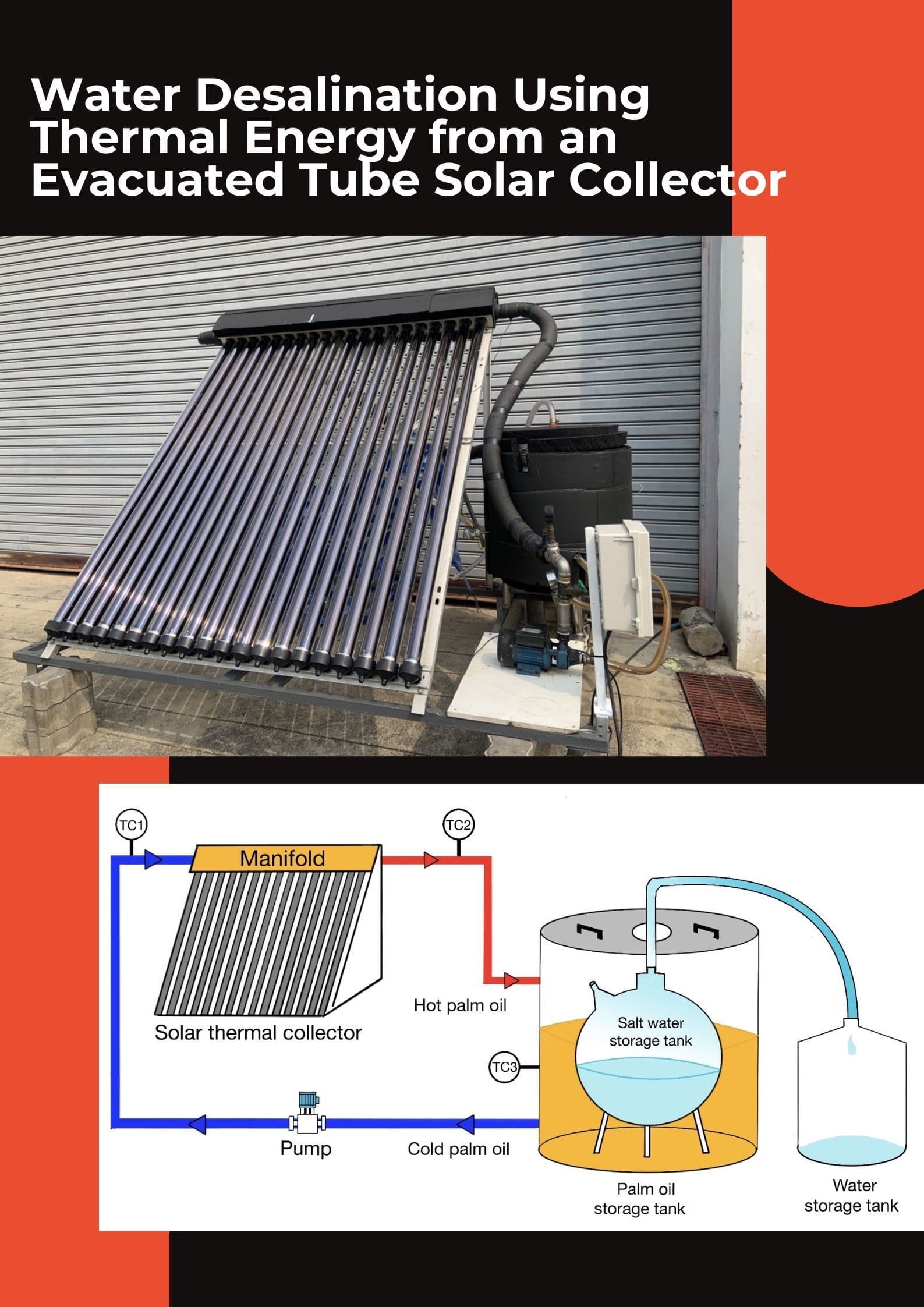
Freshwater scarcity is a global crisis due to limited accessible freshwater resources and rising demand. Seawater desalination is a key solution but is energy-intensive and reliant on fossil fuels, leading to high costs and environmental impacts. This study aims to investigate the use of solar thermal energy from an evacuated tube collector for freshwater production via evaporation and condensation. The focus is on analyzing system efficiency by comparing freshwater yield with energy input. The findings may contribute to the development of sustainable desalination technologies suitable for freshwater-scarce regions.
คณะวิศวกรรมศาสตร์
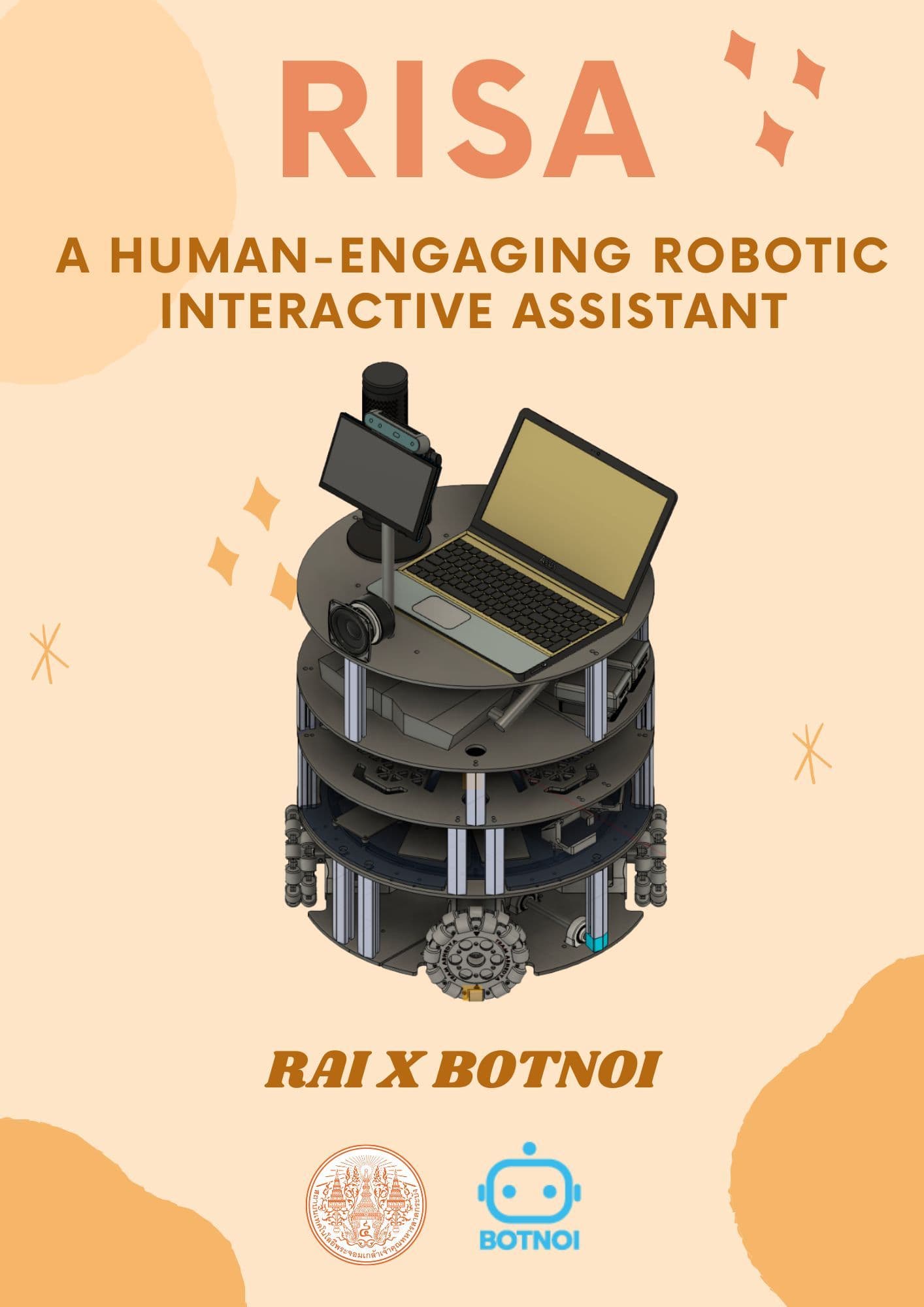
The integration of intelligent robotic systems into human-centric environments, such as laboratories, hospitals, and educational institutions, has become increasingly important due to the growing demand for accessible and context-aware assistants. However, current solutions often lack scalability—for instance, relying on specialized personnel to repeatedly answer the same questions as administrators for specific departments—and adaptability to dynamic environments that require real-time situational responses. This study introduces a novel framework for an interactive robotic assistant (Beckerle et al. , 2017) designed to assist during laboratory tours and mitigate the challenges posed by limited human resources in providing comprehensive information to visitors. The proposed system operates through multiple modes, including standby mode and recognition mode, to ensure seamless interaction and adaptability in various contexts. In standby mode, the robot signals readiness with a smiling face animation while patrolling predefined paths or conserving energy when stationary. Advanced obstacle detection ensures safe navigation in dynamic environments. Recognition mode activates through gestures or wake words, using advanced computer vision and real-time speech recognition to identify users. Facial recognition further classifies individuals as known or unknown, providing personalized greetings or context-specific guidance to enhance user engagement. The proposed robot and its 3D design are shown in Figure 1. In interactive mode, the system integrates advanced technologies, including advanced speech recognition (ASR Whisper), natural language processing (NLP), and a large language model Ollama 3.2 (LLM Predictor, 2025), to provide a user-friendly, context-aware, and adaptable experience. Motivated by the need to engage students and promote interest in the RAI department, which receives over 1,000 visitors annually, it addresses accessibility gaps where human staff may be unavailable. With wake word detection, face and gesture recognition, and LiDAR-based obstacle detection, the robot ensures seamless communication in English, alongside safe and efficient navigation. The Retrieval-Augmented Generation (RAG) human interaction system communicates with the mobile robot, built on ROS1 Noetic, using the MQTT protocol over Ethernet. It publishes navigation goals to the move_base module in ROS, which autonomously handles navigation and obstacle avoidance. A diagram is explained in Figure 2. The framework includes a robust back-end architecture utilizing a combination of MongoDB for information storage and retrieval and a RAG mechanism (Thüs et al., 2024) to process program curriculum information in the form of PDFs. This ensures that the robot provides accurate and contextually relevant answers to user queries. Furthermore, the inclusion of smiling face animations and text-to-speech (TTS BotNoi) enhanced user engagement metrics were derived through a combination of observational studies and surveys, which highlighted significant improvements in user satisfaction and accessibility. This paper also discusses capability to operate in dynamic environments and human-centric spaces. For example, handling interruptions while navigating during a mission. The modular design allows for easy integration of additional features, such as gesture recognition and hardware upgrades, ensuring long-term scalability. However, limitations such as the need for high initial setup costs and dependency on specific hardware configurations are acknowledged. Future work will focus on enhancing the system’s adaptability to diverse languages, expanding its use cases, and exploring collaborative interactions between multiple robots. In conclusion, the proposed interactive robotic assistant represents a significant step forward in bridging the gap between human needs and technological advancements. By combining cutting-edge AI technologies with practical hardware solutions, this work offers a scalable, efficient, and user-friendly system that enhances accessibility and user engagement in human-centric spaces.

วิทยาลัยนวัตกรรมการผลิตขั้นสูง
The research on improving the strength of solid electrolytes aims to enhance the properties of solid electrolyte materials produced from cement and additives that help develop the cement structure to generate electricity. The main components include sodium chloride (NaCl) and graphite, which contribute to the material’s ability to generate a weak electrical current. The objective is to develop an electricity-generating flooring material. This study involves preparing a mixture of cement, water, sodium chloride (NaCl), and graphite to enhance the material’s electrical conductivity. It is highly anticipated that this research will lead to the development of concrete flooring capable of generating electricity and can be further expanded for future applications.
วิทยาลัยนวัตกรรมการผลิตขั้นสูง
The objective of this research is to utilize waste slag in industrial applications and help mitigate flooding, water accumulation, and ponding issues. Currently, slag from the steel smelting or refining process is commonly used as a component in construction materials, such as road surfaces. However, slag has properties that make it difficult for water to permeate, leading to poor drainage and increased flooding problems. This study focuses on improving the properties of pavement materials to enhance their strength and water permeability. This can be achieved through physical structural modifications or the addition of chemical agents such as HPMC, which increases void spaces to facilitate water absorption and drainage according to required standards. The utilization of waste slag not only helps reduce production costs and improve material performance but also minimizes environmental impacts and promotes the sustainable use of resources.
คณะวิศวกรรมศาสตร์
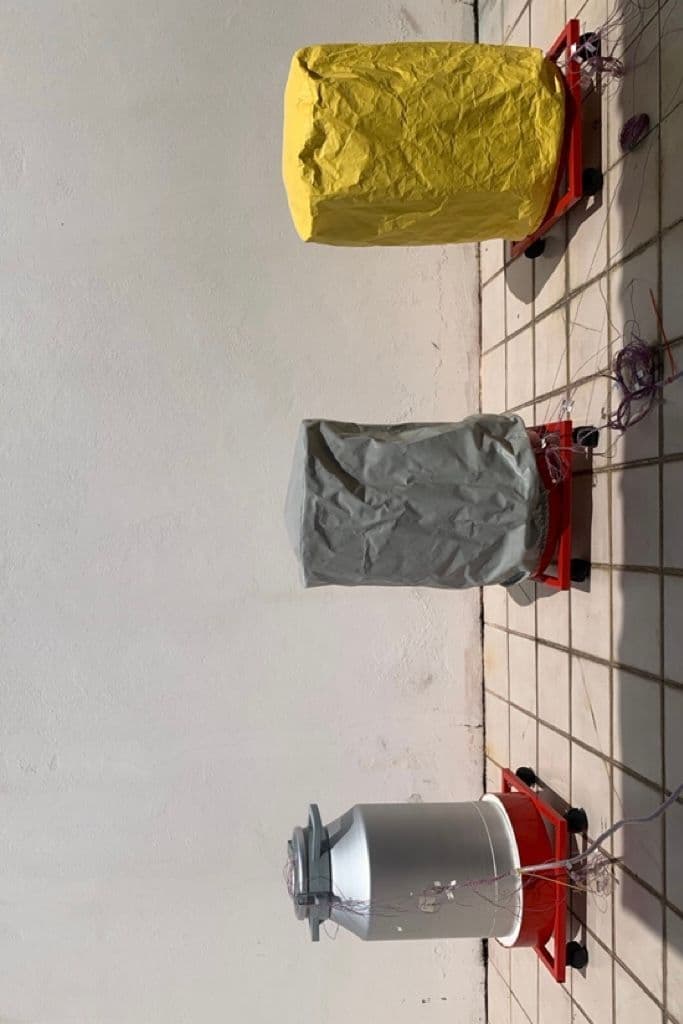
This study was conducted to develop a prototype cooling cover for transporting raw milk, aiming to provide a solution for maintaining the quality of raw milk during transportation to milk collection centers. The cooling cover is made using Phase Change Material (PCM), produced from water mixed with a gelling agent, in an amount of 5.6 kg, attached around an aluminum milk tank (with a capacity of 25 L). The cover is then covered with a UV-reflective fabric in two types: polyvinyl chloride (PVC) and high-density polyethylene (HDPE). The temperature reduction performance of both types of covers was evaluated by measuring water temperatures at various points along the radial and vertical directions of the milk tank at six points, using type-T thermocouples, under three environmental conditions: a constant temperature of 25 °C, 35 °C, and outdoor ambient temperature (average temperature 35.5 °C) for a minimum duration of 180 min. The experimental results revealed that at 120 min., the water in the tank covered with PCM-PVC and PCM-HDPE covers had temperatures lower than the ambient temperature by 12.6 °C and 12.9 °C, respectively, under a constant ambient temperature of 25 °C, and under a constant ambient temperature of 35 °C lower by 16.7 °C and 16.4 °C, respectively, and outdoor conditions. Since the temperature reduction performance of PCM-PVC and PCM-HDPE covers showed no significant difference, the performance of microbial quality preservation of raw milk was assessed only with PCM-PVC cover in comparison to a non-covered case (control), by measuring coliform and Escherichia coli counts using compact dry plates. Results indicated that after 120 min., milk in the tank covered with PCM-PVC had an average coliform count of 1.6 × 10^4 CFU/ml and E. coli count of 2 × 10^3 CFU/ml, which was lower than the non-covered control with an average coliform count of 1.5 × 10^4 CFU/ml and E. coli count of 1.1 × 10^4 CFU/ml. This study concludes that the temperature reduction achieved by the cooling cover can help inhibit coliform growth to levels below raw milk quality standards, demonstrating the potential of the cooling cover in maintaining the quality and safety of raw milk during transport, ultimately contributing to an improved quality of life for Thai dairy farmers.
คณะครุศาสตร์อุตสาหกรรมและเทคโนโลยี
The Research aims to create Computer Assisted Instruction (CAI) on Kitchen Design for Residence for 20 undergraduate students at the Interior Environmental Design Division, School of Industrial Education and Technology, King Mongkut’s Institute of Technology Ladkrabang. This CAI is a self-learning program for Interior environmental design courses focused on kitchen design for residences. The program is designed to interact with students to create learner engagement and improve learning achievement by providing course content and end-of-chapter quizzes. The research hypothesis is CAI: Interior Environmental Design: Kitchen design for residence affects learners’ learning achievement and students' knowledge toward learning by this CAI. The Development testing (DT) with E1/E2 is the criterion for this instructional media to examine learning achievement. The research findings indicate that CAI is an effective instructional media, scoring 71.50/89.00, which meets the criteria of 80/80, demonstrating students’ learning achievement. Students achieved higher scores than before by using Computer-Assisted Instruction (CAI).
คณะครุศาสตร์อุตสาหกรรมและเทคโนโลยี
This aimed to 1) develop an effective augmented reality (AR) media integrated with the metaverse to enhance English phonics and communication skills. 2) To evaluate English pronunciation skills using augmented reality media integrated with the metaverse, and 3) To assess English communication skills through interactions within the metaverse. The sample group comprised 120 Grade 4 students from two classrooms in the first semester of the 2024 academic year, selected through cluster random sampling and divided into experimental and control groups. The research instruments included AR media sets, media quality assessment forms, phonics tests, and English communication skills assessment forms, administered before and after the learning intervention. Data analysis employed mean (x ̅), standard deviation (S), t-tests for independent samples, and one-way analysis of variance (Multivariate Analysis of Variance: One-Way MANOVA) to compare mean score differences between the experimental and control groups. Results indicated that the overall quality of the AR media kit with the metaverse was rated at a very high level (x ̅= 4.80, S.D. = 0.12). Evaluating specific aspects showed that the content quality was at the highest level (x ̅= 4.92, S.D. = 0.07), while the media production technique also rated highly (x ̅ = 4.70, S.D. = 0.17). Furthermore, the English pronunciation and communication skills of the Grade 4 students using the AR media with the metaverse were significantly higher after the intervention compared to before, the overall quality of the AR media integrated with the metaverse was rated at the highest level (x ̅= 4.80, S.D. = 0.12). For individual aspects, content quality was rated at the highest level (x ̅= 4.92, S.D. = 0.07), and media production techniques were also rated at the highest level (x ̅ = 4.70, S.D. = 0.17). Comparing the mean scores of English pronunciation and communication skills between the two groups, it was found that the experimental group using AR media integrated with the metaverse demonstrated significantly higher English pronunciation skills than the control group (F(1, 89) = 3261.422, p = 0.001, Partial η² = 0.98). Additionally, the experimental group exhibited significantly higher English communication skills than the control group (F(1, 89) = 4239.365, p = 0.001, Partial η² = 0.98). These results aligned with the research hypothesis that "Grade 4 students’ English pronunciation and communication skills post-learning with AR media integrated with the metaverse would significantly improve compared to their pre-learning levels at the .05 level of significance.
คณะครุศาสตร์อุตสาหกรรมและเทคโนโลยี
The Department of Engineering Education at KMITL offers courses in power electronics laboratory practices, which require the use of expensive imported training kits. This results in a loss of national revenue due to the purchase of these imported kits. Therefore, the developers propose a power electronics training kit that offers equivalent or superior functionality to the imported ones while being more cost-effective, making it suitable for student experiments.
คณะอุตสาหกรรมอาหาร
This study focuses on formula development and properties analysis of collagen-fortified kombucha jelly in terms of taste, appearance, and benefits to create a novel product that meets the needs of the health and beauty beverage market. Sensory testing was conducted to evaluate the quality and consumer satisfaction.