

The Research aims to create Computer Assisted Instruction (CAI) on Kitchen Design for Residence for 20 undergraduate students at the Interior Environmental Design Division, School of Industrial Education and Technology, King Mongkut’s Institute of Technology Ladkrabang. This CAI is a self-learning program for Interior environmental design courses focused on kitchen design for residences. The program is designed to interact with students to create learner engagement and improve learning achievement by providing course content and end-of-chapter quizzes. The research hypothesis is CAI: Interior Environmental Design: Kitchen design for residence affects learners’ learning achievement and students' knowledge toward learning by this CAI. The Development testing (DT) with E1/E2 is the criterion for this instructional media to examine learning achievement. The research findings indicate that CAI is an effective instructional media, scoring 71.50/89.00, which meets the criteria of 80/80, demonstrating students’ learning achievement. Students achieved higher scores than before by using Computer-Assisted Instruction (CAI).
ในปัจจุบันประเทศไทยมีการพัฒนาเทคโนโลยีอย่างก้าวกระโดดเพื่อตอบสนองความต้องการของมนุษย์ในด้านต่าง ๆ ไม่เว้นแม้กระทั่งด้านการศึกษาที่จะนำเอาเทคโนโลยีเข้ามามีบทบาทสำคัญในการพัฒนามนุษย์ให้มีการเรียนที่มีประสิทธิภาพ ตรงตามทักษะแห่งศตวรรษที่ 21 หรือ 21st Century Skill และเนื่องจาก ‘ทักษะ’ ไม่ได้เป็นสิ่งที่มนุษย์สามารถสร้างขึ้นมาได้โดยง่ายเพียงแค่การนั่งฟังครูหรืออาจารย์สอนแบบบรรยายภายในห้องเพียงอย่างเดียวเท่านั้น การฝึกฝน ลงมือปฏิบัติและการค้นคว้าหาความรู้เพื่อทบทวนบทเรียนถือเป็นสิ่งสำคัญอีกอย่างหนึ่งที่จะช่วยให้มนุษย์มีทักษะเพิ่มมากขึ้น การรับเปลี่ยนรูปแบบของสื่อการสอนจากรูปแบบเดิมที่เน้นการบรรยายเนื้อหาเป็นหลักจึงถูกพัฒนาเป็นสื่อการสอนรูปบแบบดิจิตอล ซึ่งสื่อดิจิตอลนี้จำเป็นต้องประกอบด้วยบทบาทของครูผู้สอนและรูปแบบของการเรียนรู้ในห้องเรียนเพื่อถ่ายทอดเนื้อหาความรู้ไปสู่ตัวผู้เรียนได้ง่ายและรวดเร็ว บทเรียนคอมพิวเตอร์ช่วยสอน หมายถึง โปรแกรมคอมพิวเตอร์ช่วยสอนที่สามารถนำเสนอได้หลากหลายรูปแบบ เช่น ข้อความ รูปภาพ กราฟฟิก ภาพเคลื่อนไหว เสียง ฯ เป็นโปรแกรมเพื่อการจัดการเรียนการสอนโดยให้คอมพิวเตอร์เป็นสื่อกลางในการถ่ายทอดเนื้อหาความรู้ไปสู่ผู้เรียน ความสำคัญของบทเรียนคอมพิวเตอร์ช่วยสอนนั้นเน้นการสร้างแรงจูงใจในการเรียนรู้ ดึงดูดความสนใจของผู้เรียนด้วยเทคนิคการนำเสนอด้วยกราฟฟิกต่าง ๆ ซึ่งวิธีนี้จะทำให้ผู้เรียนเกิดการเรียนรู้และเข้าใจเนื้อหาได้อย่างรวดเร็ว สามารถให้ผู้เรียนมีปฏิสัมพันธ์หรือโต้ตอบกับบทเรียนและได้รับแรงเสริมจากการได้รับข้อมูลย้อนกลับในทันที ผู้เรียนสามารถเลือกเรียนได้ตามความสนใจของตนเอง อีกทั้งยังเป็นตัวส่งเสริมให้ผู้เรียนมีความรับผิดชอบในตนเอง ควบคุมการเรียน แก้ไขปัญหาและฝึกคิดอย่างมีเหตุผล รายวิชาการออกแบบสภาพแวดล้อมภายใน 1 รหัสวิชา 03456106 ภาคเรียนที่ 2 สำหรับนักศึกษาปริญญาตรีสาขาการออกแบบสภาพแวดล้อมภายใน ภาควิชาครุศาสตร์สถาปัตยกรรมและการออกแบบ คณะครุศาสตร์อุตสาหกรรมและเทคโนโลยี สถาบันเทคโนโลยีพระจอมเกล้าเจ้าคุณทหารลดกระบัง เป็นเรื่องของการออกแบบบ้านพักอาศัย ซึ่งบ้านพักอาศัยนั้นถือเป็นหนึ่งในปัจจัยทั้ง 4 ในการดำรง ชีพ หนึ่งในส่วนประกอบที่สำคัญของบ้านพักอาศัยคือห้องครัว ซึ่งห้องครัวถือเป็นส่วนสำคัญถัดจากห้องรับแขกและห้องรับประทานอาหาร การออกแบบห้องครัวจึงมีความจำเป็นอย่างมากเพื่อออกแบบให้ ตอบสนองต่อพฤติกรรมและความต้องการของมนุษย์ให้ได้มากที่สุดโดยคำนึงถึงความสะอาดและความปลอดภัยเป็นหลัก ซึ่งการที่ผู้เรียนจะสามารถออกแบบได้มีความจำเป็นต้องเข้าใจถึงหลักการและทฤษฎีในการออกแบบห้องครัวอย่างละเอียด จากเหตุผลข้างต้นผู้วิจัยจึงได้คิดวิธีการที่จะทำให้ผู้เรียนเกิดกระบวนการเรียนรู้และเกิดความเข้าใจ ในเนื้อหาให้ได้เร็วและง่ายที่สุด โดยการจัดทำรูปแบบของบทเรียนคอมพิวเตอร์ช่วยสอนวิชา การออกแบบสภาพแวดล้อมภายใน 1 เรื่อง การออกแบบห้องครัวภายในบ้านพักอาศัย เพื่อผู้เรียนสามารถเรียนรู้โต้ตอบทบทวนบทเรียน สามารถประเมินผลการเรียนจากบทเรียนได้ด้วยตนเอง สามรถควบคุมเวลาในการเรียนของตนเองได้ และสามารถเรียนรู้เพิ่มเติมนอกเหนือจากในห้องเรียนได้อีกด้วย ถือเป็นการใช้เวลาว่างให้เกิดประโยชน์สูงสุด

คณะครุศาสตร์อุตสาหกรรมและเทคโนโลยี
The Department of Engineering Education at KMITL offers courses in power electronics laboratory practices, which require the use of expensive imported training kits. This results in a loss of national revenue due to the purchase of these imported kits. Therefore, the developers propose a power electronics training kit that offers equivalent or superior functionality to the imported ones while being more cost-effective, making it suitable for student experiments.
คณะสถาปัตยกรรม ศิลปะและการออกแบบ
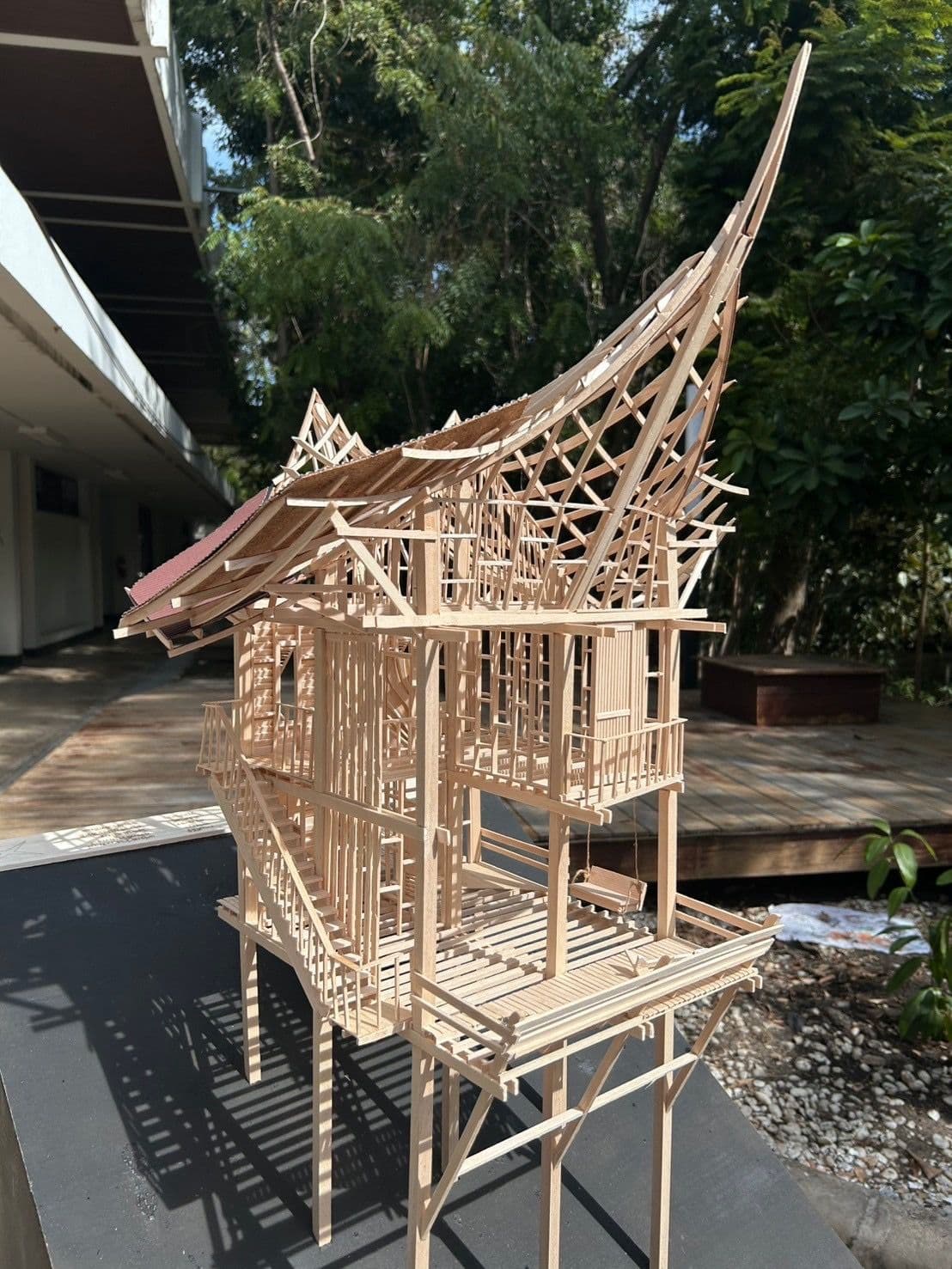
This project aims to study the load transfer in timber building structures by analyzing weight distribution across key structural components such as beams, columns, and floors, as well as the load-bearing behavior of wood under different conditions. The research incorporates structural calculations and modeling to examine load transfer patterns. Additionally, it enhances skills in design, analysis, and teamwork, providing practical knowledge applicable to real-world construction projects.
คณะวิทยาศาสตร์
Eco Grow Pellets are high-porosity plant-growing clay pellets made from ceramic industrial sediment, blended with ground chicken bone to enhance calcium and essential minerals, promoting strong and healthy plant growth. They are suitable for all types of plants, especially those requiring well-aerated soil with good water drainage. Eco Grow Pellets are an innovative clay-based growing medium designed to optimize plant cultivation efficiency. Their high porosity structure allows for excellent air and water circulation, reducing soil compaction and waterlogging—common causes of root rot and stunted growth. Additionally, the pellets are enriched with calcium and essential minerals from ground chicken bones, reinforcing plant structure and enhancing root strength, enabling better nutrient absorption. This product is made from 100% recycled ceramic industrial sediment, aligning with the principles of Zero Waste and the BCG Economy Model. It helps minimize industrial waste while transforming discarded materials into high-value, eco-friendly growing media. Eco Grow Pellets are ideal for vegetables, flowers, and potted plants, offering ease of use, cleanliness, and safety. They contribute to sustainable agriculture by improving both crop productivity and environmental health.