
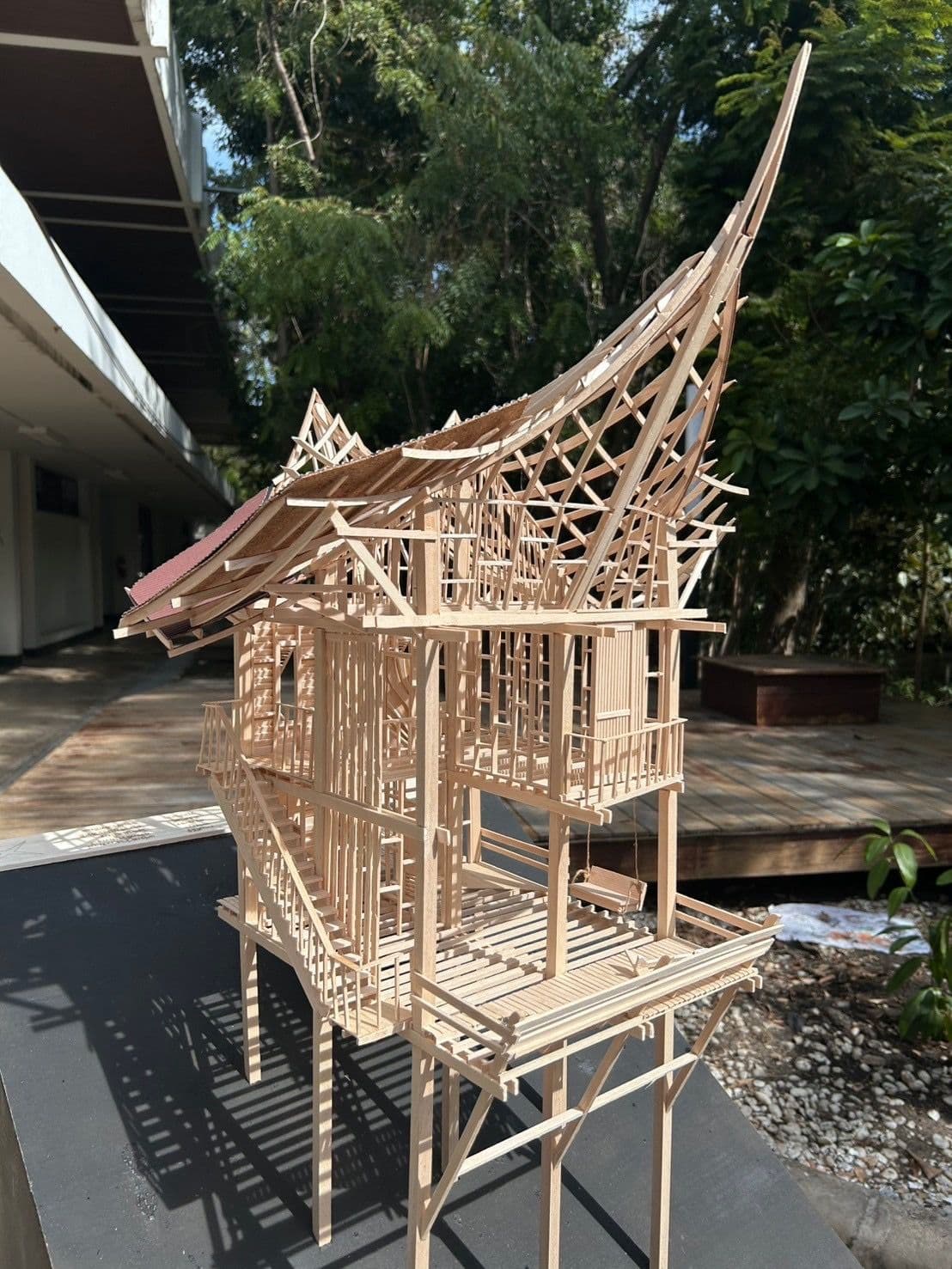
This project aims to study the load transfer in timber building structures by analyzing weight distribution across key structural components such as beams, columns, and floors, as well as the load-bearing behavior of wood under different conditions. The research incorporates structural calculations and modeling to examine load transfer patterns. Additionally, it enhances skills in design, analysis, and teamwork, providing practical knowledge applicable to real-world construction projects.
การออกแบบอาคารสถาปัตยกรรม ต้องเข้าใจในส่วนของโครงสร้างของตัวอาคาร จึงเริ่มจากโครงสร้างขั้นพื้นฐานที่เป็นอาคารโครงสร้างไม้ก่อน
คณะสถาปัตยกรรม ศิลปะและการออกแบบ
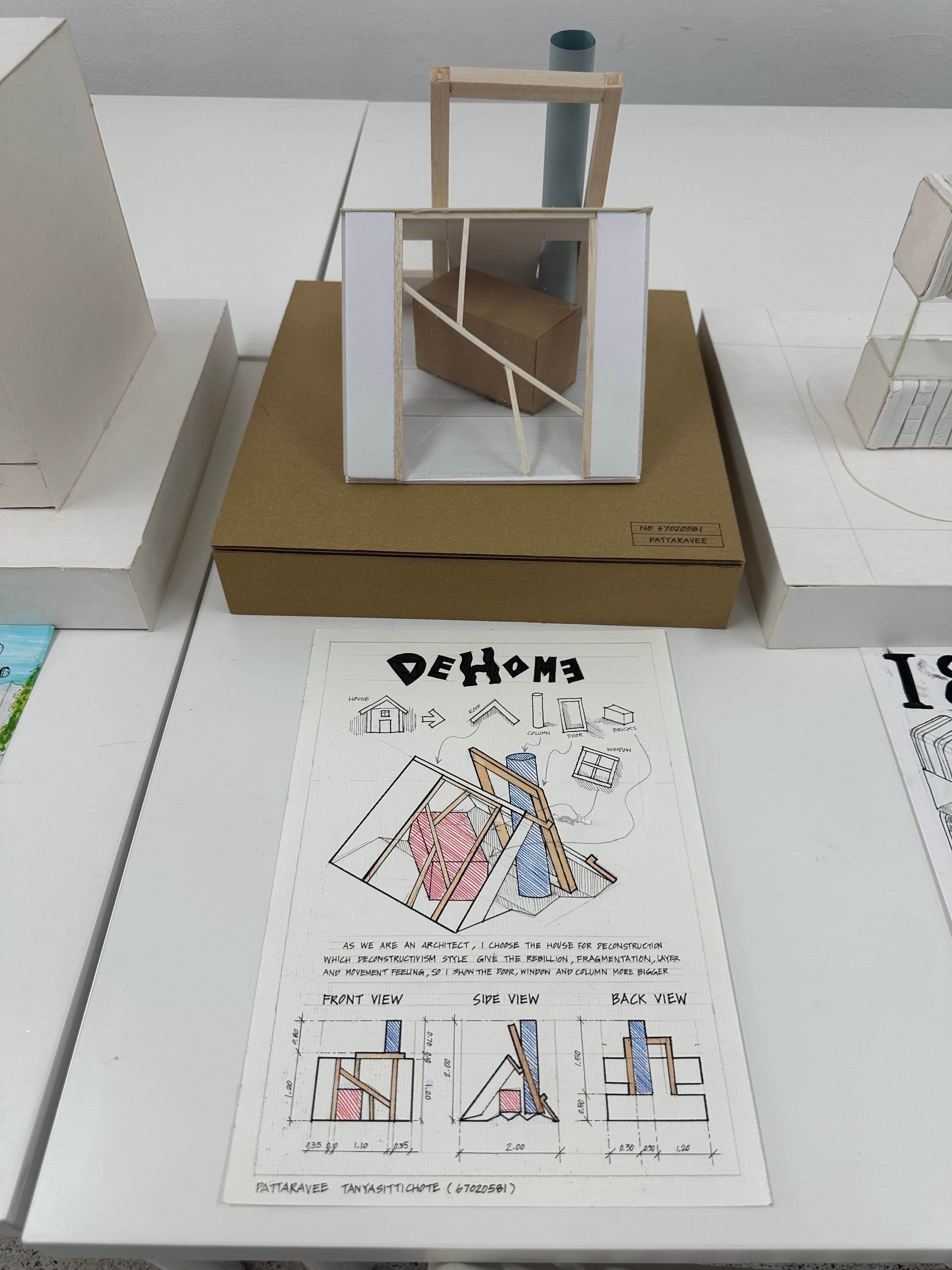
This conceptual model, titled "DeHome", incorporates the principles of Deconstructivism in architectural design. It deconstructs the fundamental elements of a house—roof, columns, doors, windows, and bricks—separating them and reassembling them in a way that conveys fragmentation, contradiction, and movement. This design challenges the traditional concept of structural stability by enlarging key elements such as doors, windows, and columns, emphasizing distortion and the dynamic force of transformation. Beyond merely dismantling the physical structure of a house, this project reinterprets the very concept of "home" within the context of contemporary architecture.

วิทยาลัยวิศวกรรมสังคีต
Some musicians are hearing impaired, some have finished their careers, but some continue to work, and it is much harder for them to be deaf than for musicians who are not. Some use hearing aids in their daily lives and use in-ear monitors in their live performances, which seem normal, but in their in-ears they only hear the metronome and drums. How can we improve the performance of in-ear monitors to near normal?
คณะอุตสาหกรรมอาหาร
The consumption of plant-based products has been gaining popularity as consumers become more health-conscious and aware of environmental impacts. The food industry has been developing meat analogs with properties similar to conventional meat. This study investigates the chemical and physical properties of chickpea-based meat analog burgers and hybrid burgers containing both chickpeas and pork, using the sous-vide cooking method. This technique helps maintain food quality in terms of texture, moisture retention, and nutritional value. The experiment examined various properties of both types of burgers, including cooking loss, water holding capacity, shear force, pH value, and color analysis. Additionally, sensory evaluation was conducted to assess taste, texture, and overall consumer preference. The findings will provide insights into the optimal sous-vide conditions for producing plant-based and hybrid burgers with desirable quality characteristics that meet the needs of health-conscious consumers. This study serves as a valuable guideline for the food industry in developing high-nutritional-value alternative protein products while reducing meat consumption. By incorporating plant-based ingredients, it helps minimize environmental impact and promotes sustainability in food production. The research is significant in both food science and the development of healthier, competitive food products for the future market.