

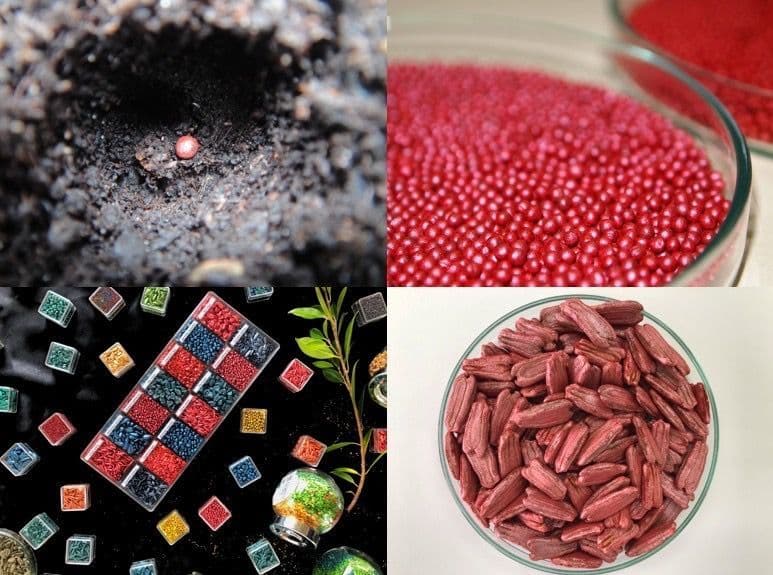
This experiment aimed to study the suitable types of polymers for coating with chlorophyll extract and the quality of cucumber seeds after coating. The experiment was planned using a Completely Randomized Design (CRD) with four replications, consisting of five methods involving seeds coated with different types of polymers: Polyvinylpyrrolidone, Sodium Alginate, Carboxy Methyl Cellulose, and Hydroxypropyl Methylcellulose, each polymer being coated alongside chlorophyll, with uncoated seeds serving as the control method. The coating substance was prepared by extracting chlorophyll from mango leaves, then mixed with each type of polymer at a concentration of 1%, using an 8% concentration of chlorophyll extract. The properties of each coating method, such as pH and viscosity of the coating substance, were examined before coating the cucumber seeds with a rotary disk coater model RRC150 at a coating rate of 1,100 milliliters per 1 kilogram of seeds. Subsequently, the seeds were dried to reach the initial moisture level using a hot air blower, and seed quality was assessed in various aspects, including seed moisture, germination rate under laboratory conditions, germination index, and seed fluorescence under a portable ultraviolet light illuminator, as well as light emission spectrum analysis using a Spectrophotometer. The experiment found that each type of polymer could be used to form a film together with chlorophyll, which had appropriate pH and viscosity for the coating without affecting seed quality and showed fluorescence on the seed surface both under portable ultraviolet light and spectral emission analysis with a Spectrophotometer. Using HPMC as the film-forming agent with chlorophyll was the most suitable method, enhancing seed fluorescence efficiency.
สารเรืองแสงที่นิยมใช้เคลือบเมล็ดพันธุ์ในปัจจุบันมีหลายชนิด เช่น Rhodamine B, Curcumin, Auramine O แต่สารเหล่านี้บางชนิดหากใช้ไปเป็นเวลานานอาจเป็นพิษต่อร่างกายมนุษย์ หากสะสมในร่างกายอาจก่อให้เกิด oxidative stress ซึ่งกระตุ้นให้เซลล์เกิดการเสียหาย เพิ่มความเสี่ยงของโรคบางอย่างได้ ในงานวิจัยนี้จึงเลือกใช้สารสกัดจากธรรมชาติมาใช้เคลือบเมล็ดพันธุ์ คือ สารสกัดคลอโรฟิลล์ มีข้อดี คือ หาได้ง่าย มีวิธีการสกัดที่ไม่ซับซ้อน แต่ข้อจำกัดของสารสกัดคลอโรฟิลล์คือมีความสามารถในการเคลือบร่วมกับพอลิเมอร์ได้บางชนิด อาจทำให้ประสิทธิการเรืองแสงมีคุณภาพลดลง ดังนั้นการวิจัยนี้จึงมีวัตถุประสงค์เพื่อหาชนิดของพอลิเมอร์ที่เหมาะสมในการนำมาเคลือบร่วมกับสารสกัดคลอโรฟิลล์แล้วไม่ส่งผลต่อประสิทธิภาพการเรืองแสงและคุณภาพของเมล็ดพันธุ์

คณะอุตสาหกรรมอาหาร
The Ginbanirose project aims to develop herbal extracts for alleviating menstrual pain using key ingredients: roselle, banana inflorescence, and ginger. These ingredients contain bioactive compounds with anti-inflammatory, antioxidant, and pain-relieving properties. The extracts are enhanced through liposome encapsulation technology, which improves absorption and stability. The production process involves herbal extraction, freeze-drying, and liposome formulation using lecithin and stabilizers. Experimental results demonstrate high phenolic content and antioxidant activity via the DPPH method. Ginbanirose addresses women’s quality of life concerns while offering significant business opportunities in the rapidly growing herbal market, particularly in the Asia-Pacific region.
คณะเทคโนโลยีการเกษตร
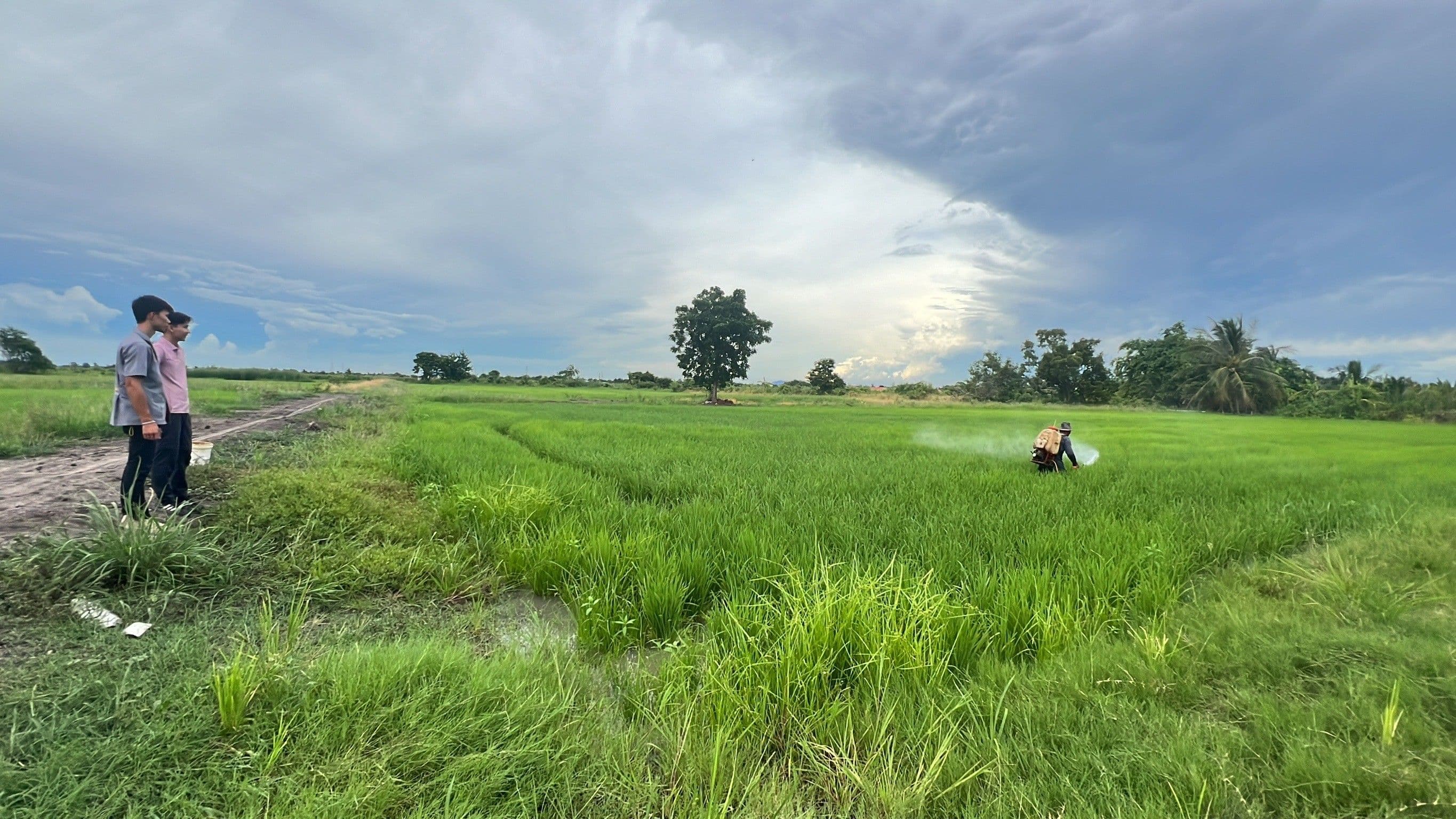
During this cooperative education program at the Bang Bo District Agricultural Office, Samut Prakan Province, a study was conducted on the costs and returns of rice cultivation using chemical inputs compared to using biopesticides in combination with chemical inputs among farmers in Bang Phli Noi Subdistrict, Bang Bo District, Samut Prakan Province.The objectives of this study were: To examine the costs and returns of rice cultivation using chemical inputs compared to using biopesticides in combination with chemical inputs among farmers in Bang Phli Noi Subdistrict, Bang Bo District, Samut Prakan Province. To explore the challenges of using biopesticides in rice cultivation among farmers in Bang Phli Noi Subdistrict, Bang Bo District, Samut Prakan Province. The study found that in the 2024/25 growing season, the total production cost for rice cultivation using biopesticides in combination with chemical inputs was 5,099.50 THB per rai, consisting of variable costs of 4,432.50 THB per rai and fixed costs of 667.00 THB per rai. Meanwhile, the total production cost for rice cultivation using only chemical inputs was 5,129.00 THB per rai, consisting of variable costs of 4,390.00 THB per rai and fixed costs of 739.00 THB per rai. The cost difference between the two methods was 114.50 THB per rai. Regarding the returns on rice cultivation in the 2024/25 growing season, the field using biopesticides in combination with chemical inputs yielded 1,000.00 kilograms per rai, with an average selling price of 8,500.00 THB per rai. Farmers earned a total revenue of 8,585.00 THB per rai and a profit of 3,485.50 THB per rai. On the other hand, the field using only chemical inputs yielded 1,000.00 kilograms per rai, with an average selling price of 8,500.00 THB per rai. Farmers earned a total revenue of 8,500.00 THB per rai and a profit of 3,371.00 THB per rai. The total income difference between the two cultivation methods was 114.50 THB per rai. In terms of challenges related to the procurement of biopesticides, it was found that biopesticides are difficult to obtain, with limited or no availability in certain areas. Additionally, relevant agencies do not provide continuous support for biopesticides, making this the most significant issue. Regarding the use of biopesticides, the most critical challenge is that once fresh biopesticides are mixed, they must be used immediately and cannot be stored, as their effectiveness deteriorates over time.

คณะวิทยาศาสตร์
The current residential solar panels lack an adequate monitoring system, which hinders their optimal utilization. This research aims to design an Internet of Things (IoT) monitoring system and employ machine learning techniques to predict the current and voltage generated by solar panels. Experimental studies have revealed a correlation between dust accumulation and the current output of solar panels. The proposed system facilitates the prediction of the optimal time for cleaning solar panels.