
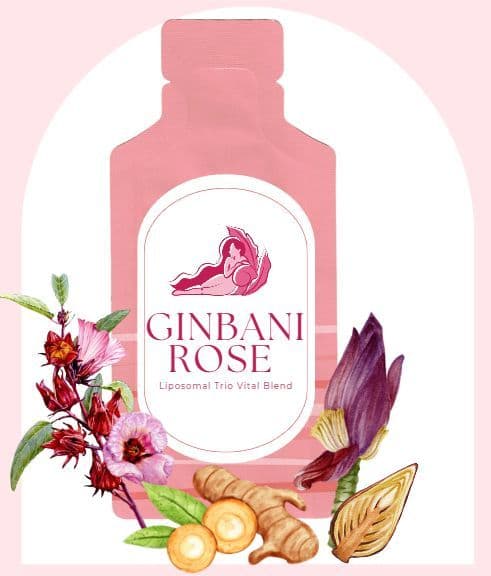
The Ginbanirose project aims to develop herbal extracts for alleviating menstrual pain using key ingredients: roselle, banana inflorescence, and ginger. These ingredients contain bioactive compounds with anti-inflammatory, antioxidant, and pain-relieving properties. The extracts are enhanced through liposome encapsulation technology, which improves absorption and stability. The production process involves herbal extraction, freeze-drying, and liposome formulation using lecithin and stabilizers. Experimental results demonstrate high phenolic content and antioxidant activity via the DPPH method. Ginbanirose addresses women’s quality of life concerns while offering significant business opportunities in the rapidly growing herbal market, particularly in the Asia-Pacific region.
ปัจจุบันผู้บริโภคให้ความสำคัญกับผลิตภัณฑ์จากธรรมชาติมากขึ้น โดยเฉพาะผลิตภัณฑ์ที่มีสารสกัดจากพืชสมุนไพรซึ่งมีคุณสมบัติที่ดีต่อสุขภาพและความงาม Ginbanirose เป็นหนึ่งในนวัตกรรมที่เกิดจากการผสานคุณสมบัติของพืชสมุนไพรไทยที่มีศักยภาพ เช่น กระเจี๊ยบแดง ขิง และปลีกล้วย ซึ่งอุดมไปด้วยสารต้านอนุมูลอิสระ และมีสรรพคุณที่เป็นประโยชน์ต่อร่างกาย การศึกษาคุณสมบัติของพืชเหล่านี้และพัฒนาให้เป็นผลิตภัณฑ์ที่สามารถใช้งานได้อย่างมีประสิทธิภาพจึงเป็นเรื่องสำคัญ ไม่เพียงแต่ช่วยเพิ่มมูลค่าให้กับพืชสมุนไพรไทยเท่านั้น แต่ยังเป็นแนวทางในการพัฒนาผลิตภัณฑ์ที่เป็นมิตรต่อสิ่งแวดล้อมและตอบสนองต่อความต้องการของตลาดสุขภาพและความงาม การใช้เทคนิค Liposome Encapsulation เพื่อเพิ่มความคงตัวและประสิทธิภาพของสารสำคัญจากพืช เป็นแนวทางหนึ่งที่ช่วยให้สามารถพัฒนา Ginbanirose ให้เป็นผลิตภัณฑ์ที่มีคุณภาพสูงและสามารถแข่งขันในตลาดได้ ดังนั้น งานวิจัยนี้จึงมีความสำคัญในการส่งเสริมการใช้ประโยชน์จากพืชสมุนไพรไทย พัฒนาผลิตภัณฑ์ที่มีคุณภาพ และสร้างมูลค่าเพิ่มให้กับวัตถุดิบธรรมชาติ เพื่อรองรับแนวโน้มของตลาดที่มุ่งสู่ผลิตภัณฑ์เพื่อสุขภาพและความงามที่ปลอดภัยและมีประสิทธิภาพสูง
วิทยาเขตชุมพรเขตรอุดมศักดิ์
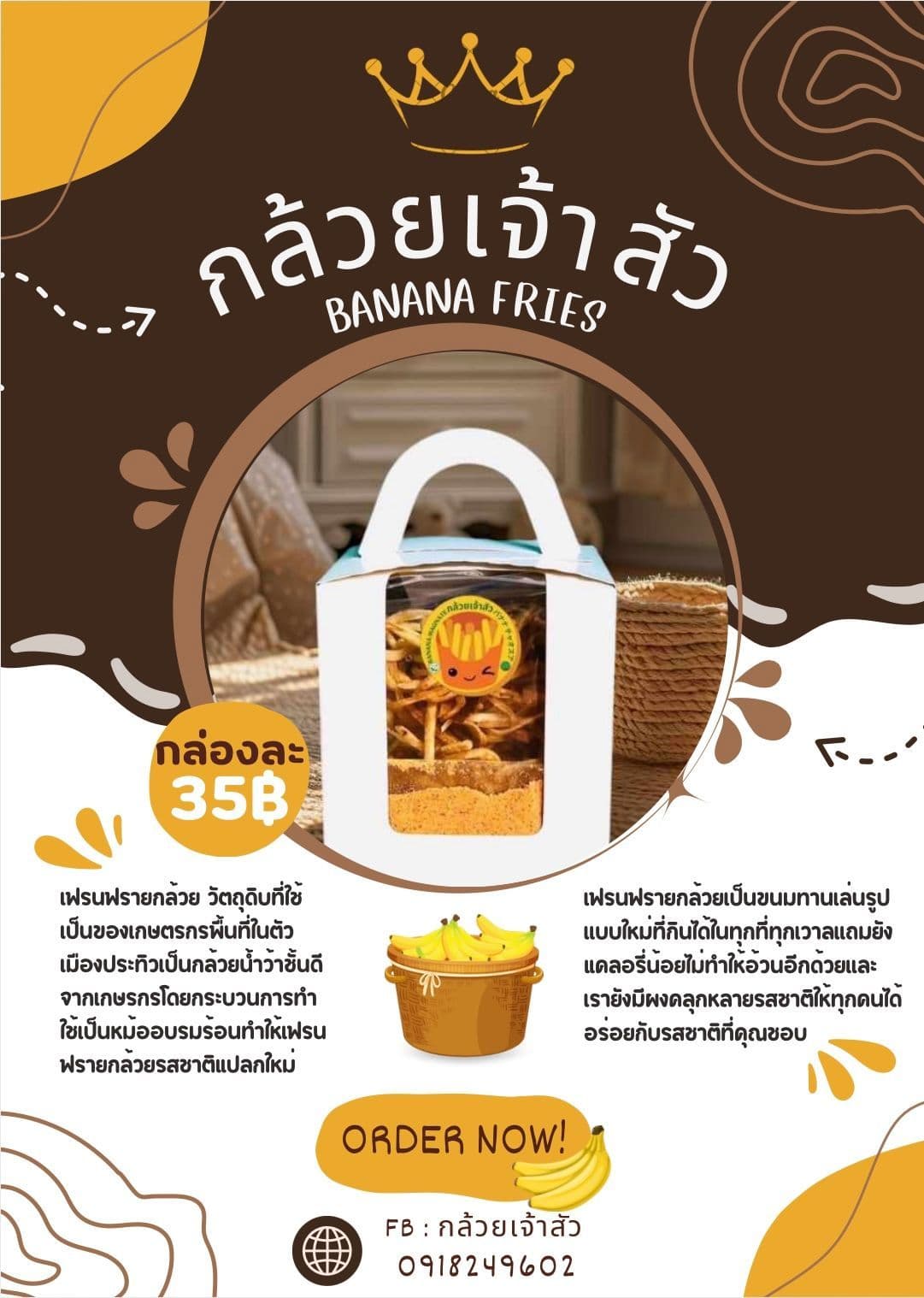
Abstract: Banana French Fries This project aimed to study and develop the product Banana French Fries, which is a snack made by frying bananas in a form similar to French fries, in order to add value to bananas and create new choices for consumers. The experiment consisted of selecting suitable banana varieties, developing a coating formula, and testing the taste of samples. The results of the study found that Nam Wa bananas are the most suitable for making banana French fries because they have a firm texture and naturally sweet taste. The best coating formula consists of wheat flour, eggs, and milk, which provide longer crispiness. The taste test found that most consumers gave a very good response and were satisfied with the taste and texture. This project shows that banana French fries are a product with potential to be developed as a healthy snack and can be further developed into a commercial product in the future.

คณะครุศาสตร์อุตสาหกรรมและเทคโนโลยี
This study aims to develop a board game on mushrooms production with cooperative learning and to examine its effects on the learning achievement of third-year vocational certificate students in the mushroom production course. The research instruments included a board game designed using the Educational Boardgame Design Canvas framework, comprising 60 cards (7 main cards, 24 secondary cards, and 29 additional cards). The board game was implemented alongside the Learning Together (LT) cooperative learning approach, following the ASSURE Model for instructional media design. Pre- and post-tests, along with a satisfaction questionnaire, were used to assess student performance and engagement. The findings revealed a statistically significant improvement at the .05 level in students' learning achievement before and after using the board game. At Ratchaburi College of Agriculture and Technology, the post-test mean score was 16.00, compared to a pre-test mean score of 12.50. Student satisfaction with the learning approach was at the highest level, with an average satisfaction score of 4.69. To further refine and expand the study, the board game was also implemented at the Uthai Thani College of Agriculture and Technology, where similar improvements were observed. The post-test mean score increased to 11.21, compared to a pre-test mean score of 7.48, confirming the research hypothesis. Student satisfaction at Uthai Thani College of Agriculture and Technology was also high, with an average satisfaction score of 4.39. These results suggest that integrating board games with cooperative learning effectively enhances student achievement and engagement in agricultural education.

คณะวิศวกรรมศาสตร์
The Thai Sign Language Generation System aims to create a comprehensive 3D modeling and animation platform that translates Thai sentences into dynamic and accurate representations of Thai Sign Language (TSL) gestures. This project enhances communication for the Thai deaf community by leveraging a landmark-based approach using a Vector Quantized Variational Autoencoder (VQVAE) and a Large Language Model (LLM) for sign language generation. The system first trains a VQVAE encoder using landmark data extracted from sign videos, allowing it to learn compact latent representations of TSL gestures. These encoded representations are then used to generate additional landmark-based sign sequences, effectively expanding the training dataset using the BigSign ThaiPBS dataset. Once the dataset is augmented, an LLM is trained to output accurate landmark sequences from Thai text inputs, which are then used to animate a 3D model in Blender, ensuring fluid and natural TSL gestures. The project is implemented using Python, incorporating MediaPipe for landmark extraction, OpenCV for real-time image processing, and Blender’s Python API for 3D animation. By integrating AI, VQVAE-based encoding, and LLM-driven landmark generation, this system aspires to bridge the communication gap between written Thai text and expressive TSL gestures, providing the Thai deaf community with an interactive, real-time sign language animation platform.