
Discover the ultimate innovations of the future developed by Thai researchers! Meet the latest technology from KMITL that will transform our way of life and industry.

This work presents the development of a multipurpose plasma water generator using atmospheric pressure plasma technology. An array-based plasma generation system was designed to enhance the efficiency of producing Plasma Activated Water (PAW), ensuring consistent quality and supporting diverse applications. The device can be operated through an automated control system integrated with IoT connectivity, enabling remote command, status monitoring, and real-time performance tracking. This improves convenience, reduces chemical usage, and enables effective and safe applications in agriculture, sterilization, water treatment, and various industrial processes.

Asphalt pavements in Thailand frequently deteriorate due to moisture damage and rutting under tropical climate and heavy traffic, leading to high maintenance costs. Conventional rehabilitation by milling and replacing damaged layers generates large amounts of Reclaimed Asphalt Pavement (RAP). Although RAP is reused to enhance sustainability, its aged binder suffers from oxidative hardening and reduced performance, requiring rejuvenation. Most conventional rejuvenators are petroleum-based and contribute to environmental pollution. Therefore, this study proposes environmentally friendly alternatives using bio-oil and biochar derived from sugarcane bagasse, along with Fatty Acid Methyl Ester (FAME), to restore RAP performance while promoting sustainable waste utilization. The objective of this research is to evaluate the effects of different proportions of these natural rejuvenating agents on recycled asphalt mixtures containing 80% RAP and 20% virgin aggregates. The mixtures were tested using the Marshall Stability and Tensile Strength Ratio (TSR) tests under dry and wet conditions to assess strength and moisture susceptibility. The results aim to determine whether these natural materials can effectively restore RAP properties to meet standard performance requirements.

คณะวิศวกรรมศาสตร์
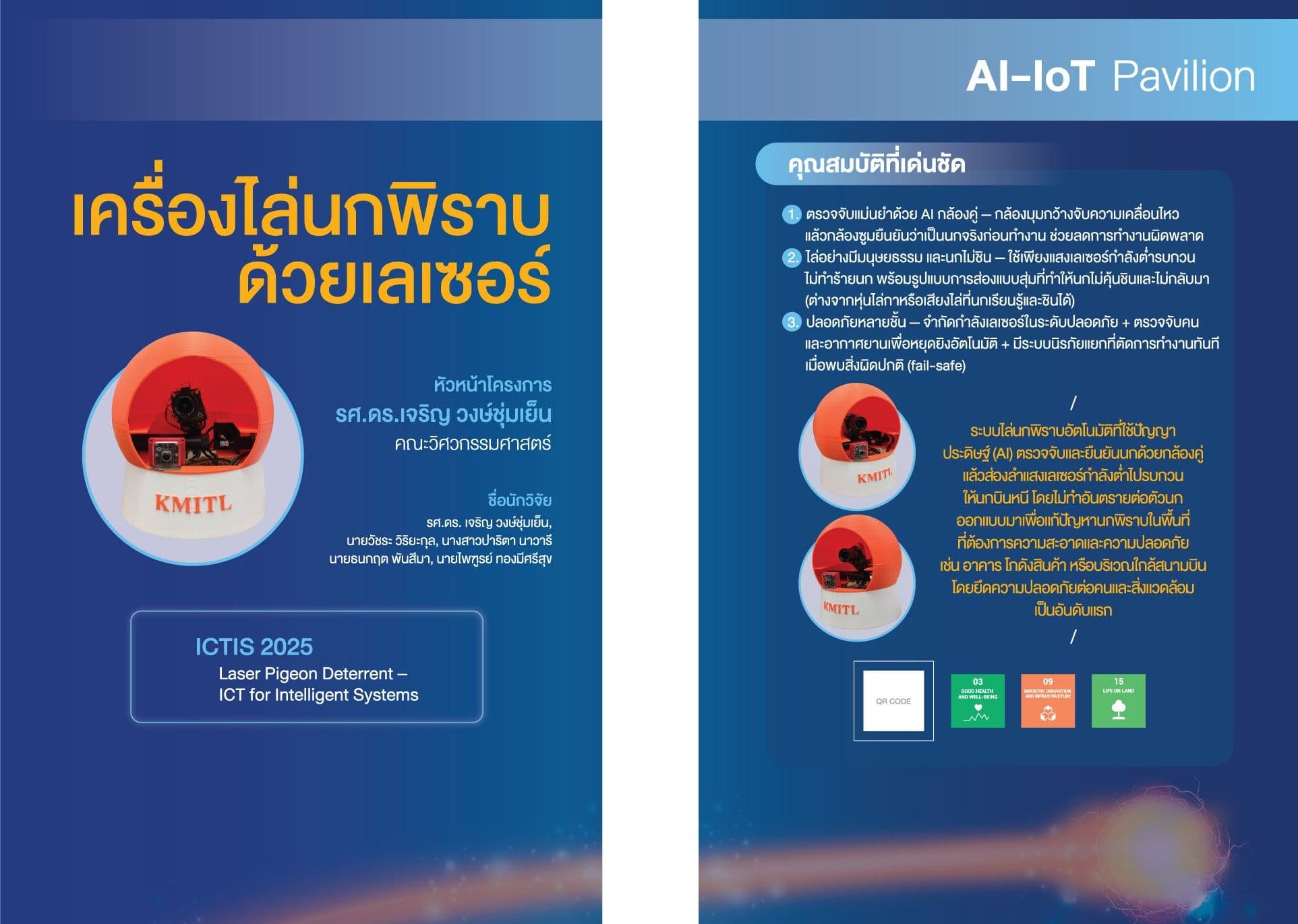
In the present day, business growth significantly fast in industries, real estate and tourism to support the growing population. Every activities must concern on an environment but the problem of infestation of pigeons that living in urban areas, villages and other buildings causes various problems and destroys the environment, property and human beings, so we have developed “Laser Pigeons Deterrent” that installed in inconvenient locations to help resolve problems that arise. This project will evict pigeons out of the area by using a high efficient laser to repelling pigeons from the behavior of pigeons responding to the laser. This project has integrated knowledge of Image Processing, Software and Hardware to develop an effective pigeon repellent device for detecting and repelling pigeons using automatic lasers. Pigeon pictures were collected from the internet and pigeon pictures were collected from cameras used in the development of this project. Pigeon pictures were collected from the Internet and data were collected under high-light to low-light conditions (morning to evening) from cameras used in project development. To make it possible to capture images of pigeons as close to the environment as possible. According to research on pigeon vision, pigeons are most sensitive to green and blue-green light. Therefore, it is reasonable to use a green laser to flee pigeons, coupled with controlling the direction of the laser irradiation to cause pigeons to react and fly away.

โรงพยาบาลพระจอมเกล้าเจ้าคุณทหาร
-
คณะวิศวกรรมศาสตร์
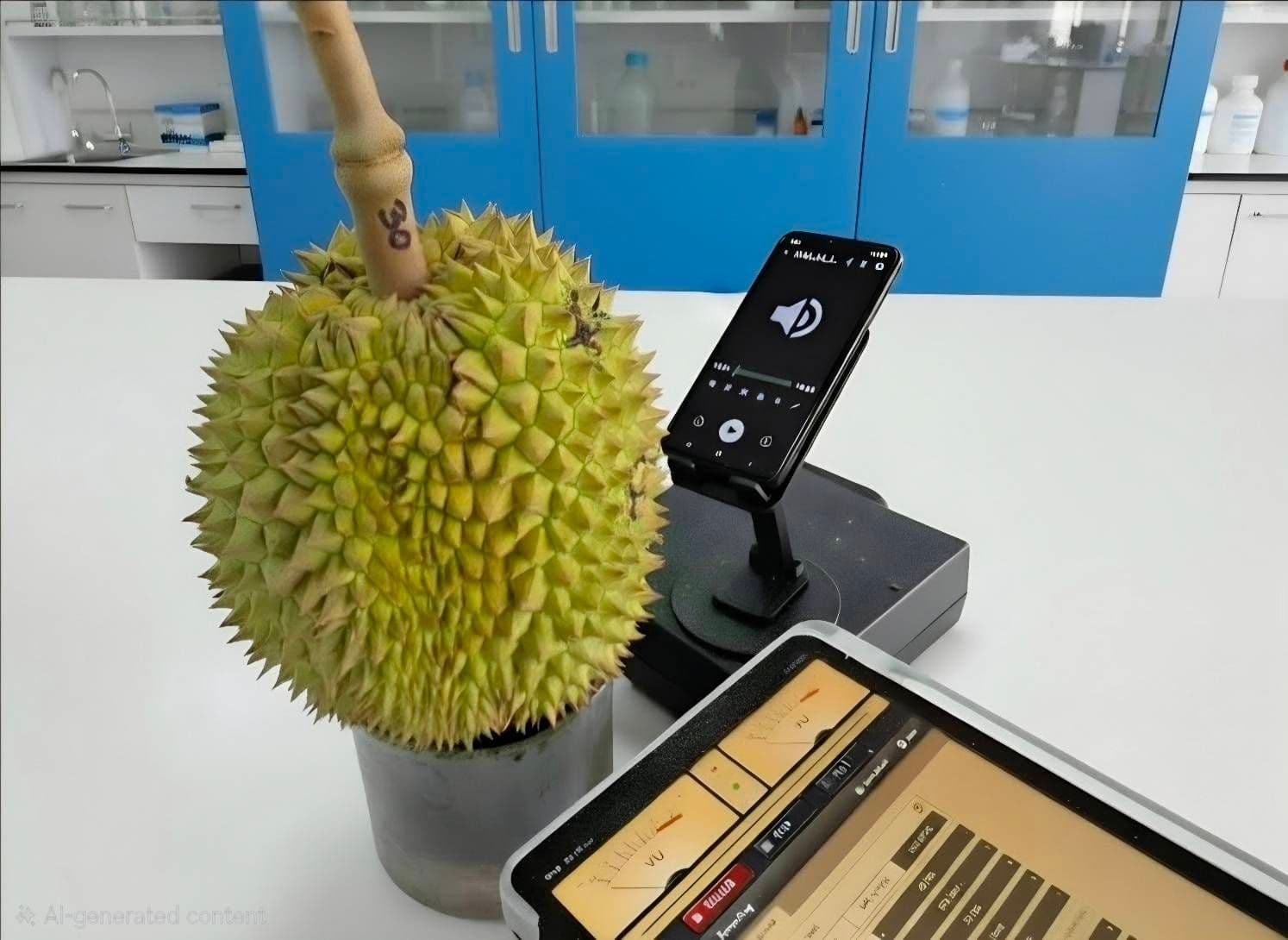
Durian is one of Thailand's most valuable economic fruits, yet ripeness assessment still relies primarily on experienced inspectors who evaluate the fruit by tapping and listening to its acoustic response. This conventional method is subjective and may lead to inconsistent results. This study presents the development of an AI-based acoustic system for non-destructive durian ripeness classification. The system integrates an acoustic acquisition device with an artificial intelligence model that analyzes tapping sounds. Audio signals are converted into Mel spectrograms and processed using a deep learning model to classify durian into three ripeness levels: Unripe, Mid-ripe, and Ripe. The system provides real-time classification results together with prediction confidence scores to support decision-making. The developed prototype demonstrated rapid, accurate, and consistent ripeness classification, reducing reliance on human expertise while improving the standardization of quality assessment. The proposed innovation offers significant potential for practical implementation in durian orchards, packing houses, and export industries by enhancing quality control, reducing classification errors, and supporting smart agriculture and digital transformation in Thailand's durian supply chain.
คณะเทคโนโลยีสารสนเทศ
-
คณะวิศวกรรมศาสตร์
-
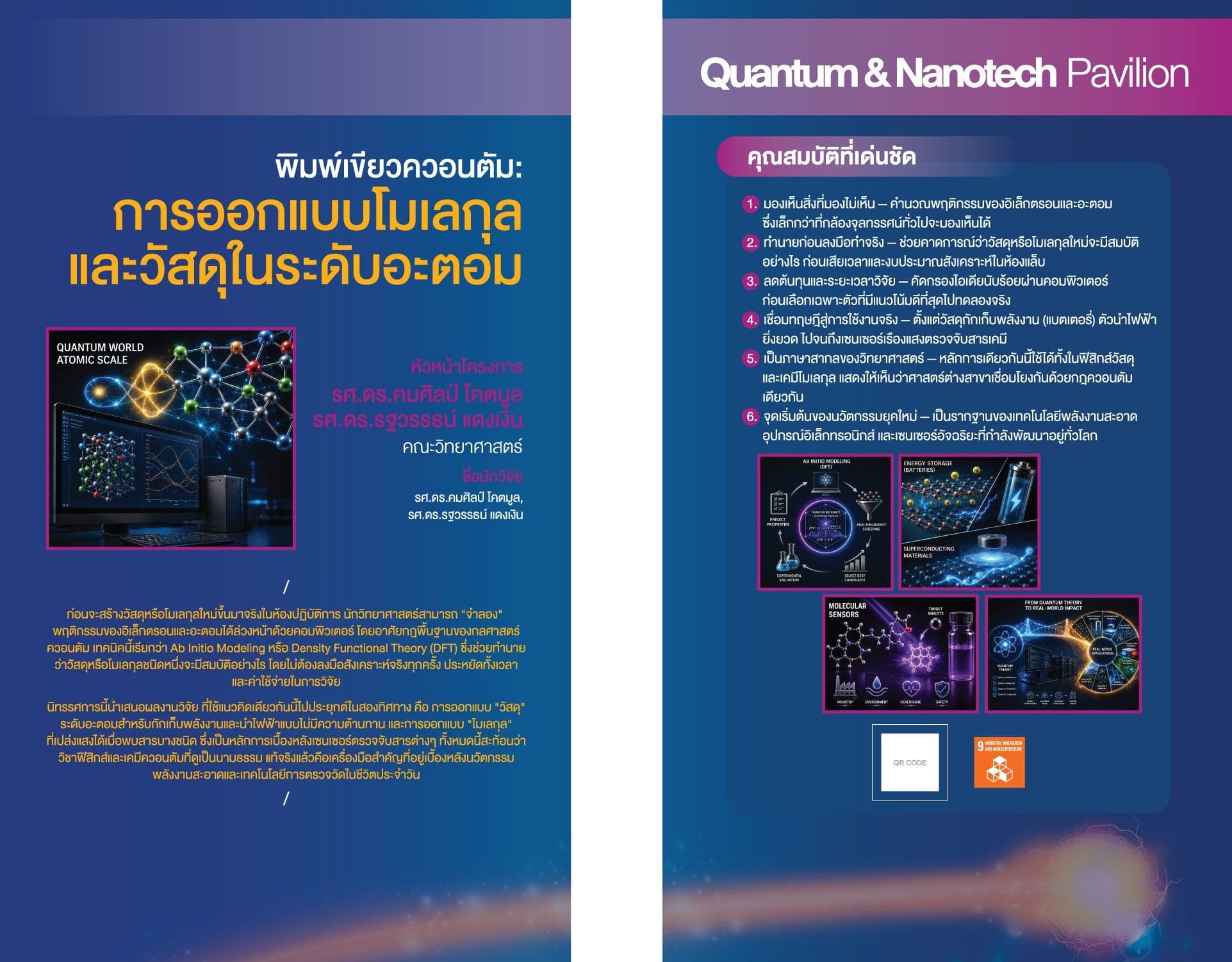
วิทยาลัยนวัตกรรมการผลิตขั้นสูง
-
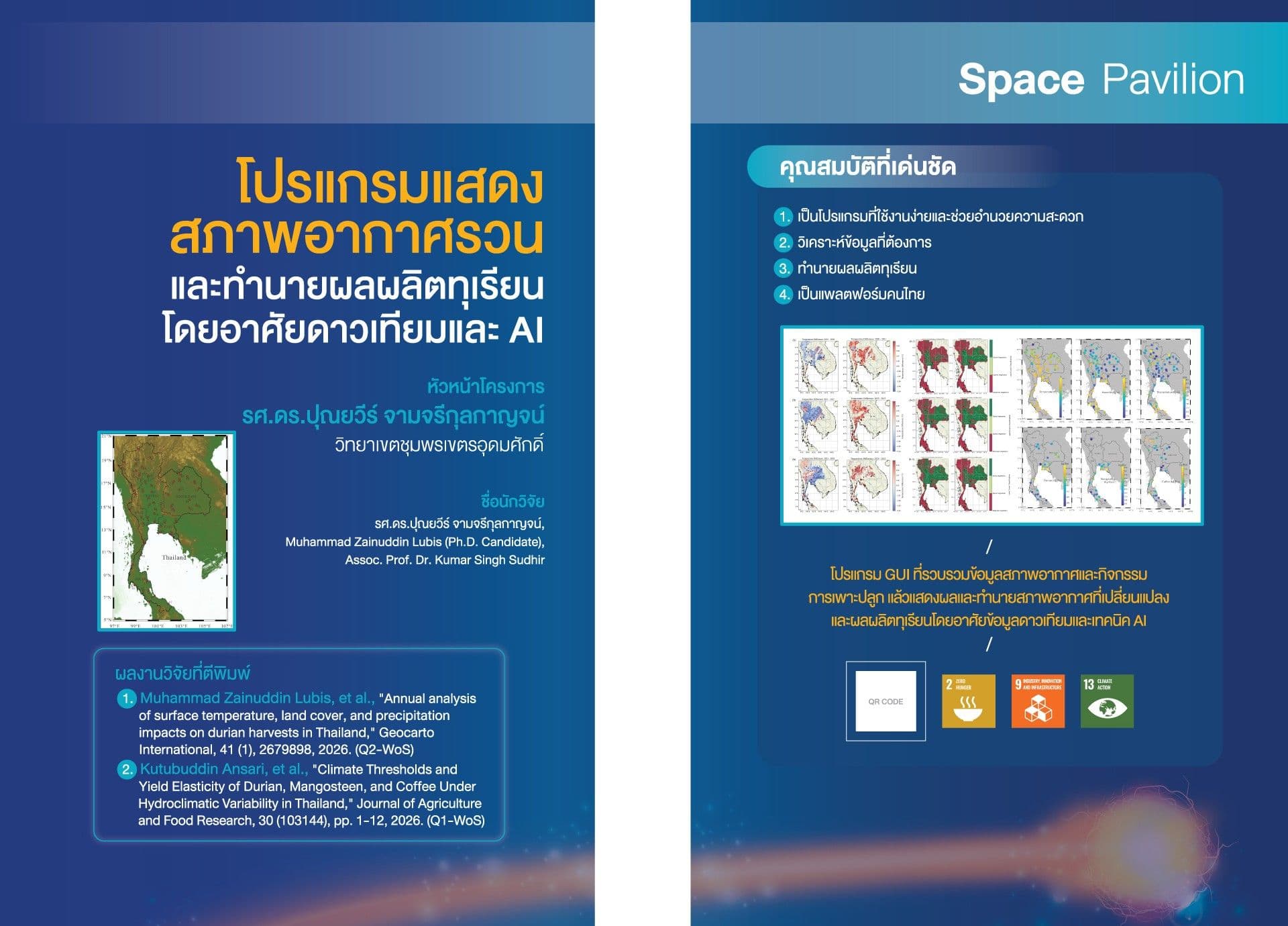
วิทยาเขตชุมพรเขตรอุดมศักดิ์
The presented GUI program is designed to display irregular weather conditions and predict durian yields using satellite data and artificial intelligence. It integrates satellite-based environmental monitoring, geospatial analysis, and AI-driven prediction with ground-based measurements, geospatial intelligence, environmental analytics, and machine learning. This integration supports scientific research, environmental monitoring, climate assessment, and data-driven decision-making. The GUI program provides analytical and predictive information based on datasets, algorithms, models, and parameters selected by the user. Predictions, classifications, and analytical results should be interpreted as model-based information, not as substitutes for professional judgment, field observations, official measurements, or regulatory information. Accuracy may vary depending on data quality, spatial and temporal resolution, model configuration, input variables, geographic conditions, and other analytical assumptions. Users are responsible for validating analytical results before applying them to operational, scientific, commercial, regulatory, or policy-related decisions.