


Asphalt pavements in Thailand frequently deteriorate due to moisture damage and rutting under tropical climate and heavy traffic, leading to high maintenance costs. Conventional rehabilitation by milling and replacing damaged layers generates large amounts of Reclaimed Asphalt Pavement (RAP). Although RAP is reused to enhance sustainability, its aged binder suffers from oxidative hardening and reduced performance, requiring rejuvenation. Most conventional rejuvenators are petroleum-based and contribute to environmental pollution. Therefore, this study proposes environmentally friendly alternatives using bio-oil and biochar derived from sugarcane bagasse, along with Fatty Acid Methyl Ester (FAME), to restore RAP performance while promoting sustainable waste utilization. The objective of this research is to evaluate the effects of different proportions of these natural rejuvenating agents on recycled asphalt mixtures containing 80% RAP and 20% virgin aggregates. The mixtures were tested using the Marshall Stability and Tensile Strength Ratio (TSR) tests under dry and wet conditions to assess strength and moisture susceptibility. The results aim to determine whether these natural materials can effectively restore RAP properties to meet standard performance requirements.
ปัจจุบันโครงสร้างพื้นฐานด้านการคมนาคมมีบทบาทสำคัญอย่างยิ่งต่อเศรษฐกิจและการดำรงชีวิตของ ประชาชน ถนนลาดยางมะตอยถือเป็นโครงสร้างหลักที่ใช้ในการเดินทางและขนส่งสินค้า ในอุตสาหกรรมหลัก ของประเทศไทย แต่เนื่องจากสภาพภูมิอากาศของประเทศไทยที่มีทั้งอุณหภูมิสูงในฤดูร้อน ฝนตกชุกในฤดูฝน ส่งผลให้เกิดการเปลี่ยนแปลงของสภาพอากาศอย่างรวดเร็ว ทำให้เกิดการชำรุดเสียหายของผิวทาง เช่น การ เกิดร่องล้อ การแตกร้าว การเกิดหลุมบ่อ และการลอกหลุด จึงจำเป็นต้องมีการซ่อมบำรุงอยู่เสมอ และการ ซ่อมแซมผิวถนนเดิมนั้นจะใช้วิธีการขุดไสผิวทางเดิมทิ้ง แล้วจึงทำการปูใหม่ด้วยวัสดุใหม่ทั้งหมด ผิวทางเดิมก็ จะกลายเป็นขยะผิวทางซึ่งมีปริมาณมากขึ้นตามการซ่อมบำรุง และถูกนำไปทิ้งโดยเปล่าประโยชน์ คณะผู้จัดทำจึงได้นำขยะผิวทางหมุนเวียนกลับมาใช้ใหม่ในรูปแบบของผิวทางแอสฟัลต์รีไซเคิล (Reclaimed Asphalt Pavement, RAP) เพื่อลดมลพิษจากการผลิตวัสดุใหม่และใช้ทรัพยากรที่มีอยู่อย่าง จำกัดให้เกิดประโยชน์สูงสุด อย่างไรก็ตามคุณสมบัติทางด้านวิศวกรรมของ RAP ต้องเทียบเท่าวัสดุมาตรฐาน ใหม่จึงจะสามารถนำมาใช้งานได้ สารฟื้นฟู (Rejuvenator) จึงเข้ามามีบทบาทอย่างมากต่อการปรับปรุง RAP โดยสารฟื้นฟูจะทำให้ RAP ที่เสื่อมสภาพ และขาดความยืดหยุ่น กลับมามีคุณสมบัติเหมือนวัสดุมาตรฐานใหม่ สารฟื้นฟูจากกากอ้อย ซึ่งประกอบไปด้วย น้ำมันชีวภาพจากกากอ้อย (Bagasse Bio-Oil) ถ่านชีวมวลจากกากอ้อย (Bagasse Bio- Char) จึงเป็นวัสดุทางเลือกจากธรรมชาติที่เหมาะสมที่สุด เนื่องมาจากกรรมวิธีการผลิตน้ำตาลที่มีกากอ้อย เหลือทิ้งจำนวนมหาศาล นอกจากนั้นยังใช้น้ำมันไบโอดีเซล (Fatty Acid Methyl Ester, FAME) ซึ่งสกัดได้ จากธรรมชาติเช่นกันมาเป็นสารฟื้นฟูของ RAP คณะผู้จัดทำจึงมุ่งเน้นที่การหาสัดส่วนของสารประกอบภายในสารฟื้นฟูที่เหมาะสมที่สุดที่สามารถ ฟื้นฟูคุณภาพของ RAP และทำการทดสอบทางวิศวกรรมเพื่อตรวจสอบคุณสมบัติของ RAP ให้กลับมามี คุณสมบัติดังมาตรฐานเดิม

คณะครุศาสตร์อุตสาหกรรมและเทคโนโลยี
-
วิทยาเขตชุมพรเขตรอุดมศักดิ์
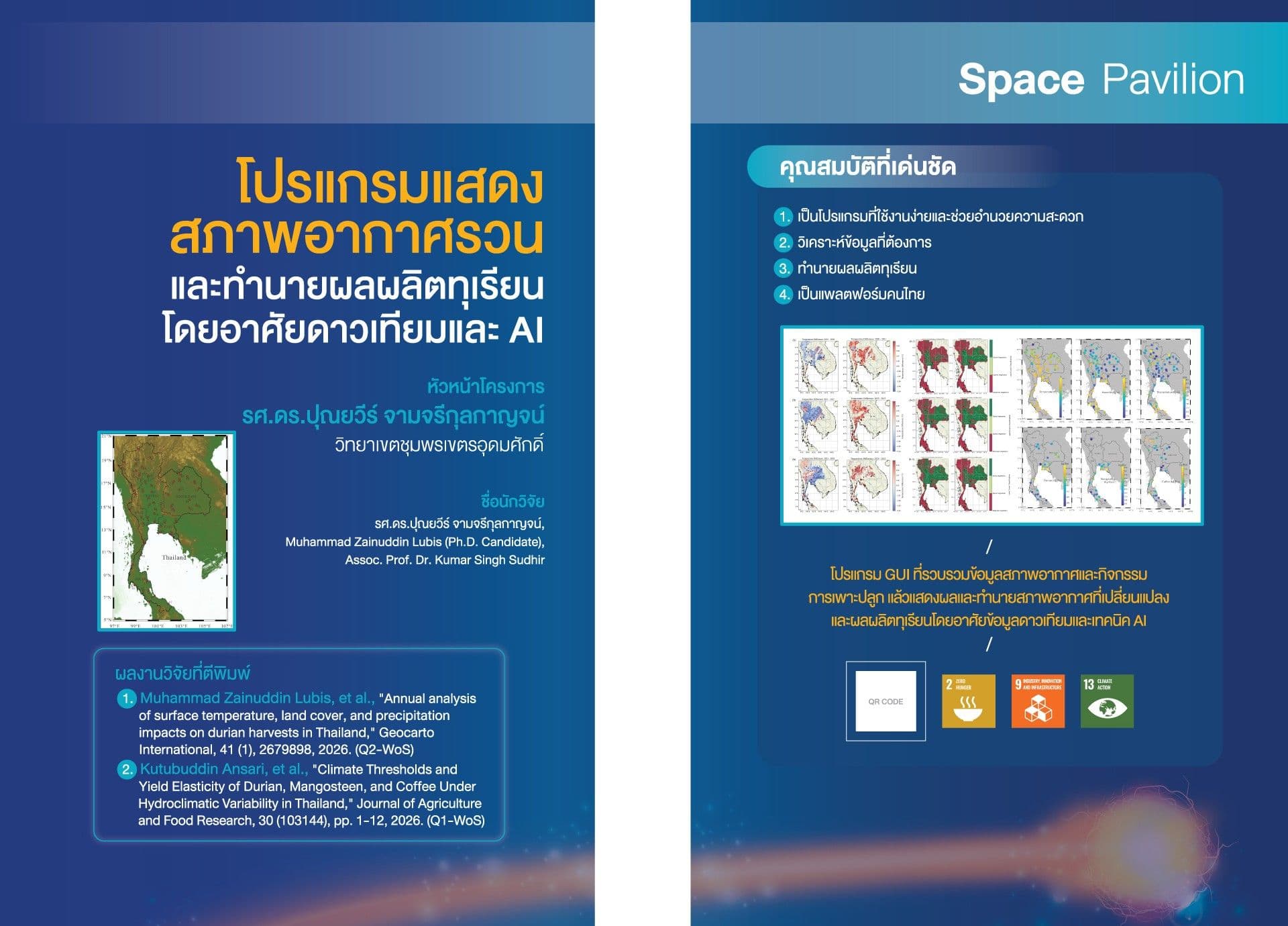
The presented GUI program is designed to display irregular weather conditions and predict durian yields using satellite data and artificial intelligence. It integrates satellite-based environmental monitoring, geospatial analysis, and AI-driven prediction with ground-based measurements, geospatial intelligence, environmental analytics, and machine learning. This integration supports scientific research, environmental monitoring, climate assessment, and data-driven decision-making. The GUI program provides analytical and predictive information based on datasets, algorithms, models, and parameters selected by the user. Predictions, classifications, and analytical results should be interpreted as model-based information, not as substitutes for professional judgment, field observations, official measurements, or regulatory information. Accuracy may vary depending on data quality, spatial and temporal resolution, model configuration, input variables, geographic conditions, and other analytical assumptions. Users are responsible for validating analytical results before applying them to operational, scientific, commercial, regulatory, or policy-related decisions.
คณะวิศวกรรมศาสตร์
-