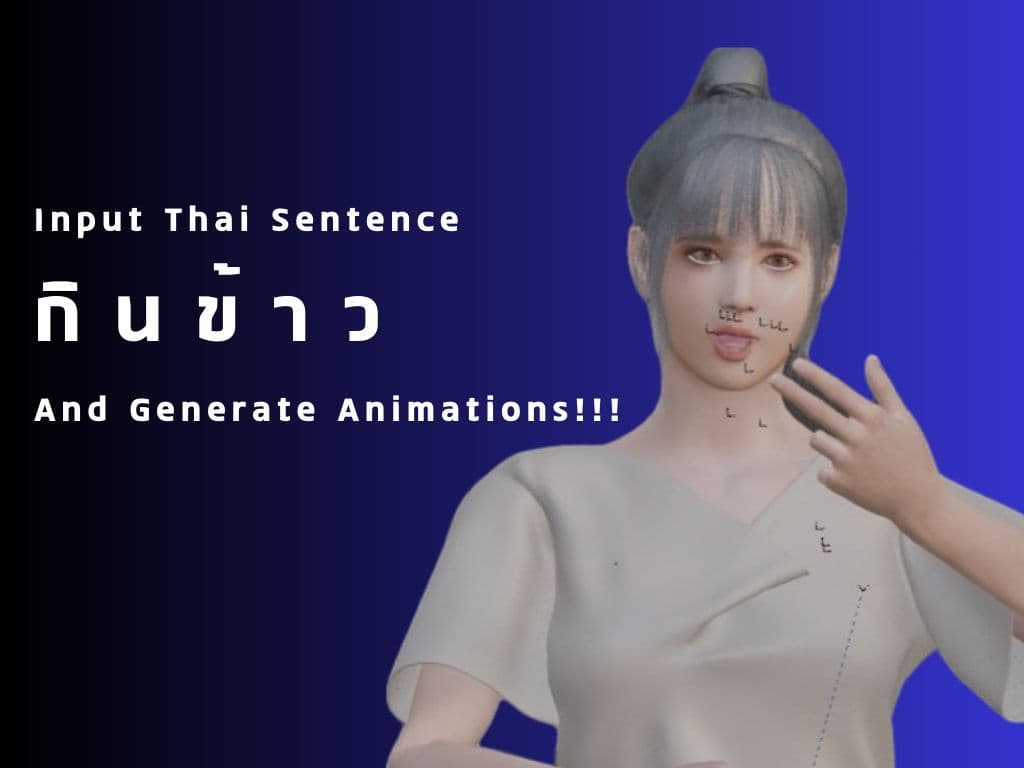
The Thai Sign Language Generation System aims to create a comprehensive 3D modeling and animation platform that translates Thai sentences into dynamic and accurate representations of Thai Sign Language (TSL) gestures. This project enhances communication for the Thai deaf community by leveraging a landmark-based approach using a Vector Quantized Variational Autoencoder (VQVAE) and a Large Language Model (LLM) for sign language generation. The system first trains a VQVAE encoder using landmark data extracted from sign videos, allowing it to learn compact latent representations of TSL gestures. These encoded representations are then used to generate additional landmark-based sign sequences, effectively expanding the training dataset using the BigSign ThaiPBS dataset. Once the dataset is augmented, an LLM is trained to output accurate landmark sequences from Thai text inputs, which are then used to animate a 3D model in Blender, ensuring fluid and natural TSL gestures. The project is implemented using Python, incorporating MediaPipe for landmark extraction, OpenCV for real-time image processing, and Blender’s Python API for 3D animation. By integrating AI, VQVAE-based encoding, and LLM-driven landmark generation, this system aspires to bridge the communication gap between written Thai text and expressive TSL gestures, providing the Thai deaf community with an interactive, real-time sign language animation platform.
การสื่อสารระหว่างบุคคลที่ได้ยินกับผู้พิการทางการได้ยินหรือบุคคลที่ไม่สามารถใช้คำพูดเป็นอุปสรรคสำคัญ โดยเฉพาะเมื่อบุคคลที่ได้ยินไม่มีความคุ้นเคยกับภาษามือไทย (TSL) ภาษามือไทยมีความซับซ้อนและต้องใช้การฝึกฝน ความตั้งใจ และประสบการณ์อย่างมากจึงจะเชี่ยวชาญได้ ซึ่งมักต้องใช้เวลาหลายเดือนของการศึกษาอย่างต่อเนื่อง แม้แต่เพื่อให้ได้ระดับความคล่องแคล่วขั้นพื้นฐาน สิ่งนี้ก่อให้เกิดช่องว่างด้านการเข้าถึง โดยเฉพาะกับผู้พิการทางการได้ยินที่อาจไม่เคยเรียนรู้ไวยากรณ์หรือภาษาไทยมาตรฐาน อาจพบความยากลำบากในการทำความเข้าใจข้อความภาษาไทยที่เขียน ซึ่งยิ่งทำให้การสื่อสารเป็นเรื่องที่ท้าทายยิ่งขึ้น แม้ว่าการใช้ข้อความเขียนอาจดูเหมือนเป็นทางออกหนึ่งของการสื่อสาร แต่ในความเป็นจริงอาจไม่ได้ผลเสมอไป เนื่องจากผู้พิการทางการได้ยินบางคนอาจไม่สามารถอ่านหรือทำความเข้าใจข้อความภาษาไทยได้อย่างคล่องแคล่ว อันเนื่องมาจากการไม่ได้สัมผัสกับไวยากรณ์ของภาษาพูดแบบดั้งเดิม นี่จึงเป็นเหตุผลสำคัญที่ต้องมีเครื่องมือแปลภาษาแบบเรียลไทม์ที่สามารถแปลงข้อความภาษาไทยเป็นภาษามือไทยได้อย่างถูกต้อง เพื่อช่วยลดช่องว่างนี้ และส่งเสริมให้เกิดปฏิสัมพันธ์ที่มีความหมายระหว่างผู้พิการทางการได้ยิน บุคคลที่ไม่สามารถใช้คำพูด และบุคคลที่ได้ยิน
วิทยาลัยการจัดการนวัตกรรมและอุตสาหกรรม
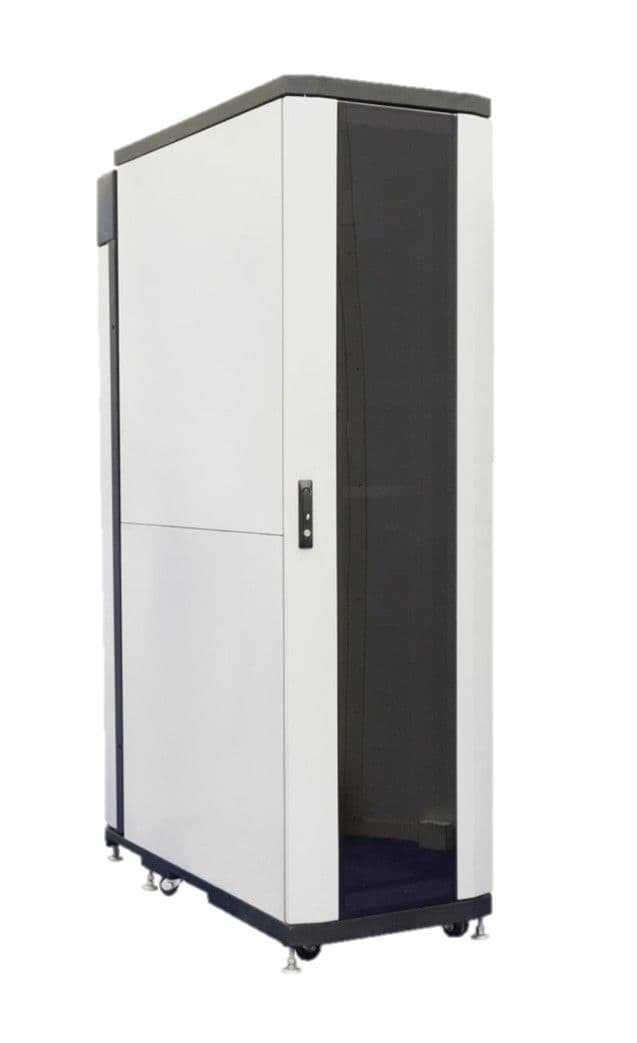
Air Rack is a product designed to address businesses with limited space and budget constraints for server rooms, cooling systems, and noise management. This system enables efficient use of IT equipment in open spaces, supporting both On-premise and On-cloud operations. It converts sensor data into digital information and displays it via a Dashboard, allowing users to monitor, analyze, and control the system remotely. Additionally, Air Rack significantly reduces power consumption and the costs associated with traditional server room management.
คณะสถาปัตยกรรม ศิลปะและการออกแบบ
The purpose of this research aims to guidelines the identity design for high-speed rail stations, which are divided into four steps: 1) Survey and analysis of identity at the high-speed train stations, including subway in Japan and Taiwan. 2) Comparison the perception of the environment by the questionnaire at BTS, MRT BL, Airport Rail Link (AERA1), and MRT PPL in Bangkok from passengers 800 passengers. 3) Survey and analysis the perception of identity at the MRT Blue Line by questionnaires 800 passengers at Wat Mangkorn, Sam Yod, Sanam Chai, and Itsaraphap stations. 4) To analysis with the descriptive statistics and one-way ANOVA. Study and survey of the high-speed rail environment from Bangkok to Nong Khai, then synthesize the identity design guidelines by 12 experts with structured interviews to summarize the conceptual framework for identity design for high-speed rail stations. The results shown that the identity of train stations in Japan and Taiwan is designed based on architectural and historical concepts that align with the local environment, society, and lifestyle near the stations. This design approach is evident at stations serving as significant tourist attractions and in the surrounding environment, including external buildings and nearby public transportation connections, as well as entrance and exit doors to the station. In summary, four types of identities have been identified: 1) The Identity Historical and Architectural 2) The Identity of Culture 3) The Identity from Cartoons and 4) The Identity of Art and Design
คณะเทคโนโลยีการเกษตร
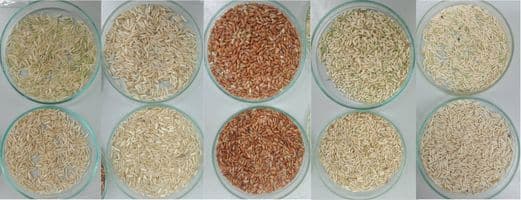
Rice is a salt-sensitive crop. The objective of this study was to evaluate the effect of salinity at flowering stage on physiological traits and yield of landrace rice. The experiment design was 4*10 Factorial in RCBD with 4 replications. Factor A was four salinity levels: control, 6, 12 and 16 dS/m; Factor B was 10 rice varieties. Data were collected on physiological traits and grain yield. The results showed that increasing salinity level decreased rice yield. The highest yield reduction was found when the rice received salt stress at 16 dS/m. In addition, rice varieties showed different yield performance when exposed to salt stress. In this found that Hom Yai variety had the lowest yield reduction when grown at 16 dS/m salinity level and did not differ from salt tolerant check variety.