

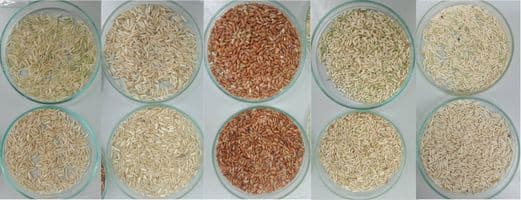
Rice is a salt-sensitive crop. The objective of this study was to evaluate the effect of salinity at flowering stage on physiological traits and yield of landrace rice. The experiment design was 4*10 Factorial in RCBD with 4 replications. Factor A was four salinity levels: control, 6, 12 and 16 dS/m; Factor B was 10 rice varieties. Data were collected on physiological traits and grain yield. The results showed that increasing salinity level decreased rice yield. The highest yield reduction was found when the rice received salt stress at 16 dS/m. In addition, rice varieties showed different yield performance when exposed to salt stress. In this found that Hom Yai variety had the lowest yield reduction when grown at 16 dS/m salinity level and did not differ from salt tolerant check variety.
การผลิตข้าวในประเทศไทยยังคงประสบปัญหาเกี่ยวกับสภาพพื้นที่ปลูกข้าวที่ไม่เหมาะสมต่อการเจริญเติบโต ซึ่งทำให้ผลผลิตของข้าวลดลง เช่น ปัญหาดินเค็ม โดยดินเค็มคือดินที่มีปริมาณเกลือที่ละลายน้ำได้ดีอยู่ในสารละลายดินสูงมากจนมีผลกระทบต่อการเจริญเติบโตและการสร้างผลผลิตของพืช อีกทั้งในปัจจุบัน สภาวะโลกร้อนมีความรุนแรงมากขึ้น และมีผลต่อเนื่องทำให้ความเครียดจากความเค็มมีความรุนแรงมากขึ้นด้วย การใช้ข้าวสายพันธุ์ที่มีความทนเค็มเป็นอีกวิธีที่จะช่วยแก้ปัญหาได้อย่างยั่งยืน ดังนั้นในการศึกษาครั้งนี้จึงสนใจศึกษาความเครียดเค็มในระยะออกดอกของข้าวที่ต่อเนื่องไปจนถึงระยะเก็บเกี่ยว โดยทำการศึกษาในพันธุ์ข้าวพื้นเมือง 6 พันธุ์ที่ผ่านการคัดเลือกแล้วว่าทนต่อความเค็มในระยะกล้าเปรียบเทียบกับข้าวพันธุ์ทนเค็มมาตรฐาน Pokkali และพันธุ์การค้า KDML105 ซึ่งผลจากการวิจัยที่ได้ในครั้งนี้สามารถนำไปเป็นข้อมูลพื้นฐานเพื่อใช้ในการปรับปรุงพันธุ์ข้าวให้มีความสามารถในการทนต่อสภาวะเครียดที่เกิดจากดินเค็ม และเป็นการคัดเลือกพันธุ์ข้าวที่มีศักยภาพในการทนเค็ม ตลอดจนส่งเสริมให้เกษตรกรปลูกในพื้นที่ที่กำลังประสบปัญหาจากสภาวะดินเค็มต่อไป
คณะเทคโนโลยีการเกษตร
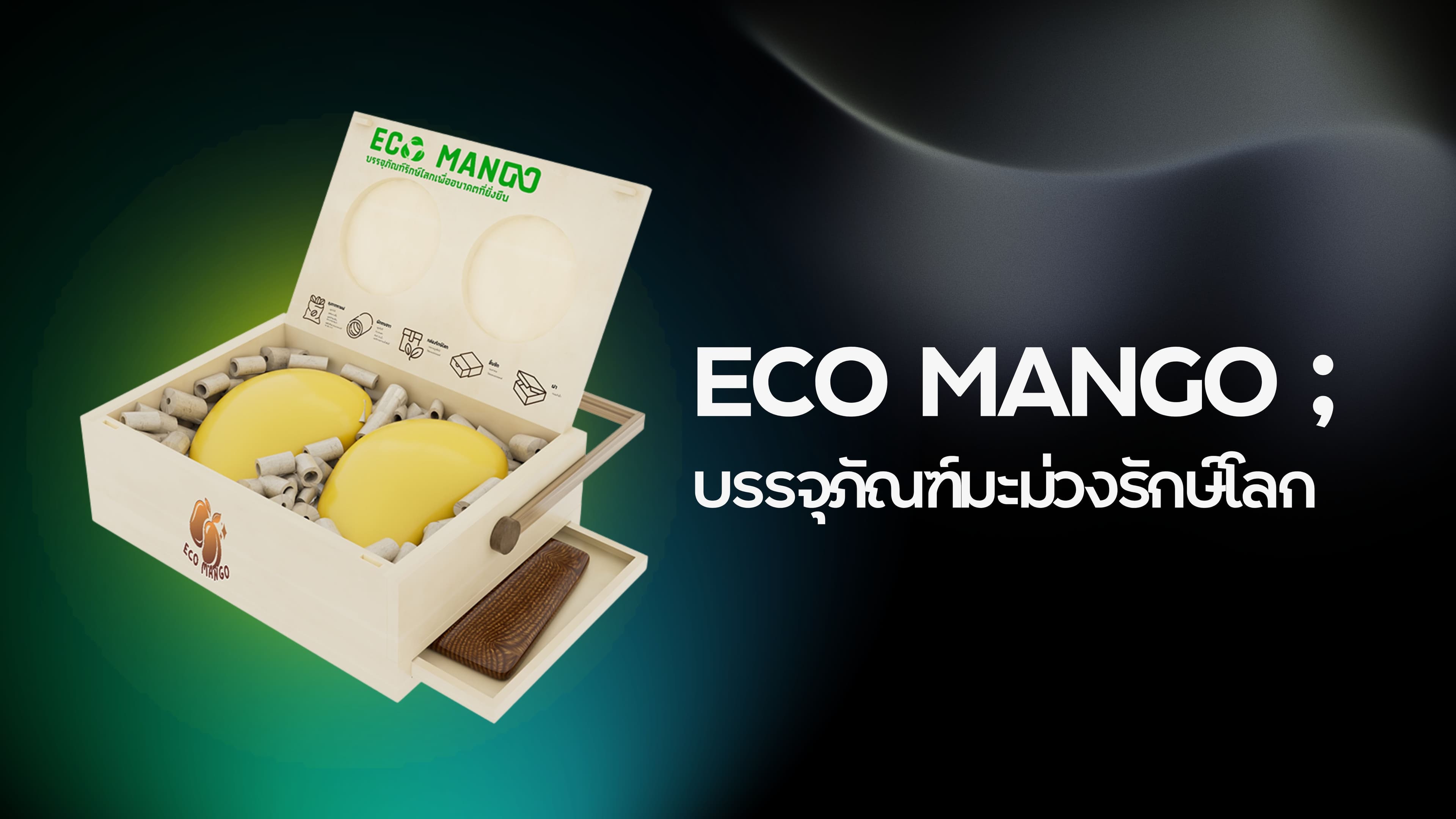
"Eco Mango Pack: Eco-friendly Packaging for a Sustainable Future" focuses on developing innovative packaging for Nam Dok Mai mangoes, considering fruit safety, shelf life, and environmental impact. The selected materials include a box made from coconut husk, and dry water hyacinth stems have been utilized as internal cushioning to enhance shock resistance. Additionally, dried coffee grounds are incorporated into the packaging to extend the mango's shelf life. The design also takes into account the needs of small-scale farmers, making the packaging suitable for community enterprise production and reducing production costs. This project aims to add value to Thai agricultural products, support the circular economy concept, and promote the use of environmentally friendly materials in the packaging industry.

วิทยาเขตชุมพรเขตรอุดมศักดิ์
Traditional Thong Yip dessert, or locally known as Khee Man dessert, is a dessert made from flour made from yellow rice.

คณะอุตสาหกรรมอาหาร
Oral disintegrating films (ODFs) can dissolve in the mouth instantly upon contact with saliva, without the need for water. This study aimed to investigate the effect of sorbitol concentration on the properties of oral disintegrating films containing Capsicum Oleoresin extract, which has properties that stimulate saliva secretion, making swallowing easier. The film was developed to address difficulties in swallowing, especially for individuals with dysphagia. The films were prepared using different concentrations of sorbitol and tested for rheological properties, mechanical properties, moisture content, free water content, thickness, disintegration time, contact angle, color, and antioxidant activity. The results indicated that sorbitol played a key role in increasing the flexibility and reducing the brittleness of the films. Additionally, an optimal concentration of sorbitol helped maintain the stability of the Capsicum extract and enhanced its efficacy in stimulating saliva secretion, thereby making swallowing more convenient and reducing oral friction. The films developed in this study demonstrate potential as an alternative for individuals with swallowing difficulties.