
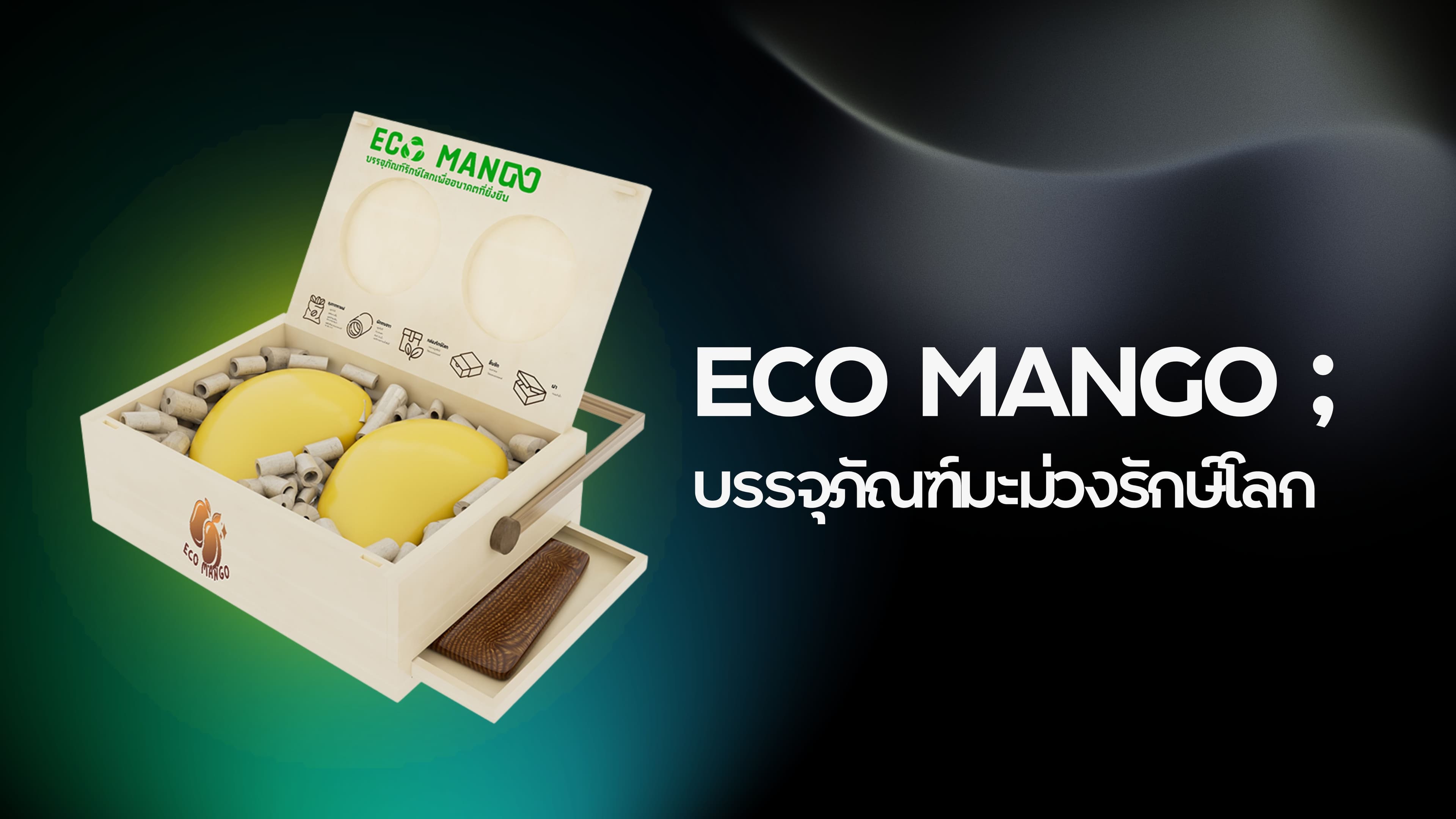
"Eco Mango Pack: Eco-friendly Packaging for a Sustainable Future" focuses on developing innovative packaging for Nam Dok Mai mangoes, considering fruit safety, shelf life, and environmental impact. The selected materials include a box made from coconut husk, and dry water hyacinth stems have been utilized as internal cushioning to enhance shock resistance. Additionally, dried coffee grounds are incorporated into the packaging to extend the mango's shelf life. The design also takes into account the needs of small-scale farmers, making the packaging suitable for community enterprise production and reducing production costs. This project aims to add value to Thai agricultural products, support the circular economy concept, and promote the use of environmentally friendly materials in the packaging industry.
มะม่วงน้ำดอกไม้เป็นผลไม้เศรษฐกิจสำคัญของประเทศไทยที่มีมูลค่าการส่งออกสูง โดยเฉพาะในตลาดต่างประเทศที่ให้ความสำคัญกับคุณภาพของผลไม้และมาตรฐานบรรจุภัณฑ์ อย่างไรก็ตาม ปัญหาหลักที่พบในกระบวนการขนส่งและจำหน่ายมะม่วง ได้แก่ ความเสียหายจากแรงกระแทก การเน่าเสียก่อนถึงมือผู้บริโภค และการปนเปื้อนจากแมลงหรือสารเคมี ทำให้เกิดการสูญเสียผลผลิตและลดโอกาสในการแข่งขันของเกษตรกรไทยในตลาดโลก ปัจจุบัน แนวโน้มของอุตสาหกรรมบรรจุภัณฑ์มุ่งเน้นไปที่การใช้ วัสดุที่เป็นมิตรต่อสิ่งแวดล้อม (Eco-friendly Packaging) ตามหลักเศรษฐกิจหมุนเวียน (Circular Economy) และการลดการใช้พลาสติกที่ไม่สามารถย่อยสลายได้ โครงงาน "อีโคแมงโก้แพ็ค: บรรจุภัณฑ์รักษ์โลกเพื่ออนาคตที่ยั่งยืน" จึงถูกพัฒนาขึ้นเพื่อเป็นแนวทางในการออกแบบบรรจุภัณฑ์สำหรับมะม่วงน้ำดอกไม้ที่ มีความแข็งแรง ป้องกันแรงกระแทก ลดการปนเปื้อนจากแมลง และช่วยยืดอายุการเก็บรักษาผลไม้ โครงงานนี้นำเสนอการใช้ กระดาษลูกฟูกกันกระแทกและเศษยางพารา ซึ่งเป็นวัสดุที่หาได้ง่ายในประเทศไทย และสามารถนำมาใช้เป็นวัสดุรองรับภายในบรรจุภัณฑ์เพื่อลดแรงกระแทก นอกจากนี้ ยังออกแบบให้เกษตรกรสามารถผลิตและใช้งานได้จริงในระดับ วิสาหกิจชุมชน เพื่อลดต้นทุนและเพิ่มมูลค่าให้กับผลิตภัณฑ์มะม่วงน้ำดอกไม้ของไทย โครงการนี้ไม่เพียงช่วยพัฒนาอุตสาหกรรมบรรจุภัณฑ์เกษตร แต่ยังช่วยส่งเสริมการใช้วัสดุที่เป็นมิตรต่อสิ่งแวดล้อม ลดขยะพลาสติก และสนับสนุนการใช้ทรัพยากรอย่างคุ้มค่าในภาคการเกษตรของประเทศ ความสำคัญของโครงงาน 1. ช่วยลดการสูญเสียผลผลิตจากการขนส่งและจำหน่าย โดยพัฒนาบรรจุภัณฑ์ที่ช่วยป้องกันการช้ำและการเสียหายของมะม่วงน้ำดอกไม้ 2. ส่งเสริมการใช้วัสดุทางเลือกที่เป็นมิตรต่อสิ่งแวดล้อม เพื่อลดการใช้บรรจุภัณฑ์พลาสติกและสนับสนุนเศรษฐกิจหมุนเวียน 3. เพิ่มมูลค่าของผลิตภัณฑ์เกษตรไทย โดยช่วยให้มะม่วงน้ำดอกไม้สามารถรักษาคุณภาพได้ดีขึ้น และเพิ่มโอกาสในการแข่งขันในตลาดโลก 4. สนับสนุนเกษตรกรและวิสาหกิจชุมชน โดยออกแบบบรรจุภัณฑ์ที่สามารถผลิตได้เอง ลดต้นทุน และเพิ่มโอกาสทางธุรกิจ โครงงานนี้จึงเป็นแนวทางหนึ่งในการพัฒนาอุตสาหกรรมบรรจุภัณฑ์เพื่อการเกษตรของไทยให้สามารถเติบโตได้อย่างยั่งยืน ทั้งในด้านเศรษฐกิจ สังคม และสิ่งแวดล้อม
คณะเทคโนโลยีการเกษตร
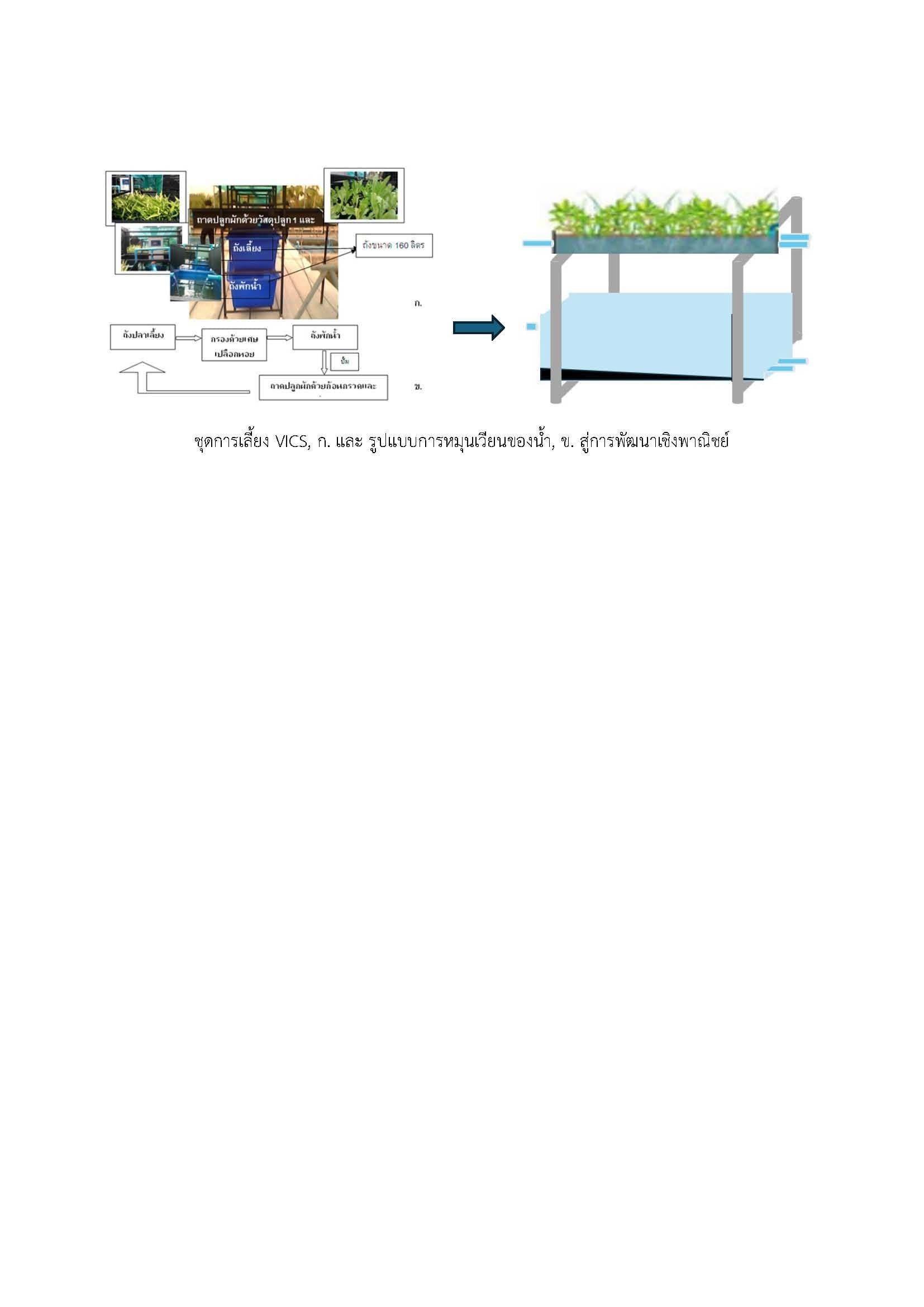
The innovation of the vertical aquaponics system for rearing golden apple snails integrating with vegetable cultivation by using substrates to water treatment. The system aims to maximize the use of vertical space, save water, and produce safe vegetables for consumption or commercial purposes, and to support living things. The golden apple snail excretes wastes/leftover food scraps that are filtered on the substrates used for water treatment. Meanwhile, natural bacteria help change these wastes into nutrients that plants can use. Therefore, the system is environmentally friendly.

คณะวิศวกรรมศาสตร์
Artificial intelligence for agriculture and environment is a collection of significant models for enviromental friendly Thailand development. The models create with machine learning and deep learning by Near infrared spectroscopy research center for agricultural and food products, including: Determining the nutrient needs (N P K) of durian trees by measuring durian leaves using a non-destructive technique using artificial intelligence, Identification of combustion properties of biomass from fast-growing trees and agricultural residues using non-destructive techniques combined with artificial intelligence, and Evaluation of global warming due to biomass combustion using non-destructive techniques using artificial intelligence. The basic technology used is Near infrared Fourier transform spectroscopy technology which measurement and output display can be done quickly without chemical, no requirement for special expert, and measurement price per sample is very low. But the instrument cannot be produced in Thailand.
คณะเทคโนโลยีการเกษตร
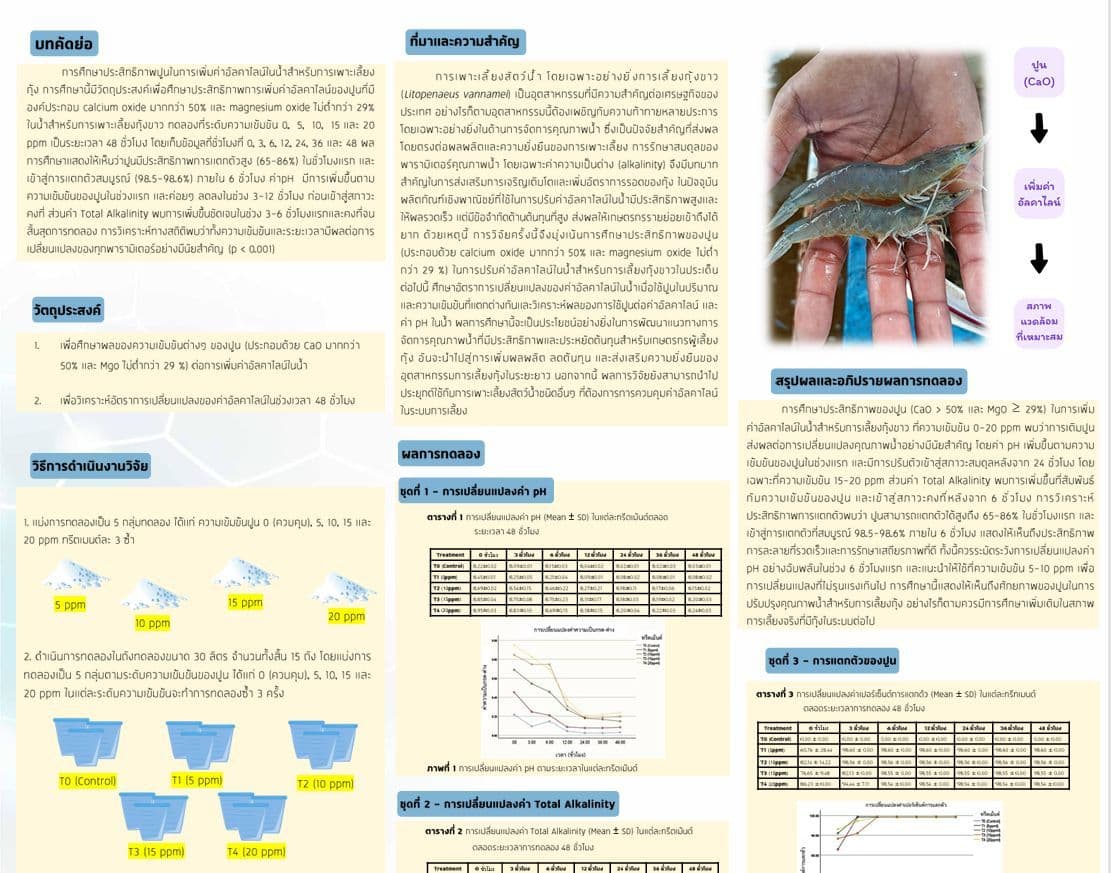
This study aimed to investigate the efficacy of lime containing more than 50% calcium oxide and not less than 29% magnesium oxide in enhancing water alkalinity for Pacific White Shrimp (Litopenaeus vannamei) aquaculture. The experiment was conducted at concentrations of 0, 5, 10, 15, and 20 ppm over a 48-hour period, with data collected at 0, 3, 6, 12, 24, 36, and 48 hours. Results demonstrated that lime exhibited high dissolution efficiency (65-86%) within the first hour and reached complete dissolution (98.5-98.6%) within 6 hours. The pH values initially increased proportionally with lime concentration, gradually decreased during 3-12 hours, before stabilizing. Total alkalinity showed significant increase during the first 3-6 hours and remained stable until the end of the experiment. Statistical analysis revealed that both concentration and time significantly affected all parameters (p < 0.001)