

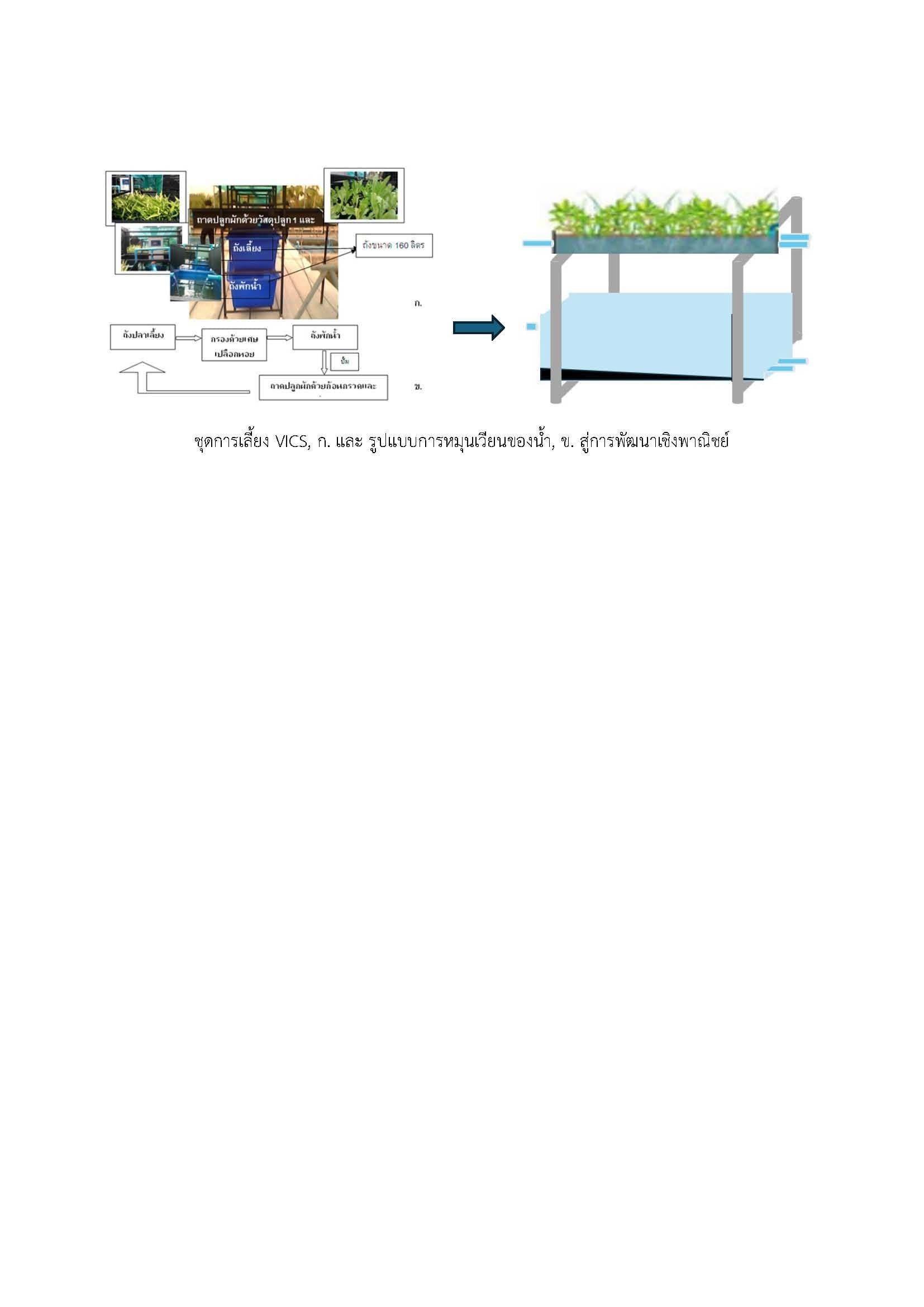
The innovation of the vertical aquaponics system for rearing golden apple snails integrating with vegetable cultivation by using substrates to water treatment. The system aims to maximize the use of vertical space, save water, and produce safe vegetables for consumption or commercial purposes, and to support living things. The golden apple snail excretes wastes/leftover food scraps that are filtered on the substrates used for water treatment. Meanwhile, natural bacteria help change these wastes into nutrients that plants can use. Therefore, the system is environmentally friendly.
นวัตกรรมชุดการเลี้ยงหอยหวานทองในแนวตั้งด้วยระบบอควาโปนิกส์ได้พัฒนาต่อเนื่องจากระบบปิดแบบผสมผสานในแนวดิ่ง (Vertical Integrated Closed System :VICS)” หรือ VICS เป็นแบบจำลองของการเกษตรแบบผสมผสานระหว่างการเลี้ยงปลาร่วมกับการเลี้ยงการปลูกพืช ซึ่งเป็นการนวัตกรรมการเกษตรที่มีการใช้ประโยชน์จากของเสียจากการเลี้ยงปลามาผ่านการบำบัดน้ำด้วยก้อนกรวดและวัสดุอื่นๆ ในขณะเดียวกันระบบบำบัดน้ำนั้นใช้ประโยชน์ในการการปลูกผัก จึงเป็นรูปแบบการเกษตรที่เป็นมิตรต่อสิ่งแวดล้อม (Environmental friendly) โดยระบบจำลองดังกล่าวเป็นการใช้ประโยชน์สูงสุดจากพื้นที่ที่มีอย่างจำกัด ใช้น้ำได้อย่างเต็มประสิทธิภาพ รวมทั้งสามารถผลิตสัตว์น้ำควบคู่ผลผลิตผักที่ปลอดสารพิษได้ ระบบ VICS จึงเป็นนวัตกรรมที่สนองตอบโจทย์สังคมเมืองที่มีพื้นที่จำกัด ประหยัดทรัพยากรน้ำในการเลี้ยงปลาและปลูกพืช ไม่ปล่อยของเสียสู่ภายนอก และเป็นมิตรต่อสิ่งแวดล้อม รวมทั้งเป็นการสร้างรายได้ให้แก่ชุมชน บ้านเรือน หรือหน่วยงานราชการต่างๆ ที่มีพื้นที่จำกัด โครงงานของการทดสอบระบบที่ผ่านมา เช่น ผลของระบบปลูกผักต่อการเจริญเติบโตของผักในระบบอะควาโปนิกส์ วัสดุปลูกที่เหมาะสมสำหรับการผลิตผักกินใบในระบบอะควาโปนิกส์ ผลของการเลี้ยงปลานิลในระบบ VICS ที่มีรูปแบบแตกต่างกันต่อการแสดงออกของโปรตีนความเครียด ผลของความหนาแน่นต่อการเติบโตของปลานิลที่เลี้ยงในระบบ VICS ผลของการเลี้ยงปลานิลในระบบ VICS ในรูปแบบที่แตกต่างกันต่อการเปลี่ยนแปลงของคุณภาพน้ำ การศึกษาวิธีการปฏิบัติที่ดีของการเลี้ยงปลานิลแดงในระบบ VICS ผลของความหนาแน่นต่อการแสดงออกของลักษณะเชิงปริมาณในปลานิลที่เลี้ยงในระบบ VICS ผลของความหนาแน่นต่อการเติบโตของปลานิลที่เลี้ยงในระบบหมุนเวียนน้ำแบบปิด และการเลี้ยงปลานิลแบบผสมผสานในแนวดิ่งด้วยระบบปิด เป็นต้น จึงนำมาสู่การพัฒนานวัตกรรมชุดการเลี้ยงหอยหวานทองในแนวตั้งเชิงพาณิชย์ที่เป็นมิตรต่อสิ่งแวดล้อมด้วยระบบอควาโปนิกส์

คณะสถาปัตยกรรม ศิลปะและการออกแบบ
-
คณะวิทยาศาสตร์
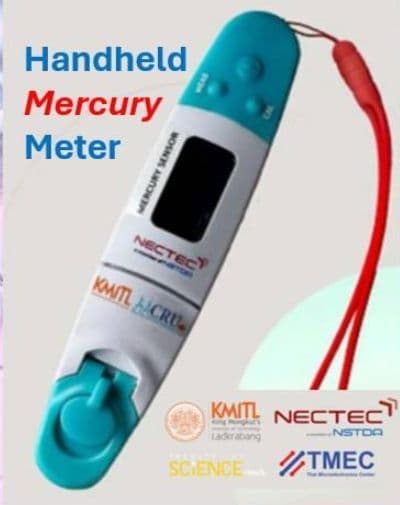
This work presents the fabrication of the handheld meter for potentiometric detection of Hg (II). The meter was constructed based on using an ion-sensitive field-effect transistor (ISFET) platform. The developed meter provides high accuracy and precision (%Recovery was in the range of 92.55 - 109.32 and %RSD was 2.38). It was applied to the analysis of cosmetic samples. The results by the developed electrode were not significantly different at a 95% confidence level compared to the results by using ICP-OES.
คณะครุศาสตร์อุตสาหกรรมและเทคโนโลยี
This study aims to develop a board game on mushrooms production with cooperative learning and to examine its effects on the learning achievement of third-year vocational certificate students in the mushroom production course. The research instruments included a board game designed using the Educational Boardgame Design Canvas framework, comprising 60 cards (7 main cards, 24 secondary cards, and 29 additional cards). The board game was implemented alongside the Learning Together (LT) cooperative learning approach, following the ASSURE Model for instructional media design. Pre- and post-tests, along with a satisfaction questionnaire, were used to assess student performance and engagement. The findings revealed a statistically significant improvement at the .05 level in students' learning achievement before and after using the board game. At Ratchaburi College of Agriculture and Technology, the post-test mean score was 16.00, compared to a pre-test mean score of 12.50. Student satisfaction with the learning approach was at the highest level, with an average satisfaction score of 4.69. To further refine and expand the study, the board game was also implemented at the Uthai Thani College of Agriculture and Technology, where similar improvements were observed. The post-test mean score increased to 11.21, compared to a pre-test mean score of 7.48, confirming the research hypothesis. Student satisfaction at Uthai Thani College of Agriculture and Technology was also high, with an average satisfaction score of 4.39. These results suggest that integrating board games with cooperative learning effectively enhances student achievement and engagement in agricultural education.