The purpose of this research aims to guidelines the identity design for high-speed rail stations, which are divided into four steps: 1) Survey and analysis of identity at the high-speed train stations, including subway in Japan and Taiwan. 2) Comparison the perception of the environment by the questionnaire at BTS, MRT BL, Airport Rail Link (AERA1), and MRT PPL in Bangkok from passengers 800 passengers. 3) Survey and analysis the perception of identity at the MRT Blue Line by questionnaires 800 passengers at Wat Mangkorn, Sam Yod, Sanam Chai, and Itsaraphap stations. 4) To analysis with the descriptive statistics and one-way ANOVA. Study and survey of the high-speed rail environment from Bangkok to Nong Khai, then synthesize the identity design guidelines by 12 experts with structured interviews to summarize the conceptual framework for identity design for high-speed rail stations. The results shown that the identity of train stations in Japan and Taiwan is designed based on architectural and historical concepts that align with the local environment, society, and lifestyle near the stations. This design approach is evident at stations serving as significant tourist attractions and in the surrounding environment, including external buildings and nearby public transportation connections, as well as entrance and exit doors to the station. In summary, four types of identities have been identified: 1) The Identity Historical and Architectural 2) The Identity of Culture 3) The Identity from Cartoons and 4) The Identity of Art and Design
อัตลักษณ์บริเวณสถานีรถไฟเป็นองค์ประกอบสำคัญในการสร้างความแตกต่างในพื้นที่สาธารณะ และสะท้อนความเป็นตัวตนเฉพาะของชุมชน สังคม และวัฒนธรรมท้องถิ่น การนำเสนออัตลักษณ์ที่ชัดเจนผ่านการใช้ภาษาภาพส่งผลต่อการจดจำและการรับรู้ของผู้ใช้บริการ อีกทั้งยังเป็นองค์ประกอบสำคัญในการสร้างความรู้สึกนึกถึงถิ่นที่ (Sense of Place) ซึ่งเป็นการหยั่งรากลึกของการดำรงอยู่ในการศึกษาย่านชุมชน โดยการเชื่อมโยงระหว่างกายภาพและนามธรรมเข้าด้วยกัน (Marisa and Nopadon, 2022) การพัฒนาการออกแบบอัตลักษณ์บริเวณสถานีรถไฟมีต้นแบบจากต่างประเทศ ญี่ปุ่นเป็นประเทศแรกที่ริเริ่มแนวคิดและพัฒนารถไฟความเร็วสูงจนเป็นต้นแบบให้กับระบบรถไฟความเร็วสูงทั่วโลก รถไฟความเร็วสูงสายแรก คือ รถไฟชินกันเซ็นสาย Tokaido Shinkansen ที่เปิดให้บริการในเดือนตุลาคม พ.ศ. 2507 เชื่อมต่อระหว่างกรุงโตเกียวและนครโอซาก้า มีระยะทาง 553 กิโลเมตร ต่อมาในประเทศไต้หวันซึ่งมีรถไฟความเร็วสูงที่ใช้ขบวนรถไฟด้วยเทคโนโลยีจากประเทศญี่ปุ่น (ในขณะที่โครงสร้างพื้นฐานและระบบยังเป็นของเยอรมนี) ซึ่งมีความน่าสนใจด้วยเทคโนโลยีทั้งเอเชียและยุโรปโดยมีความเร็วติดอันดับ 1 ใน 10 ของโลก (กรมการขนส่งทางราง. 2561) รวมไปถึงรถไฟฟ้าที่เชื่อมต่อระบบขนส่งมวลชนในเมือง โดยสถานีรถไฟได้ถูกแบ่งออกตามพื้นที่การใช้งานของสถานี ได้แก่ ทางเข้าออก จุดประชาสัมพันธ์จำหน่ายตั๋ว ผนัง ทางเดิน เสา ป้ายบอกทาง แผนที่ และชานชลา จากพื้นที่ดังกล่าวนอกจากสัญลักษณ์บอกทาง ยังพบว่า บริเวณสถานีมีอัตลักษณ์รูปแบบตามถิ่นที่อยู่ของชุมชนบริเวณนั้น ช่วยสร้างความรู้สึกนึกคิด การรับรู้ต่อผู้ใช้บริการ โดยจากข้อมูลดังกล่าวจะเป็นแนวทางการศึกษาเปรียบเทียบด้านองค์ประกอบของสถานี รูปแบบอัตลักษณ์ การนำอัตลักษณ์ไปใช้บริเวณสถานี ด้วยอนาคตอันใกล้นี้ประเทศไทยกำลังจะมีรถไฟความเร็วสูงให้ใช้บริการ ในปัจจุบัน อยู่ในกระบวนการก่อสร้าง การศึกษาแนวทางการออกแบบอัตลักษณ์บริเวณสถานีรถไฟความเร็วสูง จึงเป็นสิ่งที่สามารถสร้างสรรค์ให้มีคุณค่าที่จะบอกถึงความเป็นตัวตน ถิ่นฐานเฉพาะ รวมถึงสถานที่สำคัญที่อยู่ใกล้เคียงสถานี เป็นการสร้างคุณค่าทางวัฒนธรรม รวมไปถึงการส่งเสริมการท่องเที่ยว และเป็นการยกระดับคุณภาพชีวิต สถานีรถไฟในประเทศไทยมีคุณค่าทางสถาปัตยกรรมที่โดดเด่น ด้วยการออกแบบที่สอดคล้องกับการใช้สอยและสภาพภูมิอากาศร้อนชื้น รวมถึงความงามในลักษณะพื้นถิ่น (ปริญญา ชูแก้ว, 2554) ตามหลักการกระบวนการสัมพันธ์การเรียนรู้พื้นที่ สภาพแวดล้อมต้องมีลักษณะที่เอื้อต่อการสร้างจินตภาพได้ง่าย เช่น การใช้ภูมิสัญลักษณ์ที่เป็นสัญญาณชี้แนะที่ช่วยในการรับรู้และเข้าใจ (วิมลสิทธิ หรยางกูร, 2556) การวิจัยนี้มีวัตถุประสงค์เพื่อศึกษาและสำรวจอัตลักษณ์บริเวณสถานีรถไฟความเร็วสูงและรถไฟฟ้าในประเทศญี่ปุ่น ไต้หวัน และประเทศไทย โดยมุ่งเน้นการเปรียบเทียบรูปแบบอัตลักษณ์ พื้นที่ของสถานี วิธีการสร้างสรรค์ และการรับรู้จากผู้ใช้บริการ เพื่อนำมาพัฒนาแนวทางการออกแบบอัตลักษณ์สำหรับสถานีรถไฟความเร็วสูงสายกรุงเทพฯ-หนองคาย ซึ่งเป็นโครงการความร่วมมือระหว่างไทย-จีน โดยผลการศึกษาที่ได้จะเป็นประโยชน์ต่อการพัฒนาการออกแบบอัตลักษณ์ของสถานีในด้านต่างๆ อาทิ การสร้างสัญลักษณ์ประจำสถานี การออกแบบตัวนำโชค (Mascot) การพัฒนาของที่ระลึก ตลอดจนสินค้าและบริการที่เกี่ยวข้องกับระบบรถไฟความเร็วสูง นอกจากนี้ ยังเป็นการส่งเสริมการท่องเที่ยว ยกระดับคุณภาพชีวิต และสร้างคุณค่าทางวัฒนธรรมให้กับชุมชนและสังคมไทย อันจะนำไปสู่การพัฒนาประเทศในยุคไทยแลนด์ 4.0 อย่างยั่งยืน
คณะสถาปัตยกรรม ศิลปะและการออกแบบ
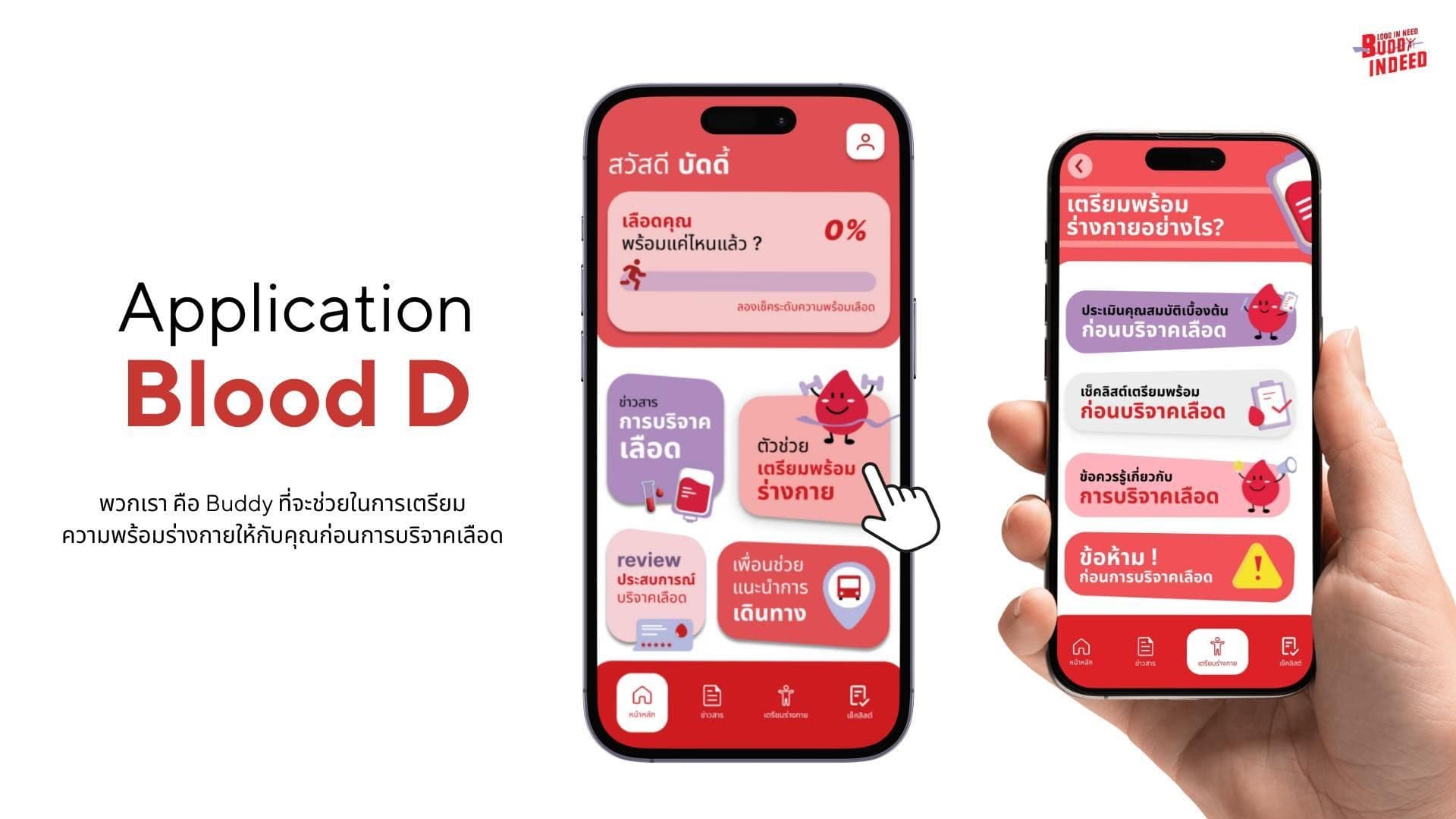
In the world of blood donation, there are 2 types of people: those who donate blood and those who don't. Most campaigners emphasize how to persuade more people to donate blood and recruit more new blood donors. We believe that even though such focus is important, there're more critical aspects that might have been neglected, which is: for those who have already made up their minds to be blood doners, will they be successful in donating when the time comes? According to our studies, only 63 % of attempted doners are successful. Regrettably, 37 % has to go home disappointed as their bodies are not fit for the conditions required by Red Cross medical staff at blood donation centers (which include some most basic preparations such as low-fat food intake and 8-hours sleep on the night before). Our campaign, ‘Blood in Need, Buddy Indeed’, focuses on 2 aspects. Firstly, to persuade more people to donate blood. Secondly, for those who have made up their minds to donate blood, we will provide necessary support (both body and mind) so that they are fully prepared and successful in donating blood when the time comes via networks of systems, staffs and the newly designed and prototype of the application ‘Blood D’. Our campaign covers the whole ‘before/during/after’ experience of users (as blood doners). Support includes assessment of their current condition whether they are within the requirement of Red Cross Blood Bank. ‘Blood D’ will also provide relevant information on blood donating events, such as locations, and time booking. Once sign-up, the application “Blood D” will sent friendly reminder and clear infographic on how to prepare their bodies as daily notifications during the 7 days countdown. This is to ensure that the users’ blood will be ‘D’ (homophone of the Thai word ‘ดี’ which mean ‘good’ and at the same time playing on the word ‘ Buddy’) or be the ‘good blood’ that can save lives for those in need. After organizing 4 blood donation events both within and outside the KMITL. The numbers of successful blood doners have increased from 63 % to 78 % (this number is the average of 4 events, with the most successful event of 89%). The campaign has won the first runner up in national blood donation campaign competition. It is highly anticipated that once the application “Blood D” is fully launched, it will help increase the amount of blood collected up to 15% with the same numbers of existing doners.
คณะอุตสาหกรรมอาหาร
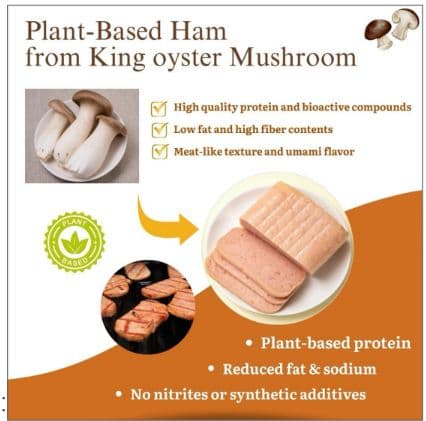
This project therefore aims to develop a "Plant-based Ham Product Prototype" using king oyster mushrooms (Pleurotus eryngii) as the primary ingredient — a natural raw material with strong potential in terms of nutritional value and meat-like texture. The project also seeks to improve the production process to achieve a product with satisfactory textural and flavor characteristics, meeting the needs of a new generation of health- and environmentally-conscious consumers, while providing a foundation for further commercial development within the alternative protein market.
คณะวิศวกรรมศาสตร์
This research focuses on the design and development of a high-power converter to regulate energy supply from solar cells (Photovoltaic: PV) to a hydrogen production unit (Electrolyzer), which is a crucial component in advancing renewable energy in alignment with the RE100 initiative. Specifically, this study targets Green Hydrogen, which is generated through the water electrolysis process using clean energy from solar cells, ensuring zero emissions and environmental sustainability. The proposed converter includes of a Three-Level NPC Inverter, transformer, Full-Bridge Rectifier, and LC filter to enhance the power quality supplied to the electrolyzer. The system's design and simulation were conducted using MATLAB and Simulink to evaluate circuit performance and analyze operational efficiency. Simulation was conducted using MATLAB and Simulink to evaluate circuit performance and analyze operational efficiency. Additionally, a microcontroller-based control system is integrated with a gate driver circuit to optimize the electrolysis process by reducing power losses. This proposed converter effectively converts PV energy into suitable voltage and current levels for the electrolyzer while maintaining high hydrogen production efficiency.