
Discover the ultimate innovations of the future developed by Thai researchers! Meet the latest technology from KMITL that will transform our way of life and industry.

คณะวิทยาศาสตร์
Bacteriocins are microbial peptides that demonstrate potency against pathogens. This study evaluated the inhibitory effects on pathogens and characterized the bacteriogenomic profile of strain TKP1-5, isolated from the feces of Anas platyrhynchos domesticus. Strain TKP1-5 was characterized using phenotypic traits, 16S rRNA sequencing, and Whole-Genome Sequencing (WGS). It exhibited growth in the presence of 2-6% NaCl, temperatures of 25-45°C, and pH levels ranging from 3 to 9. Based on ANIb, ANIm, and dDDH values, strain TKP1-5 was identified as Lactococcus lactis. Whole genome analysis revealed that strain TKP1-5 harbors the Nisin Z peptide gene cluster with a bit-score of 114.775. The antimicrobial spectrum of bacteriocin TKP1-5 showed inhibitory effects against pathogenic bacteria including Pediococcus pentosaceus JCM5885, Listeria monocytogenes ATCC 19115, Enterococcus faecalis JCM 5803T, Salmonella Typhimurium ATCC 13311ᵀ, Aeromonas hydrophila B1 AhB1, Streptococcus agalactiae 1611 and Streptococcus cowan I. Genomic analysis confirmed L. lactis TKP1-5 as a non-human pathogen without antibiotic resistance genes or plasmids. Furthermore, L. lactis TKP1-5 contains potential genes associated with various probiotic properties and health benefits. This suggests that L. lactis TKP1-5, with its antibacterial activity and probiotic potential, could be a promising candidate for further research and application in the food industry.
คณะเทคโนโลยีการเกษตร
-
วิทยาเขตชุมพรเขตรอุดมศักดิ์
This project aims to design and develop an eye-tracking system to facilitate communication for paralyzed immobile patients. The system is designed to enable patients to convey their needs to caregivers or family members by detecting and tracking eye movements using the Tobii Eye Tracker 5 device. This approach serves as an alternative communication method, replacing the physical movement or speech of paralyzed patients. The system effectively detects and tracks eye movements at a distance of 55 to 85 centimeters and is designed for installation on a computer to ensure ease of use. The program interface consists of three main sections: (1) a set of emotions, (2) a set of needs, and (3) a set of additional needs. It supports input from a virtual keyboard in both Thai and English and allows users to specify additional needs through eye-tracking-enabled typing. Furthermore, the system can generate synthetic speech for text that is difficult to pronounce aloud, send notification messages via the Line application, and store usage data in a database presented in a dashboard format. System testing revealed that the optimal detection distance ranges from 65 to 75 centimeters, as this range yields an error rate of no more than 1 percent. The system accurately responds to eye movements for communication through sound within 3 seconds when interacting with various function buttons. This eye-tracking system effectively enables paralyzed immobile patients to communicate their emotions and needs, facilitating better understanding and interaction between patients and their caregivers or family members.
คณะอุตสาหกรรมอาหาร
Spent coffee grounds (SCG) are a byproduct of the coffee brewing process, and their quantity continues to increase due to the growing global coffee consumption. SCG contain beneficial compounds such as polysaccharides, dietary fibers, and antioxidants, which can be utilized in various applications, including prebiotic extraction. This study focuses on extracting prebiotics from SCG using acid hydrolysis and enzymatic hydrolysis methods to evaluate their potential in promoting the growth of beneficial gut microorganisms. The expected results of this research include adding value to coffee industry waste, reducing organic waste, and providing a sustainable approach to developing prebiotic products for use in the food and health industries. Furthermore, this study aligns with sustainable resource utilization and environmentally friendly practices.
คณะวิศวกรรมศาสตร์
This project focuses on the development of an automatic license plate recognition system that supports both standard and special license plates in Thailand. By utilizing Machine Learning technology, the system enhances the efficiency of license plate reading. It can process data from both images and videos. Users can register and subscribe to the service, allowing them to send data for processing through RESTful API, WebSocket, and registered IP cameras.
คณะวิทยาศาสตร์
The species Enterococcus lactis is closely related to E. faecium and is known for its beneficial and probiotic effects. In this study, strain RRS4 was isolated from Raphanus sativus Linn. and identified based on both phenotypic and genotypic characteristics. Strain RRS4 exhibited cell viability in environments with 2-8% NaCl, pH ranging from 4 to 9, and temperatures between 4°C and 45°C. Through comprehensive genomic analysis, strain RRS4 was confirmed to be E. lactis. E. lactis RRS4 demonstrated inhibitory effects against Vancomycin-resistant E. faecalis JCM 5803. Safety assessments via in silico methods, including KEGG annotation, indicated the absence of virulent and undesirable genes in E. lactis RRS4. VirulenceFinder analysis aligned virulence-related genes with those from three strains of E. lactis and four strains of E. faecium. While antibiotic resistance genes were found to be conserved, they did not correlate with key pathogenicity traits. Furthermore, safety evaluations highlighted that E. lactis RRS4 is generally safe, despite the presence of genes associated with antibiotic resistance. Lastly, we propose guidelines for assessing the safety of microbial strains using whole-genome analysis. These findings represent advancements in probiotic research.
คณะวิศวกรรมศาสตร์
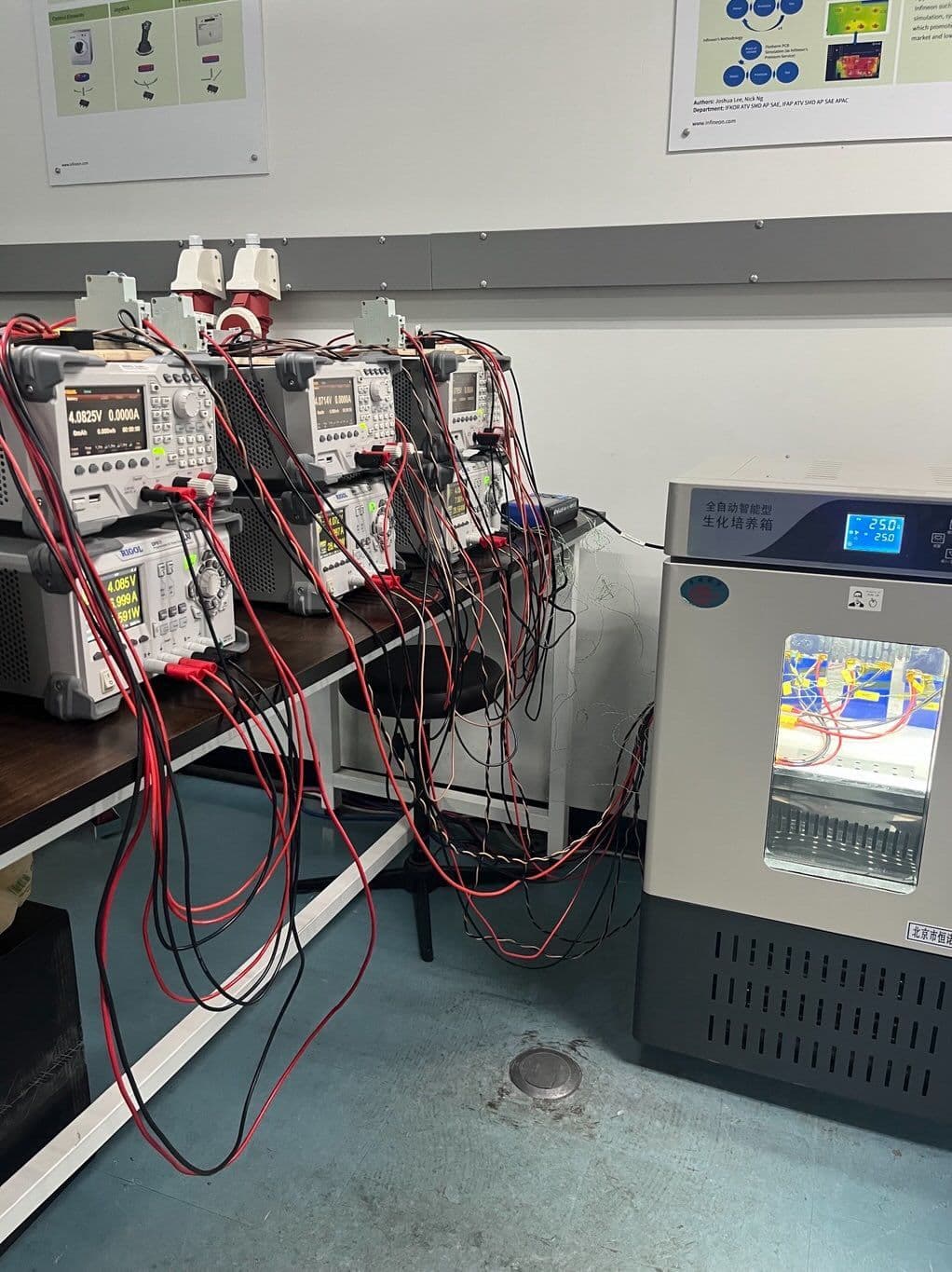
Currently, lithium batteries are widely used in electronic devices and electric vehicles, making the estimation of their State of Health (SOH) crucial. Accurate SOH estimation helps extend battery lifespan, reduce maintenance costs, and prevent safety issues such as overheating or explosions. This project aims to study and analyze mathematical models of batteries and develop SOH estimation techniques using Neural Networks to enhance accuracy and evaluation speed. The experiment involved collecting charge and discharge data from three lithium battery cells under controlled temperature conditions while maintaining a constant current. The current, voltage, and time data were recorded and analyzed to determine the battery capacity for each cycle. These data were then used to train a Neural Network model. The results demonstrated an effective method for predicting battery health status. The outcomes of this project can contribute to the development of a Battery Management System (BMS) that improves battery efficiency and longevity. Additionally, it provides a foundation for applying artificial intelligence techniques in the energy sector effectively.
คณะวิทยาศาสตร์
This study aimed to investigate the effectiveness of extracts from moringa seeds, roselle seeds, and tamarind seeds as coagulants to improve water quality in surface water sources. Extracts from these seeds serve as environmentally friendly coagulants and provide alternative options for enhancing surface water quality. The turbidity of surface water sources ranged between 14 and 24 NTU. The coagulation process used the Jar Test method, where the moringa seed, roselle seed, and tamarind seed extracts functioned as both primary coagulants and coagulant aids. In the preparation process, the seeds were finely ground and extracted using a 0.5-M sodium chloride (NaCl) solution. These extracts were then applied as coagulants to reduce turbidity and enhance water quality, with each concentration tested in 300 ml of water. The results indicated that the most effective way to remove turbidity using 2,000 mg/L of moringa seed extract, achieving a turbidity reduction of approximately 73.19% at a cost of 0.0309 baht per 300 ml of water. Followed by Tamarind seed extract, with a concentration of 4,000 mg/L, followed with a turbidity reduction of approximately 56.75% at a cost of 0.0933 baht per 300 ml. Lastly, roselle seed extract at 6,000 mg/L achieved a turbidity reduction of approximately 32.67% at a cost of 0.0567 baht per 300 ml of water.
คณะอุตสาหกรรมอาหาร
The consumption of plant-based products has been gaining popularity as consumers become more health-conscious and aware of environmental impacts. The food industry has been developing meat analogs with properties similar to conventional meat. This study investigates the chemical and physical properties of chickpea-based meat analog burgers and hybrid burgers containing both chickpeas and pork, using the sous-vide cooking method. This technique helps maintain food quality in terms of texture, moisture retention, and nutritional value. The experiment examined various properties of both types of burgers, including cooking loss, water holding capacity, shear force, pH value, and color analysis. Additionally, sensory evaluation was conducted to assess taste, texture, and overall consumer preference. The findings will provide insights into the optimal sous-vide conditions for producing plant-based and hybrid burgers with desirable quality characteristics that meet the needs of health-conscious consumers. This study serves as a valuable guideline for the food industry in developing high-nutritional-value alternative protein products while reducing meat consumption. By incorporating plant-based ingredients, it helps minimize environmental impact and promotes sustainability in food production. The research is significant in both food science and the development of healthier, competitive food products for the future market.