

This study aimed to investigate the effectiveness of extracts from moringa seeds, roselle seeds, and tamarind seeds as coagulants to improve water quality in surface water sources. Extracts from these seeds serve as environmentally friendly coagulants and provide alternative options for enhancing surface water quality. The turbidity of surface water sources ranged between 14 and 24 NTU. The coagulation process used the Jar Test method, where the moringa seed, roselle seed, and tamarind seed extracts functioned as both primary coagulants and coagulant aids. In the preparation process, the seeds were finely ground and extracted using a 0.5-M sodium chloride (NaCl) solution. These extracts were then applied as coagulants to reduce turbidity and enhance water quality, with each concentration tested in 300 ml of water. The results indicated that the most effective way to remove turbidity using 2,000 mg/L of moringa seed extract, achieving a turbidity reduction of approximately 73.19% at a cost of 0.0309 baht per 300 ml of water. Followed by Tamarind seed extract, with a concentration of 4,000 mg/L, followed with a turbidity reduction of approximately 56.75% at a cost of 0.0933 baht per 300 ml. Lastly, roselle seed extract at 6,000 mg/L achieved a turbidity reduction of approximately 32.67% at a cost of 0.0567 baht per 300 ml of water.
น้ำเป็นทรัพยากรที่มีความสำคัญต่อมนุษย์ใช้สำหรับการอุปโภคบริโภค ใช้ในภาคเกษตร ภาคอุตสาหกรรมและภาคอื่น ๆ โดยน้ำจืดในธรรมชาติสามารถแยกออกเป็น 2 ประเภทใหญ่ ๆ คือ น้ำผิวดิน (Surface Water) และน้ำใต้ดิน (Ground Water) โดยลักษณะสำคัญของน้ำผิวดินและน้ำใต้ดิน คือ น้ำผิวดินจะมีความขุ่นและมีปริมาณแร่ธาตุที่เจือปนอยู่น้อย ในขณะที่น้ำใต้ดินจะมีความใสกว่าและมีแร่ธาตุเจือปนอยู่มาก น้ำผิวดินเป็นแหล่งน้ำที่นำมาใช้ประโยชน์กันมากเนื่องจากมีปริมาณน้ำค่อนข้างมากเพียงพอต่อความต้องการและไม่ต้องมีการขุดเจาะผ่านชั้นหินชั้นดินที่ยากและราคาค่อนข้างสูง คุณภาพน้ำโดยทั่วไปจะขึ้นอยู่กับลักษณะของดิน หินและบริเวณโดยรอบที่น้ำไหลผ่านส่วนมากจะมีคุณภาพทางกายภาพที่ไม่ดีมากนัก คือ มีความขุ่น กลิ่น สี รส น้ำที่มีความขุ่นมักจะพบสารแขวนลอยเป็นจำนวนมากทำให้ไม่เป็นผลดี น้ำที่มีความขุ่นมากจะส่งผลทำให้ต้นไม้หรือพืชผักไม่สามารถเจริญเติบโตได้ดีพอ ความขุ่นยังสามารถทำให้อุณหภูมิของน้ำเปลี่ยนแปลงทำให้อุณหภูมิของน้ำสูงกว่าปกติ ส่งผลต่อปริมาณการละลายของออกซิเจนในน้ำ ทำให้เป็นอันตรายต่อพืช ดังนั้นก่อนนำน้ำผิวดินมาใช้ประโยชน์ควรจะมีการปรับปรุงคุณภาพน้ำก่อนเพื่อกำจัดสิ่งเจือปนในน้ำให้เหลือน้อยที่สุดและผ่านมาตรฐานคุณภาพน้ำก่อนนำมาใช้ประโยชน์ ในปัจจุบันผักผลไม้ไทยมีหลากหลายสายพันธุ์ที่ได้ออกสู่ตลาด ทำให้มีผู้คนนิยมรับประทานผักผลไม้เป็นจำนวนมาก แต่หลังจากรับประทานผักผลไม้นั้นเสร็จแล้วผู้คนนั้นจะทำการทิ้งเปลือกและเมล็ดของผักผลไม้ทำให้เกิดขยะจากเมล็ดผลไม้เป็นจำนวนมาก ซึ่งขยะจากเมล็ดผักผลไม้ที่ถูกทิ้งเป็นจำนวนมากนั้นไม่ส่งผลให้เกิดประโยชน์ใด ๆ และไม่มีมูลค่า ผู้วิจัยจึงมีความคิดที่จะนำเมล็ดผักผลไม้ที่เป็นขยะมาเพิ่มมูลค่าและทำให้เกิดประโยชน์สูงสุด โดยนำเมล็ดผักผลไม้มาใช้ประโยชน์เป็นสารช่วยตกตะกอนในน้ำ จึงได้มีการนำผลไม้ที่หาง่ายในท้องถิ่น เช่น เมล็ดมะรุม เมล็ดกระเจี๊ยบแดงและเมล็ดมะขาม มาศึกษาประสิทธิภาพในการตกตะกอนความขุ่นและสีในน้ำเพื่อการปรับปรุงคุณภาพน้ำให้ดีขึ้น

คณะวิศวกรรมศาสตร์
This capstone project develops an AI-powered chatbot to address cybersecurity vulnerabilities, leveraging the Common Vulnerabilities and Exposures (CVE) system and the Common Vulnerability Scoring System (CVSS). The chatbot will provide accessible and informative support for understanding and mitigating these vulnerabilities, potentially leading to significant improvements in cybersecurity practices.
คณะวิศวกรรมศาสตร์
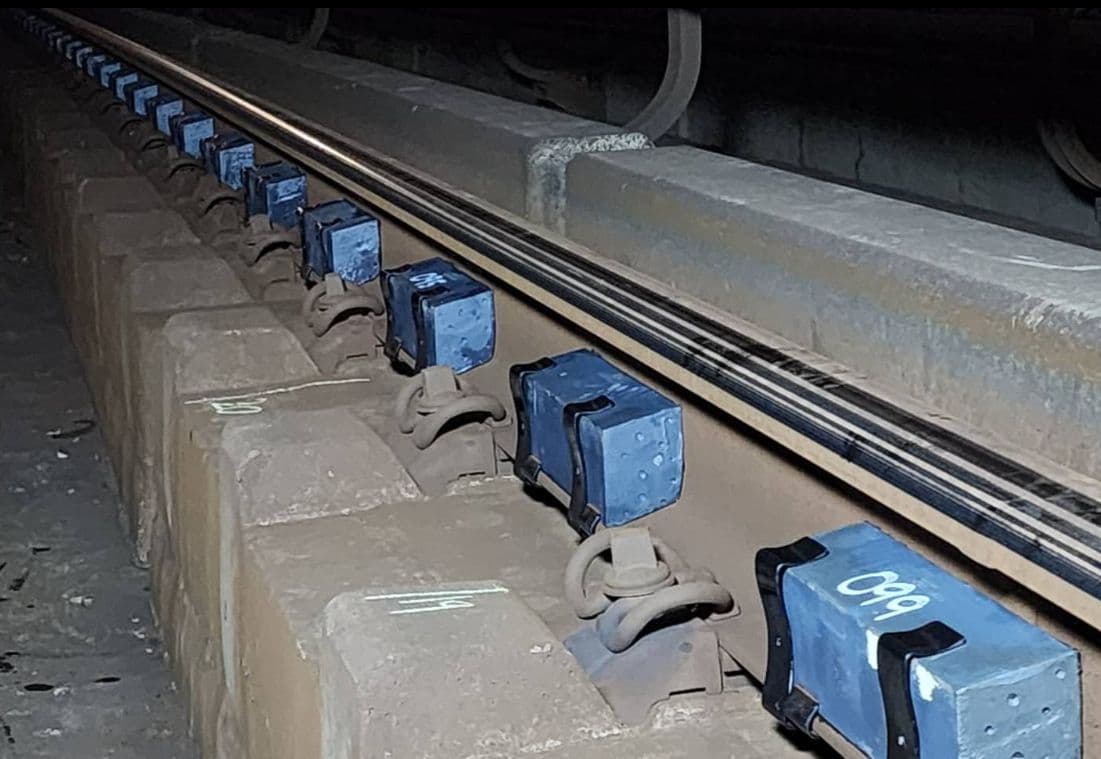
Nowadays, rail transportation has a significant impact on people's lives and economic growth. Consequently, the number of rail systems being built around our country has dramatically increased. This process causes various types of pollution, such as noise and rail-way vibration, which can badly affect the life of citizens who live nearby. The most popular way to solve this problem recently is to decrease the noise from the sound source or to adjust the vibration by attaching a Track Damper to the railway. This technique is being used in many countries especially in Europe and Australia because it is cheap and has high efficiency. The key piece called Track Dampers are made by AUT company’s Thailand for a period of time. The company produces Track Dampers for the owner of the technology so as to sell more than 300,000 pieces of it overseas. Furthermore, the demand of Track Dampers grows as the railway systems expand. Unfortunately, the imported synthetic materials, which are used to create Track Dampers, are made from environmentally unfriendly sources. As a result, this research aims to develop the product to be environmentally-safe by replacing some imported materials with Thai’s local content; which are natural rubber and rubber crumbs. Furthermore, the product will be added value by mounting with embedded sensors for real-time monitoring of track vibration, noise, and rail temperature. All embedded devices developed will sense, collect, and automatically send to cloud by wireless technology platform. The AI and IOT platform will also be developed for safety, security, and maintenance proposed of railway track system. However, in conducting research, there will be close collaboration with AUT company through design, production, and testing. The outcome of this research is to upgrade AUT company from tier 2 manufacturer (TRL 8-9) to tier 1 manufacturer (TRL 7-8) which will be served the Thailand competitiveness enhancing strategic goal.

คณะอุตสาหกรรมอาหาร
Most rice is consumed as cooked, milled rice, but a small portion is also ground into flour or separated into a starch fraction and used by the food industry as a gluten-free ingredient. This study aims to find out if different types of rice flour and starch, such as white and colored rice, could be used in industry. This study employs green modification techniques to slow down the digestion process by combining polyphenols with starch. Our initial study found that the raw colored rice has a lower glycemic index than other types of rice, such as brown or white rice. Another study that looked at how the quality of colored rice flour was changed by different methods also discovered that out of the six green methods (annealing, heat moisture treatment, ultrasound, pregelatinization, wet-microwave, and dry-microwave). It found that ultrasound improved the polyphenol bioaccessibility in the rice flour and reduced the digestion rate. The pregelatinization process led to the flour having high solubility and an estimated glycemic index. Different techniques affected the flour/starch quality in different ways. Therefore, for further industrial application, it could also be easier to select the method for food product based on their required techno-functional quality of flour/starch. In addition to the modification techniques, this study showed that the high bioaccessible polyphenol content and high polyphenol content in rice greatly slowed down the rate of digestion. This study also open for further exploring the possibility of using high polyphenol agricultural waste to modify starch and flour in a sustainable manner.