

Most rice is consumed as cooked, milled rice, but a small portion is also ground into flour or separated into a starch fraction and used by the food industry as a gluten-free ingredient. This study aims to find out if different types of rice flour and starch, such as white and colored rice, could be used in industry. This study employs green modification techniques to slow down the digestion process by combining polyphenols with starch. Our initial study found that the raw colored rice has a lower glycemic index than other types of rice, such as brown or white rice. Another study that looked at how the quality of colored rice flour was changed by different methods also discovered that out of the six green methods (annealing, heat moisture treatment, ultrasound, pregelatinization, wet-microwave, and dry-microwave). It found that ultrasound improved the polyphenol bioaccessibility in the rice flour and reduced the digestion rate. The pregelatinization process led to the flour having high solubility and an estimated glycemic index. Different techniques affected the flour/starch quality in different ways. Therefore, for further industrial application, it could also be easier to select the method for food product based on their required techno-functional quality of flour/starch. In addition to the modification techniques, this study showed that the high bioaccessible polyphenol content and high polyphenol content in rice greatly slowed down the rate of digestion. This study also open for further exploring the possibility of using high polyphenol agricultural waste to modify starch and flour in a sustainable manner.
Rice (Oryza sativa L.) is a crucial staple crop that supplies nutritional sustenance for half of the global population (Shao et al., 2018). Moreover, rice constitutes a significant commercial crop in Thailand, with its grains serving as a staple food, and a diverse array of rice types is present throughout the nation (Suebpongsang et al., 2020). Multiple rice types have been developed in Thailand, including colored/pigmented rice and non-pigmented rice, commonly referred to as brown and white rice, which can be utilized in many industries (Yamuangmorn & Prom, 2021). Furthermore, rice is regarded as a naturally gluten-free ingredient. Rice flour or starch can be utilized to create a variety of products, including cookies, bread, noodles, and crackers. Due to the elevated carbohydrate content in rice, most rice products are regarded as having a high glycemic index (GI). The link between polyphenols and digestive behavior has become a topic of attention, particularly for rice and its products. Researchers predominantly conducted comparisons of the features of pigmented rice and non-pigmented rice (with/without eGI) across various areas or types (Tangsrianugul et al., 2019; Verma & Srivastav, 2020; Waewkum & Singthong, 2021). Nevertheless, there remains a deficiency in information regarding the association between endogenous antioxidant qualities and other starch characteristics, which might be further considered for predicting the nutritional value of rice and for enhancing the foundational knowledge necessary for the development of rice products. The versatility of rice flour in industrial applications is primarily influenced by its physicochemical properties and usefulness. Unprocessed rice has limited utility and applicability (Iqbal et al., 2023). Consequently, novel techniques are necessary to enhance the quality of rice flours for further processing. Therefore, this research may offer essential insights for further investigation into select rice varieties and modification techniques for specific industrial applications by utilizing the starch-polyphenols complex concept.
คณะวิศวกรรมศาสตร์
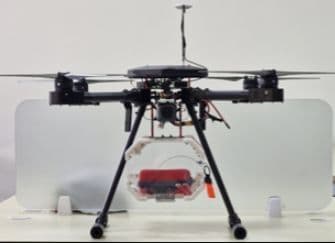
One of the most important aspects of responding to a medical case is the response time. In general, most fatalities are due to the patient not being able to reach the hands of the doctor in time. This also includes the arrival of medical equipment to the scene. The human brain will start to degrade in function after 3 minutes of oxygen starvation which conventional road transportation method first responders presently use is usually unable to reach the site in this golden 3 minutes, resulting in fatalities during transport or before the arrival of first responders at the scene. Therefore, medical equipment transport by fully autonomous aircraft is explored. This is done through drone deliveries which is much quicker than road methods as the equipment could be flown straight to the site as it is not affected by traffic, road conditions, and navigation. In this project, we will explore an aerial delivery system for medical equipment such as Automatic External Defibrillators (AEDs), First aid equipment, and other small requested medical devices. This will be done through a DJI drone platform and their SDK application. The main goal for this project is to decrease the response time by using an autonomous aerial drone to deliver medical equipment.

คณะเทคโนโลยีการเกษตร
Climate change affects agricultural systems worldwide, including Thailand, and may lead to reduced crop yields, impacting food security. Bambara groundnut is a crop with the potential to adapt to changing environments and can thrive in areas with limited resources. This research aims to study the impact of climate change on Bambara groundnut yields in Thailand using the DSSAT (Decision Support System for Agrotechnology Transfer) model, an important tool for predicting plant growth under various environmental conditions. This study utilizes climate data, soil composition, and genetic information of Bambara groundnut to simulate and analyze yield trends under future climate scenarios. Four study areas in Thailand were selected: Songkhla, Lampang, Yasothon, and Saraburi. The CSM-CROPGRO-Bambara groundnut model was used to assess the impact of changing temperature and rainfall on the growth and yield of Bambara groundnut. The results of this study are expected to provide farmers and researchers with valuable information for planning cultivation and managing peanut production in response to climate change. Additionally, the findings can help formulate policy guidelines to promote the cultivation of climate-resilient crops and support the country's food security.
คณะบริหารธุรกิจ
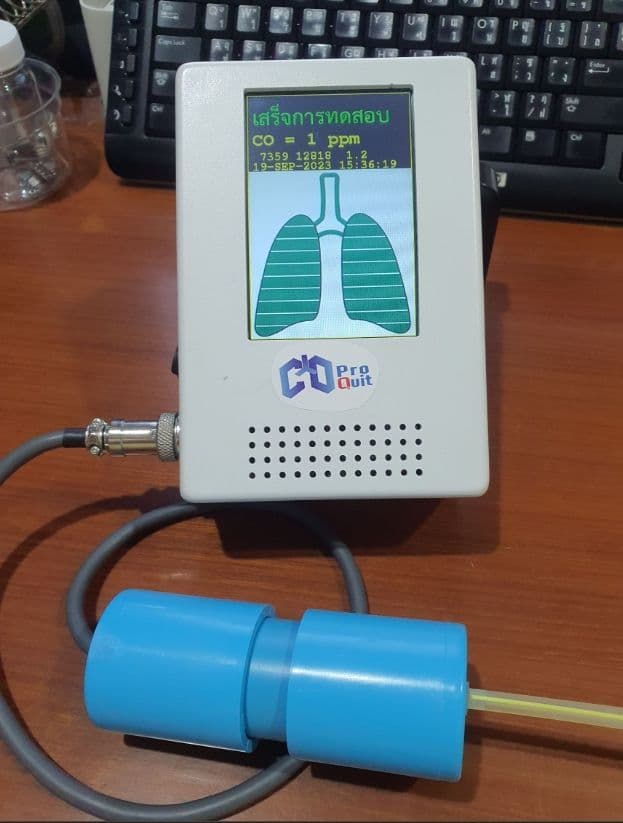
CO Breathalyzer with Voice Response is the device to measured the level of CO residual in a person's lung who consume tobacco. Measuring residual CO in human breath can identify the tobacco addiction level instead of measuring nicotine in blood.