

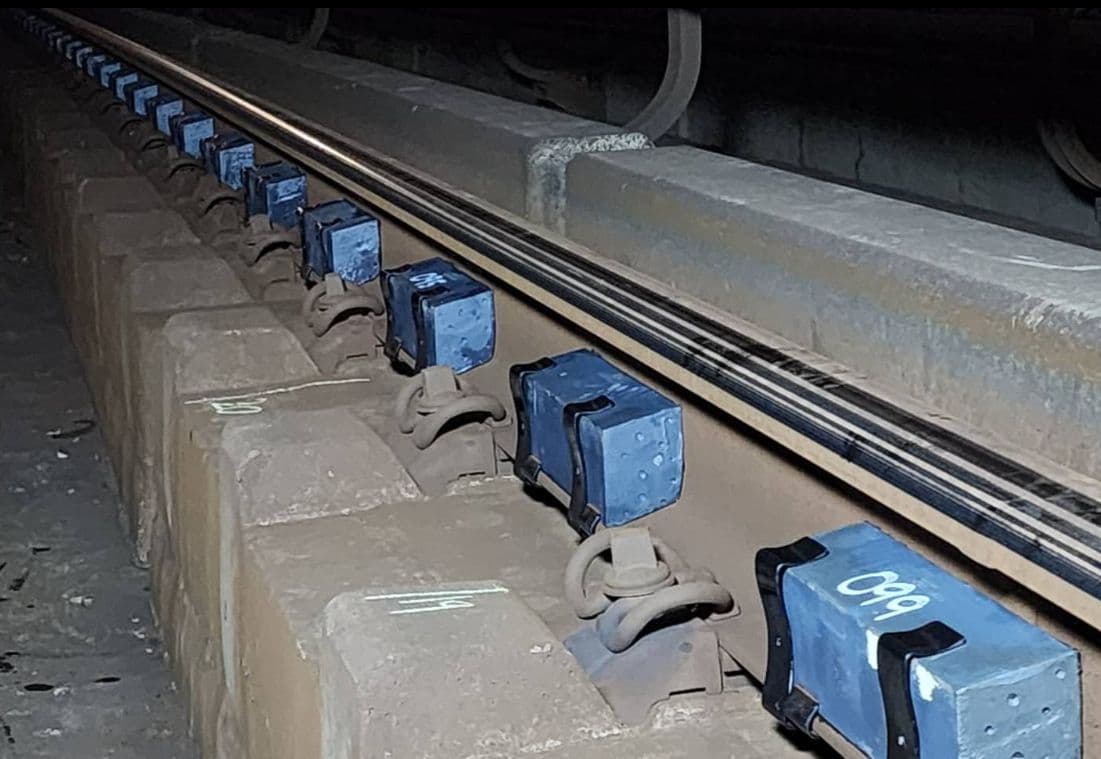
Nowadays, rail transportation has a significant impact on people's lives and economic growth. Consequently, the number of rail systems being built around our country has dramatically increased. This process causes various types of pollution, such as noise and rail-way vibration, which can badly affect the life of citizens who live nearby. The most popular way to solve this problem recently is to decrease the noise from the sound source or to adjust the vibration by attaching a Track Damper to the railway. This technique is being used in many countries especially in Europe and Australia because it is cheap and has high efficiency. The key piece called Track Dampers are made by AUT company’s Thailand for a period of time. The company produces Track Dampers for the owner of the technology so as to sell more than 300,000 pieces of it overseas. Furthermore, the demand of Track Dampers grows as the railway systems expand. Unfortunately, the imported synthetic materials, which are used to create Track Dampers, are made from environmentally unfriendly sources. As a result, this research aims to develop the product to be environmentally-safe by replacing some imported materials with Thai’s local content; which are natural rubber and rubber crumbs. Furthermore, the product will be added value by mounting with embedded sensors for real-time monitoring of track vibration, noise, and rail temperature. All embedded devices developed will sense, collect, and automatically send to cloud by wireless technology platform. The AI and IOT platform will also be developed for safety, security, and maintenance proposed of railway track system. However, in conducting research, there will be close collaboration with AUT company through design, production, and testing. The outcome of this research is to upgrade AUT company from tier 2 manufacturer (TRL 8-9) to tier 1 manufacturer (TRL 7-8) which will be served the Thailand competitiveness enhancing strategic goal.
ปัญหาด้านเสียงรบกวนนั้นถูกจัดเป็นหนึ่งในปัญหาด้านมลพิษที่ได้รับการร้องเรียนมากที่สุด มลพิษทางเสียงเกิดขึ้นได้จากหลายแหล่ง เช่น เสียงรบกวนอันเกิด จากกิจกรรม เสียงรบกวนจากการก่อสร้าง เสียงรบกวนจากการผลิตในโรงงานอุตสาหกรรม เสียงรบกวนจากการคมนาคมขนส่งทางน้ำ ทางอากาศ และทางถนน รวมถึงการขนส่งระบบรางด้วยเช่นกัน มีการทำการศึกษาและจัดทำมาตรฐานการตรวจวัดรวมถึงพิจารณาออกกฎหมายที่เกี่ยวข้องกับเสียงรบกวนในระบบรางเพื่อบังคับใช้ตามความเหมาะสมในแต่ละประเทศ ในประเทศไทยมีความเป็นได้สูงที่จะประสบปัญหาเสียงรบกวนในลักษณะเดียวกันกับประเทศอื่นๆ เหมือนกัน ในระบบยานพาหนะระบบรางจะมักเกิดเสียงรบกวน 2 ส่วน ได้แก่ เสียงรบกวนภายนอก (Exterior Noise) และเสียงรบกวนภายใน (Interior Noise) โดยเสียงรบกวนภายนอกนั้นหมายถึงเสียงรบกวนจากแหล่งกำเนิด แหล่งกำเนิดเสียงหลัก ๆ ของพาหนะระบบรางนั้นอาจเกิดได้จากปฏิสัมพันธ์ระหว่างล้อและรางในขณะวิ่งบนรางตรง (Rolling Noise), เกิดจากการจากการเสียดสีแบบลื่นไถลระหว่างล้อและรางเมื่อพาหนะทำการลากภาระ(Traction Noise) หรือเป็นเสียงรบกวนอันเกิดจากอากาศพลศาสตร์ (Aerodynamic Noise) อย่างไรก็ตามการควบคุมการเกิดเสียงรบกวนในรูปแบบต่าง ๆ ที่กล่าวไว้ข้างต้นนั้นย่อมต้องการเทคนิคการควบคุมเสียงรบกวนที่แตกต่างกันไป แท่งสลายพลังงาน (Rail Damper) ซึ่งถูกนำเสนอในโครงการวิจัยนี้โดยมีความเหมาะสมในการลดเสียงรบกวนในส่วนของ Rolling Noise และ Traction Noise เป็นสำคัญ สำหรับผู้ประกอบการในประเทศไทยที่เป็นผู้ผลิตและประกอบแท่งสลายพลังงาน (Rail Damper) อาทิ Silent TrackTM มียอดการผลิตสูงและมีแนวโน้มที่จะมียอดสั่งผลิตเพิ่มขึ้นเรื่อย ๆ อย่างไรก็ตามการรับจ้างผลิตให้เจ้าของเทคโนโลยีเพียงอย่างเดียวทำให้ไม่สามารถสร้างมูลค่าเพิ่มของตัวผลิตภัณฑ์ได้ อีกทั้งวัสดุที่ใช้ทำจากวัสดุสังเคราะห์ที่ต้องนำเข้ามา 100% ดังนั้นโครงการวิจัยนี้จึงมีวัตถุประสงค์เพื่อพัฒนาต่อยอดจากผลิตภัณฑ์ดังกล่าวโดยเพิ่มความเป็นมิตรกับสิ่งแวดล้อมด้วยการแทนที่เนื้อวัสดุบางอย่างด้วยวัสดุ ในประเทศสองชนิด คือ ยางพาราและเศษยางรถยนต์เก่า (Crumb Rubber) ทั้งนี้ในการดำเนินงานวิจัยได้ทำงานร่วมกันกับผู้ประกอบการอย่างใกล้ชิด ตั้งแต่การออกแบบ การผลิตและการทดสอบเพื่อยกระดับจาก TRL 8-9 ในฐานะผู้ผลิตบางชิ้นส่วนของผู้ประกอบการเป็นเจ้าของเทคโนโลยีในระดับ TRL 7-8 เพื่อการแข่งขันในตลาดระบบรางระดับสากลต่อไป

คณะเทคโนโลยีสารสนเทศ
In the era where information technology plays a significant role in various fields, the use of website to support education has become essential. This case study focuses on the development of a website for the Object Oriented Programming (OOP) course at King Mongkut's Institute of Technology Ladkrabang (KMITL) to facilitate instructors and teaching assistants in grading, assessing student work, and tracking student progress. The developed system helps reduce grading errors, ensures accurate and timely assessments, and enables efficient monitoring of students' academic performance. Additionally, the platform allows students to schedule project submissions and track their grades, while providing statistical data on student performance. This development aims to modernize and enhance the quality of teaching and learning.
คณะวิทยาศาสตร์
With the arrival of multimedia innovations such as games, access to media has changed, creating novelty in media consumption. Oversteer is a project that takes advantage of gaming media to allow users to experience driving similar to driving on a racetrack.
คณะวิศวกรรมศาสตร์
In Thailand, the quantity of old tires has been increasing annually, posing a significant environmental challenge due to their non-biodegradable material. However, old tires contain an internal porous structure, which suggests their potential application as sound-absorbing materials. Porosity is a key characteristic that enables materials to trap sound waves, making them effective for noise reduction. Therefore, this study aims to investigate and develop sound-absorbing materials from old tire rubber powder. The methodology involved mixing old tire powder with fresh latex at a ratio of 1:2, followed by drying at a temperature of 120°C for four hours. Subsequently, the physical properties influencing sound absorption, including density, porosity, and water absorption, were analyzed. The results indicated that the sound-absorbing material produced from old tire rubber powder showed a density of 0.96 g/cm³, a porosity value of 0.45, and a water absorption of 11.03%. Therefore, the findings suggest that old tire rubber powder has the potential to be effectively utilized as a sound-absorbing material.