

Spent coffee grounds (SCG) are a byproduct of the coffee brewing process, and their quantity continues to increase due to the growing global coffee consumption. SCG contain beneficial compounds such as polysaccharides, dietary fibers, and antioxidants, which can be utilized in various applications, including prebiotic extraction. This study focuses on extracting prebiotics from SCG using acid hydrolysis and enzymatic hydrolysis methods to evaluate their potential in promoting the growth of beneficial gut microorganisms. The expected results of this research include adding value to coffee industry waste, reducing organic waste, and providing a sustainable approach to developing prebiotic products for use in the food and health industries. Furthermore, this study aligns with sustainable resource utilization and environmentally friendly practices.
กาแฟเป็นหนึ่งในสินค้าทางการเกษตรที่มีการบริโภคและผลิตเป็นจำนวนมากทั่วโลก ส่งผลให้เกิดของเสียจากกระบวนการผลิตอย่าง “กากกาแฟ” ในปริมาณมหาศาล กากกาแฟมักถูกทิ้งเป็นขยะอินทรีย์ ซึ่งอาจส่งผลกระทบต่อสิ่งแวดล้อมโดยตรงและทางอ้อม อย่างไรก็ตาม กากกาแฟมีสารประกอบที่เป็นประโยชน์ เช่น โพลีแซ็กคาไรด์ เส้นใยอาหาร และสารฟีนอลิก ซึ่งสามารถนำมาใช้ประโยชน์ในหลายด้าน เช่น การผลิตปุ๋ยหมัก การสกัดสารต้านอนุมูลอิสระ และการผลิตพลังงานชีวภาพ หนึ่งในแนวทางที่ได้รับความสนใจคือการสกัดพรีไบโอติกจากกากกาแฟ เนื่องจากพรีไบโอติกมีบทบาทสำคัญในการส่งเสริมสุขภาพทางเดินอาหาร โดยช่วยกระตุ้นการเจริญเติบโตของจุลินทรีย์ที่มีประโยชน์ เช่น แลคโตบาซิลลัสและบิฟิโดแบคทีเรีย ซึ่งช่วยเสริมภูมิคุ้มกันและลดความเสี่ยงของโรคต่าง ๆ การนำกากกาแฟมาใช้ในการสกัดพรีไบโอติกจึงเป็นแนวทางที่ไม่เพียงช่วยลดปริมาณขยะและใช้ทรัพยากรอย่างมีประสิทธิภาพ แต่ยังเป็นวิธีที่ยั่งยืนและเป็นมิตรต่อสิ่งแวดล้อม
วิทยาลัยเทคโนโลยีและนวัตกรรมวัสดุ
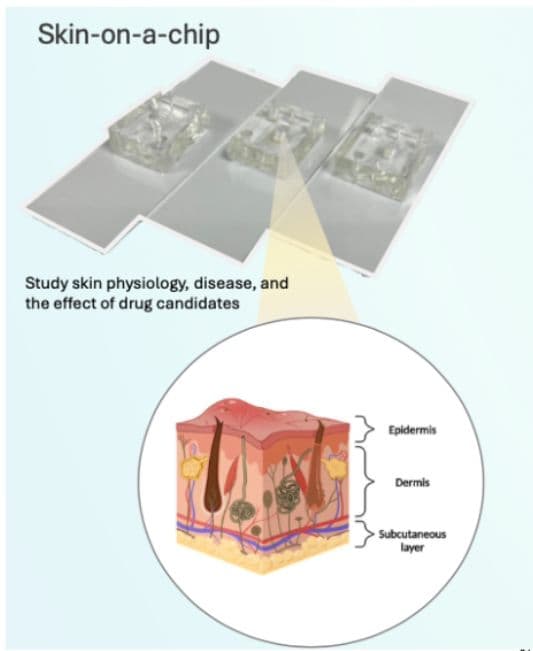
This research aims to develop and test a Skin-on-a-Chip (SoC) device that integrates skin cells and endothelial cells within a microfluidic system to closely simulate the biological environment of human skin. The device reduces reliance on animal testing while lowering research costs and time, and improves the accuracy of pharmaceutical and cosmeceutical ingredient testing. The project targets TRL 5 prototype development alongside patent filing and pilot-scale manufacturing process development, with a clear pathway toward commercial readiness within two years.

คณะวิทยาศาสตร์
With the urgent need for rapid screening of Aflatoxin B1 (AFB1) due to its association with increased liver cirrhosis and hepatocellular carcinoma cases from contaminated agricultural foods, we propose a novel electrochemical aptasensor. This aptasensor is based on trimetallic nanoparticles AuPt-Ru supported by reduced graphene oxide (AuPt-Ru/RGO) modified on a low-cost and disposable goldleaf electrode (GLEAuPt-Ru/RGO) for detection of AFB1. The trimetallic nanoparticle AuPt-Ru was synthesized using an ultrasonic-driven chemical reduction method. The synthesized AuPt-Ru exhibited a waxberry-like appearance, with AuPt core-shell structure and ruthenium dispersed over the particles. The average particle size was 57.35 ± 8.24 nm. The AuPt-Ru was integrated into RGO sheets (inner diameter of 0.5 to 1.6 µm) in order to enhance electron transfer efficiency and increase the specific immobilizing surface area of the thiol-5’-terminated modified aptamer (Apt) to target AFB1. With a large electrochemical surface area and low electrochemical impedance, GLEAuPt-Ru/RGO displays ultra-high sensitivity for AFB1 detection. Differential pulse voltammetry (DPV) measurements revealed a linear range for AFB1 detection range from 0.3 to 30.0 pg mL-1 (R2 = 0.9972), with a limit of detection (LOD, S/N = 3) and a limit of quantification (LOQ, S/N = 10) of 0.009 pg mL-1 and 0.031 pg mL-1, respectively. The developed aptasensor also demonstrated excellent accuracy in real agricultural products, including dried red chili, garlic, peanut, pepper, and Thai jasmine rice, achieving recovery rates between 94.6 and 107.9%. The fabricated aptamer-based GLEAuPt-Ru/RGO performance is comparable to that of a modified commercial electrode, which has great potential application prospects for detecting AFB1 in agricultural products.
คณะอุตสาหกรรมอาหาร
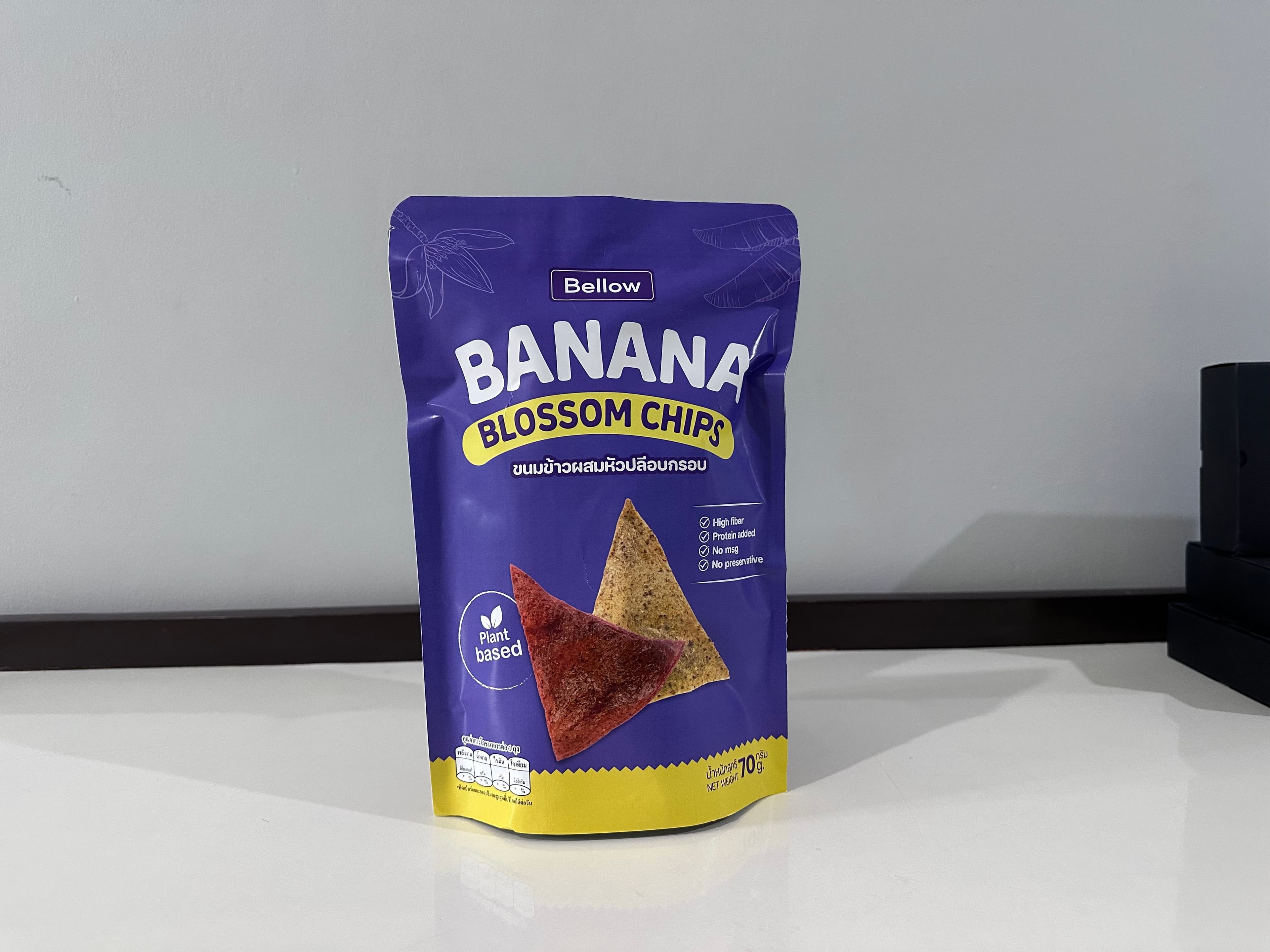
Banana Blossom Chips is a healthy snack rich in dietary fiber, antioxidants, and plant-based protein. It is a result of combining local Thai ingredients: banana blossoms, which are high in dietary fiber and antioxidants, chickpea flour, a source of plant-based protein, and red jasmine brown rice, which has a low GI value and high antioxidants. It is processed to create crispiness and a unique shape, reduces fat, is gluten-free, and helps maintain nutritional value. Therefore, it is a new alternative for health-conscious consumers and adds value to Thai agricultural products.