

With the urgent need for rapid screening of Aflatoxin B1 (AFB1) due to its association with increased liver cirrhosis and hepatocellular carcinoma cases from contaminated agricultural foods, we propose a novel electrochemical aptasensor. This aptasensor is based on trimetallic nanoparticles AuPt-Ru supported by reduced graphene oxide (AuPt-Ru/RGO) modified on a low-cost and disposable goldleaf electrode (GLEAuPt-Ru/RGO) for detection of AFB1. The trimetallic nanoparticle AuPt-Ru was synthesized using an ultrasonic-driven chemical reduction method. The synthesized AuPt-Ru exhibited a waxberry-like appearance, with AuPt core-shell structure and ruthenium dispersed over the particles. The average particle size was 57.35 ± 8.24 nm. The AuPt-Ru was integrated into RGO sheets (inner diameter of 0.5 to 1.6 µm) in order to enhance electron transfer efficiency and increase the specific immobilizing surface area of the thiol-5’-terminated modified aptamer (Apt) to target AFB1. With a large electrochemical surface area and low electrochemical impedance, GLEAuPt-Ru/RGO displays ultra-high sensitivity for AFB1 detection. Differential pulse voltammetry (DPV) measurements revealed a linear range for AFB1 detection range from 0.3 to 30.0 pg mL-1 (R2 = 0.9972), with a limit of detection (LOD, S/N = 3) and a limit of quantification (LOQ, S/N = 10) of 0.009 pg mL-1 and 0.031 pg mL-1, respectively. The developed aptasensor also demonstrated excellent accuracy in real agricultural products, including dried red chili, garlic, peanut, pepper, and Thai jasmine rice, achieving recovery rates between 94.6 and 107.9%. The fabricated aptamer-based GLEAuPt-Ru/RGO performance is comparable to that of a modified commercial electrode, which has great potential application prospects for detecting AFB1 in agricultural products.
อะฟลาทอกซิน (AFs) เป็นสารพิษที่ผลิตโดยเชื้อรา Aspergillus flavus (A. flavus) และ Aspergillus parasiticus (A. parasiticus) โดยมาก AFs จะพบจากการปนเปื้อนในผลิตภัณฑ์ทางการเกษตรที่เก็บในสภาพแวดล้อมที่มีความชื้นและอุณหภูมิสูง เช่น พริกแห้ง กระเทียม ถั่วลิสง พริกไทย และข้าวสาร เป็นต้น AFs ในธรรมชาติสามารถพบได้หลายชนิด ได้แก่ AFB1, AFB2, AFG1, AFG2 และในรูปแบบเมตาบอไลต์คือ AFM1 และ AFM2 โดยเฉพาะ AFB1 เป็นที่รู้จักว่าเป็นสารก่อมะเร็งที่มีความร้ายแรงมากที่สุดและได้รับการจัดเป็นสารก่อมะเร็งกลุ่ม 1 โดยองค์กรวิจัยมะเร็งนานาชาติ (The international cancer research: IARC) เนื่องจากมีความเสี่ยงสูงต่อการเกิดมะเร็งตับ (Hepatocellular carcinoma: HCC) ส่งผลให้การบริโภคอาหารที่ปนเปื้อน AFB1 มีผลกระทบทางสุขภาพต่อทั้งมนุษย์และสัตว์ทั่วโลก ในหลายประเทศได้ตั้งข้อกำหนดมาตรฐานปริมาณ AFB1 ในอาหารไม่เกิน 20 ไมโครกรัมต่อกิโลกรัม (64.05 นาโนโมลต่อลิตร) เพื่อควบคุมความปลอดภัยด้านอาหารและลดความเสี่ยงจากสารก่อมะเร็งนี้ ดังนั้น การพัฒนาวิธีการตรวจวัดที่มีความไว และความจำเพาะสูงในการตรวจหา AFB1 ในตัวอย่างผลิตภัณฑ์ทางการเกษตรจึงมีความสำคัญอย่างมากต่อการควบคุมคุณภาพอาหาร เทคนิคการตรวจวัดทางชีวภาพด้วยไบโอเซ็นเซอร์ไฟฟ้าเคมี (Electrochemical biosensing) ได้รับความสนใจอย่างมากในปัจจุบัน เนื่องจากมีข้อดีหลายประการ เช่น ตรวจวัดได้อย่างรวดเร็ว ความจำเพาะสูง ความไวสูง ใช้งานง่ายและมีต้นทุนการผลิตต่ำ งานวิจัยหลายฉบับได้รายงานเกี่ยวกับการพัฒนาไบโอเซนเซอร์ไฟฟ้าเคมีที่มีการใช้ร่วมกับสารชีวภาพ เช่น แอนติบอดี, เอนไซม์, แอปตาเมอร์, และ DNA ที่ใช้ในการตรวจ AFB1 โดยสารชีวภาพเหล่านี้จะถูกตรึงไว้กับ วัสดุนาโน (Nanomaterials) ที่มีพื้นที่ผิวจำเพาะสูงและสมบัติการนำไฟฟ้าที่ดีเยี่ยม เช่น อนุภาคนาโนทอง (AuNPs) ได้ถูกนำมาใช้กันอย่างแพร่หลายในการสร้างวัสดุตรวจวัดที่ให้สัญญาณเชิงไฟฟ้าเคมี เนื่องจากมีเสถียรภาพทางเคมีสูงและความเข้ากันได้ทางชีวภาพ อีกทั้งอนุภาคนาโนแพลทินัม (PtNPs) ซึ่งเป็นที่รู้จักกันมาอย่างยาวนานว่ามีความสามารถในการเร่งปฏิกิริยาที่ดีเยี่ยม และรูทิเนียม (RuNPs) ยังมีความสามารถในการเพิ่มเสถียรภาพและสมรรถนะในการเร่งปฏิกิริยาของวัสดุเชิงประกอบนาโนโลหะผสม ปัจจุบันมีการสังเคราะห์อนุภาคโลหะผสมหลากหลายชนิดมากขึ้น เช่น FePtCu และ PtPdTe ซึ่งมีคุณสมบัติทางการเร่งปฏิกิริยาที่ดีกว่าอนุภาคนาโนโลหะเดี่ยวและอนุภาคนาโนโลหะคู่ ด้วยเหตุนี้ การรวมข้อดีของ AuNPs, PtNPs และ RuNPs เข้าด้วยกัน แสดงให้เห็นถึงเสถียรภาพ สมรรถนะในการเร่งปฏิกิริยา และความสามารถในการตรึงโมเลกุลชีวภาพได้อย่างยอดเยี่ยม นอกจากนี้ รีดิวซ์กราฟีนออกไซด์ (RGO) เป็นอีกหนึ่งวัสดุนาโนที่ได้รับความสนใจในการใช้เป็นวัสดุตรวจวัดทางไฟฟ้าเคมี ซึ่ง RGO นั้นเป็นคาร์บอนนาโนที่เกิดจากการจัดเรียงชั้นของกราฟีนในโครงสร้าง ซึ่งสามารถปรับแต่งขนาดและรูปร่างได้ และมีคุณสมบัติที่น่าสนใจหลายประการ เช่น พื้นที่ผิวสูง (มากกว่า 600 m²/g) ความทนทานเชิงกลที่ดีเยี่ยม (200-500 MPa) การนำความร้อน (30-2600 W/m·K) และสมบัตินำไฟฟ้าสูง (มากกว่า 667 S/m) รวมถึงพฤติกรรมทางไฟฟ้าเคมีที่ดีเยี่ยม ด้วยคุณสมบัติดังกล่าวของวัสดุนาโน ในงานวิจัยนี้ได้ศึกษาสภาวะที่เหมาะสมในการสังเคราะห์และคุณสมบัติทางไฟฟ้าของสารประกอบนาโนโลหะสาม AuPt-Ru ที่ยึดติดบนพื้นผิว RGO (AuPt-Ru/RGO) พบว่า AuPt-Ru/RGO ที่สังเคราะห์ขึ้นมีสมบัตินำไฟฟ้าสูง ช่วยเร่งการถ่ายโอนอิเล็กตรอน ทำให้ปฏิกิริยาเกิดเร็วขึ้นและแสดงสมบัติเป็นตัวเร่งปฏิกิริยาที่ดี อีกทั้งยังสามารถเพิ่มประสิทธิภาพการตรวจวัดที่มีความเฉพาะเจาะจงต่อ AFB1 มากยิ่งขึ้นด้วยการจับกับแอปตาเมอร์ที่มีการดัดแปลงด้วยหมู่ไทออล (Thiol-terminated modified aptamer: 5’-thiol- GTT GGG CAC GTG TTG TCT CTC TGT GTC TCG TGC CCT TCG CTA GGC CCA CA -3’; Apt) ผ่านพันธะไทออลระหว่างแอปตาเมอร์และวัสดุเชิงประกอบ AuPt-Ru/RGO ในงานวิจัยนี้ยังมีการใช้ทองคำเปลว 24 กะรัต มาสร้างเป็นขั้วไฟฟ้าแบบใช้แล้วทิ้ง (Goldleaf electrode: GLE) เพื่อทดแทนขั้วไฟฟ้าที่มีการจำหน่ายในเชิงพาณิชย์ เช่น แท่งทองคำหรือแพลทินัมที่มีราคาสูง ทองคำเปลวที่นำมาใช้นั้นมีความบางและเกิดการฉีกขาดได้ง่าย แต่ด้วยข้อดีของทองคำเปลวที่มีสมบัติการนำไฟฟ้าได้ดีและทนทานต่อสารเคมี การใช้เทปพอลิอิไมด์มาเป็นฐานรองในการผลิต GLE ช่วยเสริมความแข็งแรงและความทนทานต่อการฉีกขาด รวมถึงมีการใช้งานแผ่นทองแดงนำไฟฟ้าเพื่อช่วยเพิ่มชุดสัมผัสทางไฟฟ้าให้กับ GLE โดยขั้วไฟฟ้า GLE ที่สร้างขึ้นมีขนาดอยู่ที่ 1.0 x 2.5 มิลลิเมตร และบริเวณจุดทำปฏิกิริยา (Planar-disc) มีเส้นผ่านศูนย์กลางอยู่ที่ 0.5 มิลลิเมตร และทำการปรับปรุงพื้นผิวด้วย AuPt-Ru/RGO สำหรับการตรวจวัดทางไฟฟ้าเคมีของ AFB1 (GLEAuPt-Ru/RGO) สามารถตรวจวัดตัวอย่างได้ที่ปริมาตรเพียง 15 ไมโครลิตร อีกทั้งการใช้แผ่นทองคำเปลวเป็นขั้วไฟฟ้าที่มีราคาถูกยังเน้นให้เห็นถึงศักยภาพในการสร้างเซ็นเซอร์ที่มีต้นทุนต่ำ ใช้ปริมาณสารตรวจวัดในปริมาณที่น้อย จึงเหมาะสำหรับการใช้งานแบบใช้แล้วทิ้งได้

คณะสถาปัตยกรรม ศิลปะและการออกแบบ
-
คณะวิทยาศาสตร์
This research will begin with a review of literature and related studies to examine existing technologies and methods for hand gesture recognition and their applications in controlling electronic devices such as drones, robots, and gaming systems. Subsequently, a hand gesture recognition system will be designed and developed using machine learning and computer vision techniques, with a focus on creating an algorithm that operates quickly and accurately, making it suitable for real-time control. The developed system will be tested and refined using various simulated scenarios to evaluate its efficiency and accuracy in diverse environments. Additionally, a user-friendly interface will be developed to ensure accessibility for all user groups. The research will also incorporate qualitative studies to gather feedback from both novice users and experts, which will contribute to further system improvements, ensuring it effectively meets user needs. Ultimately, the findings of this research will lead to the development of a functional prototype for gesture-based control, which can be applied in industries and entertainment. This will contribute to advancements in innovation and new technologies in the future.
คณะสถาปัตยกรรม ศิลปะและการออกแบบ
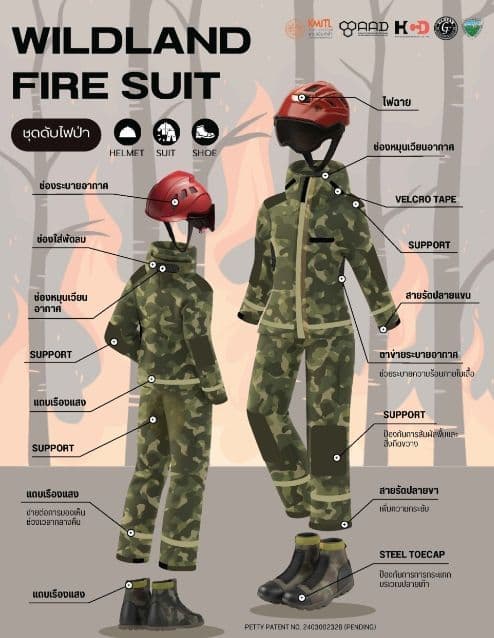
The forest firefighting suit consists of the following components and uses: The forest firefighting suit is designed and developed to be suitable for the behavior of the officers and the conditions of the work area, consisting of a shirt and pants. The material used in the sewing of the suit is aramid fabric, which has the property of being able to prevent the spread of fire, to prevent the officers from burning while performing their duties in the event that the forest fire spreads close to them, which is different from the current suits that cannot prevent fires. The shirt is designed with a mesh on the side of the body to release internal heat so that air can circulate well. The sleeves at the elbows have a support point to prevent contact with the ground or obstacles. The collar has a slot for a portable fan and a fan air circulation channel on the back, which can be turned on while performing forest firefighting duties, helping to prevent the body temperature from getting too hot, reducing the risk of heatstroke. When the fan battery runs out, it can be removed for charging and put back in when needed. The pants are designed with mesh on the inside or in blind spots to release internal heat so that air can circulate well. The pants at the knees have a support point to prevent contact with the ground or obstacles. The forest firefighting suit, consisting of a shirt and pants, has been designed and developed to be able to be produced domestically, reducing imports from abroad