

This research will begin with a review of literature and related studies to examine existing technologies and methods for hand gesture recognition and their applications in controlling electronic devices such as drones, robots, and gaming systems. Subsequently, a hand gesture recognition system will be designed and developed using machine learning and computer vision techniques, with a focus on creating an algorithm that operates quickly and accurately, making it suitable for real-time control. The developed system will be tested and refined using various simulated scenarios to evaluate its efficiency and accuracy in diverse environments. Additionally, a user-friendly interface will be developed to ensure accessibility for all user groups. The research will also incorporate qualitative studies to gather feedback from both novice users and experts, which will contribute to further system improvements, ensuring it effectively meets user needs. Ultimately, the findings of this research will lead to the development of a functional prototype for gesture-based control, which can be applied in industries and entertainment. This will contribute to advancements in innovation and new technologies in the future.
ในยุคปัจจุบัน เทคโนโลยีโดรน หุ่นยนต์ และเกมดิจิทัลได้เข้ามามีบทบาทสำคัญในชีวิตประจำวันและอุตสาหกรรมต่าง ๆ มากขึ้นอย่างต่อเนื่อง การควบคุมอุปกรณ์เหล่านี้ส่วนใหญ่ยังคงพึ่งพารีโมทคอนโทรล จอยสติก หรืออุปกรณ์ควบคุมเฉพาะทาง ซึ่งอาจมีข้อจำกัดในด้านความยืดหยุ่น ความเป็นธรรมชาติในการใช้งาน และการเข้าถึงสำหรับผู้ใช้บางกลุ่ม เช่น ผู้พิการ หรือผู้สูงอายุ นอกจากนี้ ในสถานการณ์ที่ต้องการความคล่องตัวสูง เช่น การควบคุมโดรนในพื้นที่จำกัด หรือการเล่นเกมที่ต้องการการตอบสนองที่รวดเร็ว การใช้อุปกรณ์ควบคุมแบบดั้งเดิมอาจเป็นข้อจำกัดในการเพิ่มประสิทธิภาพการทำงานหรือประสบการณ์การเล่นเกม การพัฒนาเทคโนโลยีการรู้จำท่าทางมือ (Hand Gesture Recognition) จึงเป็นแนวทางที่มีศักยภาพอย่างสูงในการแก้ไขปัญหาดังกล่าว โดยเทคโนโลยีนี้สามารถช่วยให้ผู้ใช้ควบคุมโดรน หุ่นยนต์ หรือเล่นเกม ฯลฯ เป็นต้น ได้อย่างเป็นธรรมชาติมากขึ้น เพียงแค่ใช้ท่าทางมือที่กำหนดไว้ ซึ่งนอกจากจะเพิ่มความสะดวกสบายและความคล่องตัวในการควบคุมแล้ว ยังช่วยเพิ่มความสามารถในการเข้าถึงเทคโนโลยีสำหรับผู้ใช้ที่มีข้อจำกัดทางร่างกาย อีกทั้งยังเปิดโอกาสให้มีการพัฒนารูปแบบการควบคุมและการเล่นเกมแบบใหม่ ๆ ที่ไม่เคยมีมาก่อน

คณะสถาปัตยกรรม ศิลปะและการออกแบบ
This project is a carbon safe haven of Bangkok, aspiring to be the prototypal gateway of the future's carbon net zero ambitions. The project aims to answer the fundamental "flaw" of the existing urban fabric, still being extremely inefficient and highly polluting. Conversely, Carbon Oasis would not only create its own energy, but look to provide its excess energy and water surplus' back to the city and its surroundings. Taking parts of the existing city and implementing new concepts to inspire a change in the urban fabric and its people.
คณะวิศวกรรมศาสตร์
Inventing robots for the TPA Robotics Competition Thailand Championship 2024, game “Rice Way, Thai Way to the International Way (HARVEST DAY)”
คณะอุตสาหกรรมอาหาร
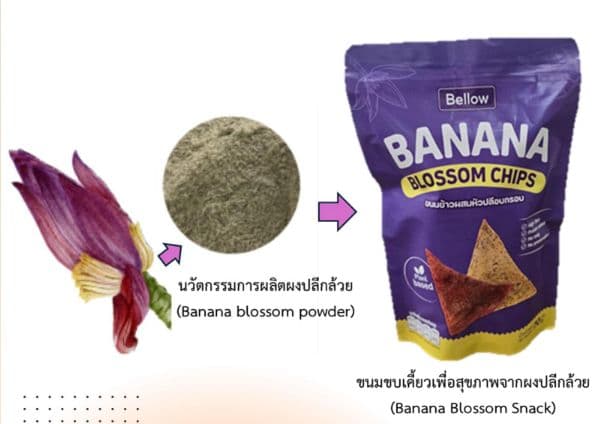
Thailand produces over 1.2 million tons of bananas annually, generating substantial agricultural waste — particularly banana blossoms, which are highly nutritious, rich in dietary fiber and antioxidants, yet are commonly discarded. This study aimed to develop a "fiber-enriched baked snack using banana blossom powder" to add value to this underutilized raw material and meet the growing demand of health-conscious consumers. The prototype product received second runner-up recognition at the Conovative Award 2024. However, limitations were identified in terms of coarse texture, dark coloration, and residual astringency. This research therefore focuses on optimizing the pretreatment process through safe physical and chemical methods, alongside a comparative evaluation of drying techniques — including hot-air drying, freeze drying, and microwave drying — to maximize the retention of nutritional value and bioactive compounds. The findings are expected to enhance the applicability of banana blossom powder in health food products, particularly snacks requiring refined physical and sensory qualities, and to support further commercial development.