
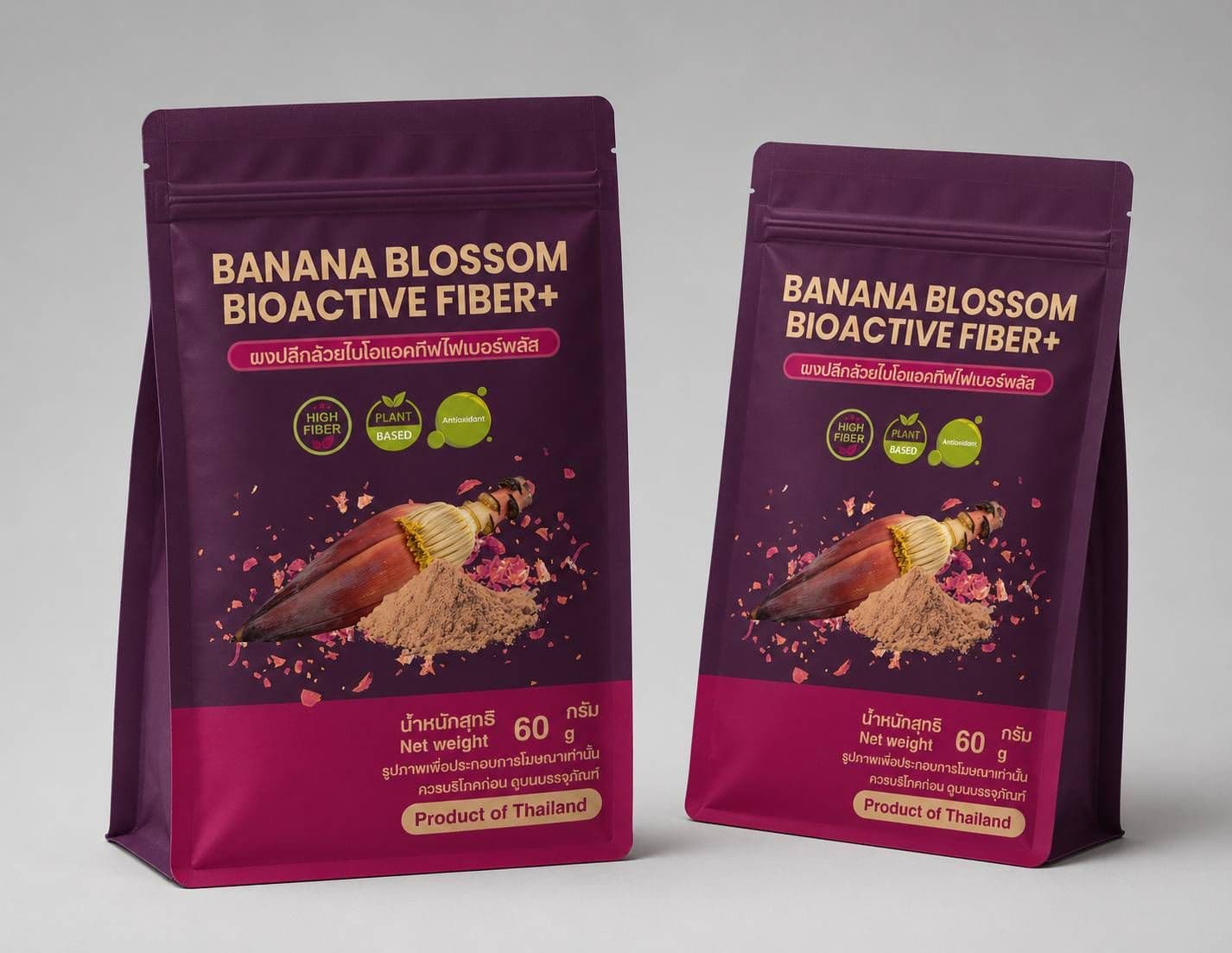
Banana blossom is an agricultural by-product with considerable potential for development into a value-added food ingredient due to its dietary fiber and naturally occurring bioactive compounds, particularly phenolic compounds and flavonoids associated with antioxidant properties. However, its application in food products is limited by several quality-related characteristics, including coarse texture, dark color resulting from browning reactions, and astringency, which may negatively affect product quality and consumer acceptance. This study aims to develop an innovative process for banana blossom powder production using pretreatment with citric and ascorbic acids combined with ultrasound-assisted treatment. The process is designed to reduce astringency, control browning, improve physical characteristics, and retain important bioactive compounds in banana blossom prior to drying and powder production. The resulting banana blossom powder will be evaluated for its nutritional composition, dietary fiber content, bioactive compounds, antioxidant properties, and functional properties. The developed banana blossom powder will subsequently be incorporated as an ingredient in a healthy snack product using extrusion technology, followed by quality evaluation of the developed prototype. This study integrates agricultural by-product upcycling with food processing technology to transform banana blossom into a fiber-rich food ingredient containing naturally occurring bioactive compounds and further develop it into a healthy food product that responds to current health and sustainability trends. This approach also creates opportunities for technology transfer and future commercial applications.
ประเทศไทยเป็นประเทศที่มีการผลิตกล้วยในปริมาณสูง ส่งผลให้เกิดวัสดุพลอยได้ทางการเกษตรจากกระบวนการผลิตและการเก็บเกี่ยวจำนวนมาก โดย ปลีกล้วย (Banana Blossom) เป็นส่วนหนึ่งที่ยังไม่ได้รับการใช้ประโยชน์อย่างเต็มศักยภาพ ทั้งที่เป็นวัตถุดิบจากธรรมชาติที่มีคุณค่าทางโภชนาการ โดยเฉพาะใยอาหาร และมีสารออกฤทธิ์ทางชีวภาพหลายชนิด เช่น สารประกอบฟีนอลิก ฟลาโวนอยด์ และแทนนิน ซึ่งมีความสัมพันธ์กับสมบัติการต้านอนุมูลอิสระ (Kavya et al., 2023) งานวิจัยที่ผ่านมายังแสดงให้เห็นถึงศักยภาพของปลีกล้วยและสารสำคัญที่พบในปลีกล้วยต่อการนำไปพัฒนาเป็นวัตถุดิบสำหรับผลิตภัณฑ์อาหารเพื่อสุขภาพ (Singh et al., 2016) การนำปลีกล้วยมาแปรรูปเป็นผงปลีกล้วย (Banana Blossom Powder) จึงเป็นแนวทางที่มีศักยภาพในการยกระดับวัสดุพลอยได้ทางการเกษตรให้เป็น ส่วนประกอบอาหารมูลค่าสูงที่อุดมด้วยใยอาหารและสารออกฤทธิ์ทางชีวภาพจากธรรมชาติ ซึ่งสามารถนำไปประยุกต์ใช้เพื่อเพิ่มคุณค่าทางโภชนาการและสมบัติเชิงหน้าที่ของผลิตภัณฑ์อาหาร ตลอดจนช่วยลดการสูญเสียทรัพยากร เพิ่มมูลค่าให้กับวัตถุดิบทางการเกษตร และสร้างโอกาสในการพัฒนาผลิตภัณฑ์อาหารเพื่อสุขภาพรูปแบบใหม่ อย่างไรก็ตาม การนำปลีกล้วยมาใช้เป็นส่วนประกอบในผลิตภัณฑ์อาหารยังมีข้อจำกัดสำคัญ ได้แก่ เนื้อสัมผัสที่ค่อนข้างหยาบ สีคล้ำจากปฏิกิริยาการเกิดสีน้ำตาล และรสฝาดจากสารประกอบฟีนอลิกและแทนนิน ซึ่งอาจส่งผลต่อคุณภาพทางกายภาพ คุณภาพทางประสาทสัมผัส และการยอมรับของผู้บริโภค รวมทั้งเป็นข้อจำกัดต่อการนำไปประยุกต์ใช้ในระดับอุตสาหกรรม งานวิจัยนี้จึงมุ่งพัฒนานวัตกรรมในกระบวนการเตรียมปลีกล้วยก่อนการแปรรูป (Pretreatment) โดยประยุกต์ใช้สารละลายกรดซิตริกและกรดแอสคอร์บิกร่วมกับเทคโนโลยีอัลตราซาวด์ (Ultrasound-Assisted Treatment) เพื่อช่วยควบคุมการเกิดสีน้ำตาล ลดรสฝาด ปรับปรุงคุณลักษณะทางกายภาพ และช่วยคงรักษาสารออกฤทธิ์ทางชีวภาพที่สำคัญ ก่อนนำไปผ่านกระบวนการทำแห้งและผลิตเป็นผงปลีกล้วย (Elaveniya & Jayamuthunagai, 2014; Jha et al., 2021) ผงปลีกล้วยที่พัฒนาได้จะได้รับการประเมินทั้งด้าน คุณค่าทางโภชนาการ ปริมาณใยอาหาร สารออกฤทธิ์ทางชีวภาพ สมบัติการต้านอนุมูลอิสระ และสมบัติเชิงหน้าที่ เพื่อศึกษาศักยภาพในการเป็นส่วนประกอบอาหารเพื่อสุขภาพ ก่อนนำไปประยุกต์ใช้ในการพัฒนาผลิตภัณฑ์ขนมขบเคี้ยวด้วยเทคโนโลยีเอกซ์ทรูชัน เพื่อสร้างผลิตภัณฑ์ต้นแบบที่ผสานคุณค่าของใยอาหารและสารออกฤทธิ์ทางชีวภาพจากปลีกล้วยเข้ากับเทคโนโลยีการผลิตอาหารสมัยใหม่ งานวิจัยนี้จึงเป็นการเชื่อมโยงแนวคิด Upcycling และ Circular Economy เข้ากับ Innovative Food Processing โดยยกระดับปลีกล้วยจากวัสดุพลอยได้ทางการเกษตรให้เป็นส่วนประกอบอาหารมูลค่าสูง และต่อยอดสู่ผลิตภัณฑ์ขนมขบเคี้ยวเพื่อสุขภาพที่สอดคล้องกับแนวโน้มของผู้บริโภคยุคใหม่ที่ให้ความสำคัญกับสุขภาพ อาหารจากพืช และความยั่งยืน รวมทั้งมีศักยภาพในการถ่ายทอดเทคโนโลยีและต่อยอดสู่การผลิตในเชิงพาณิชย์

คณะเทคโนโลยีสารสนเทศ
-

คณะทันตแพทยศาสตร์
-

วิทยาเขตชุมพรเขตรอุดมศักดิ์
-