
The consumption of plant-based products has been gaining popularity as consumers become more health-conscious and aware of environmental impacts. The food industry has been developing meat analogs with properties similar to conventional meat. This study investigates the chemical and physical properties of chickpea-based meat analog burgers and hybrid burgers containing both chickpeas and pork, using the sous-vide cooking method. This technique helps maintain food quality in terms of texture, moisture retention, and nutritional value. The experiment examined various properties of both types of burgers, including cooking loss, water holding capacity, shear force, pH value, and color analysis. Additionally, sensory evaluation was conducted to assess taste, texture, and overall consumer preference. The findings will provide insights into the optimal sous-vide conditions for producing plant-based and hybrid burgers with desirable quality characteristics that meet the needs of health-conscious consumers. This study serves as a valuable guideline for the food industry in developing high-nutritional-value alternative protein products while reducing meat consumption. By incorporating plant-based ingredients, it helps minimize environmental impact and promotes sustainability in food production. The research is significant in both food science and the development of healthier, competitive food products for the future market.
ปัจจุบัน การบริโภคเนื้อสัตว์และผลิตภัณฑ์จากสัตว์มีแนวโน้มเพิ่มขึ้น แต่ส่งผลกระทบต่อสุขภาพ เช่น โรคอ้วนและโรคหัวใจ รวมถึงปัญหาสิ่งแวดล้อมจากการทำปศุสัตว์ เช่น การตัดไม้ทำลายป่า การลดลงของความหลากหลายทางชีวภาพ และการปล่อยก๊าซเรือนกระจก ซึ่งอุตสาหกรรมเกษตรคิดเป็น 24% ของการปล่อยก๊าซเรือนกระจกทั่วโลก โดยเฉพาะภาคปศุสัตว์ที่มีสัดส่วน 14% เทียบเท่ากับการปล่อยก๊าซจากภาคคมนาคมขนส่ง ก๊าซหลักที่ปล่อยออกมาคือ มีเทนจากสัตว์เคี้ยวเอื้อง ไนตรัสออกไซด์จากการใช้ปุ๋ย และคาร์บอนไดออกไซด์จากการเปลี่ยนแปลงการใช้ที่ดิน ทำให้ผู้บริโภคเริ่มให้ความสนใจกับอาหารจากพืชมากขึ้น เช่น เบอร์เกอร์ที่ทำจากถั่วลูกไก่ ถั่วเหลือง และข้าวสาลี เนื่องจากมีโปรตีนสูง ไขมันต่ำ และลดผลกระทบต่อสิ่งแวดล้อม การทำซูวีด (Sous-vide) เป็นเทคนิคการปรุงอาหารที่ใช้ความร้อนต่ำและควบคุมอุณหภูมิอย่างแม่นยำ โดยบรรจุอาหารในถุงสุญญากาศแล้วนำไปแช่ในน้ำที่มีอุณหภูมิคงที่ต่ำกว่าวิธีปรุงปกติ ทำให้เนื้อสุกอย่างสม่ำเสมอ ทั้งยังช่วยรักษาความชุ่มชื้นและรสชาติได้ดีกว่า การวิจัยนี้จึงมุ่งศึกษาคุณสมบัติของเบอร์เกอร์จากเนื้อสัตว์และพืช โดยเน้นที่เนื้อสัมผัส สี อุณหภูมิ และระยะเวลาที่เหมาะสมในการใช้ซูวีด เพื่อให้ได้ผลิตภัณฑ์ที่ตอบโจทย์ผู้บริโภคที่ใส่ใจสุขภาพ และช่วยลดผลกระทบต่อสิ่งแวดล้อม เป็นทางเลือกที่ยั่งยืนในอนาคต งานวิจัยนี้จึงมีความสำคัญทั้งในแง่ของวิทยาศาสตร์อาหารและการพัฒนาผลิตภัณฑ์ที่ดีต่อสุขภาพและสิ่งแวดล้อมในระยะยาว
คณะครุศาสตร์อุตสาหกรรมและเทคโนโลยี
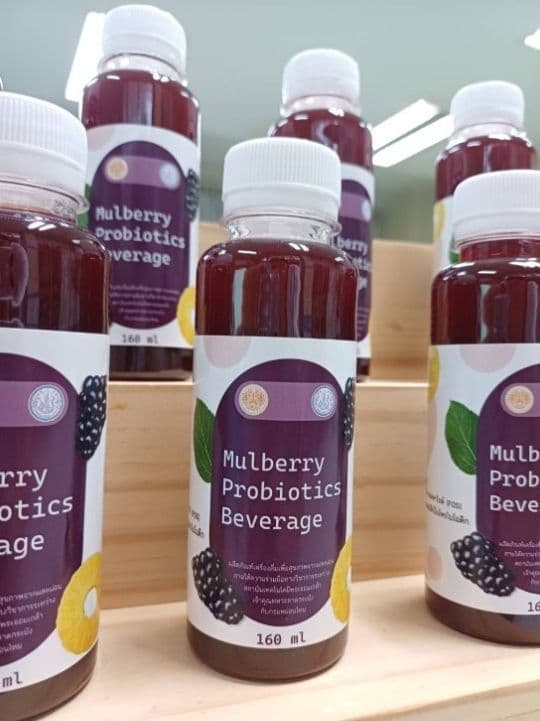
Mulberry Kefir is a fermented drink made from ripe mulberry fruit, made from ripe mulberry juice. Its pinkish-red color is the color of the natural anthocyanin in mulberries. Anthocyanins have antioxidant properties and contain the prebiotic fructo-oligosaccharides, the probiotic microorganisms Lactobacillus and Saccharomeces. It has a sweet and sour taste, is fizzy and has a little alcohol. The taste and fizz come from production technology, which uses a fermentation process from microorganisms. Mulberry kefir is considered a functional beverage made from plants (Plant Based Beverage), suitable for people who are lactose intolerant and those who do not consume beverages made from milk. It makes you feel refreshed after drinking it.
คณะเทคโนโลยีสารสนเทศ
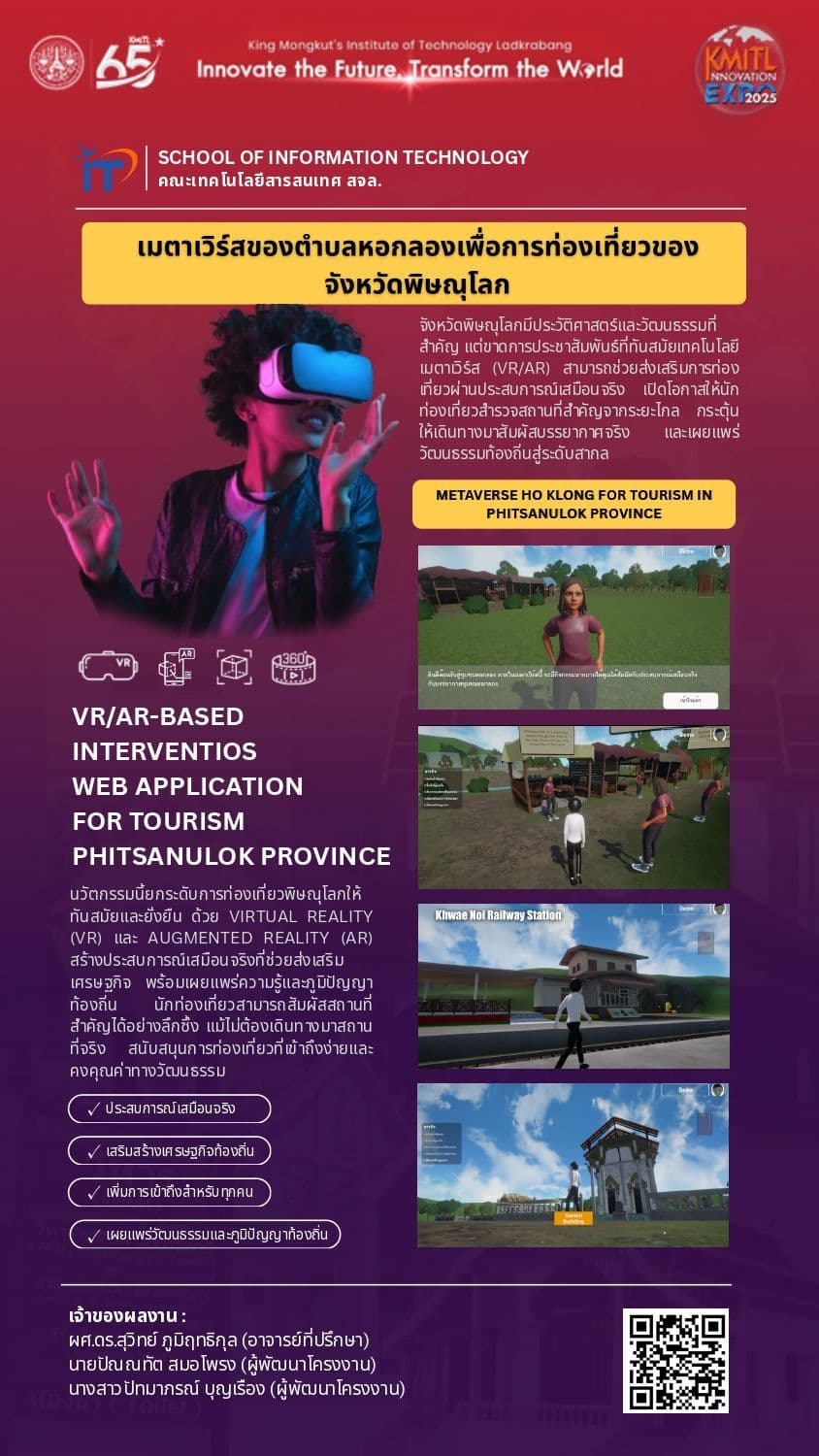
This research project aims to study and develop a metaverse system for tourism in Horklong Subdistrict, Phitsanulok Province. The primary goal is to create a prototype metaverse system that showcases the cultural and historical tourist attractions in Horklong Subdistrict through virtual reality technology. This will help promote tourism in rural areas that are not yet widely known and enhance the modern promotion of tourist attractions in the province. The development of the metaverse system in this project utilizes virtual reality technology to simulate the experience of touring Horklong Subdistrict via a virtual boat ride. Users will be able to access the system through the Unity platform, which is a tool used to develop 3D and VR applications. The system is designed to allow users to choose to ride a virtual boat and visit various places that have been creatively recreated in a virtual format. These locations are designed and developed using 3D models based on real data collected from the Horklong Subdistrict area. This project is therefore an initiative to sustainably promote cultural and historical tourism in Phitsanulok Province. It has the potential to increase income for local communities as well as to disseminate local knowledge and wisdom to a broader audience. The metaverse system for tourism in Horklong Subdistrict is thus an important project in modernizing the province’s tourism sector and attracting more visitors, both domestically and internationally.

วิทยาลัยอุตสาหกรรมการบินนานาชาติ
This analysis focuses on the essential components of flight plans when operating at low altitudes. The study explores the critical elements that pilots and flight operators must consider to guarantee the safety of passengers, crew, and aircraft while flying at low altitudes. By examining factors such as weather conditions, airspace restrictions, terrain considerations, and emergency procedures, this analysis aims to provide valuable insights into optimizing flight planning processes for low-altitude operations