


Mulberry Kefir is a fermented drink made from ripe mulberry fruit, made from ripe mulberry juice. Its pinkish-red color is the color of the natural anthocyanin in mulberries. Anthocyanins have antioxidant properties and contain the prebiotic fructo-oligosaccharides, the probiotic microorganisms Lactobacillus and Saccharomeces. It has a sweet and sour taste, is fizzy and has a little alcohol. The taste and fizz come from production technology, which uses a fermentation process from microorganisms. Mulberry kefir is considered a functional beverage made from plants (Plant Based Beverage), suitable for people who are lactose intolerant and those who do not consume beverages made from milk. It makes you feel refreshed after drinking it.
ผลหม่อนสุก เป็นผลิตผลจากหม่อนซึ่งมีการไปแปรรูปเป็นแยมหม่อน น้ำหม่อน ไวน์หม่อน การนำผลหม่อนมาแปรรูปเป็นเครื่องดื่มคีเฟอร์ในกลุ่มของ water kefir เป็นแนวคิดที่เพิ่มความหลากหลายให้กับเครื่องดื่มจากผลหม่อนโดยใช้เทคโนโลยีการหมักด้วจุลินทรีย์แลคโทบาซิลลัส และยีสต์ ได้เป็นเครื่องดื่มจากพืชที่มีความโดดเด่นด้านสี รสชาติ
คณะสถาปัตยกรรม ศิลปะและการออกแบบ
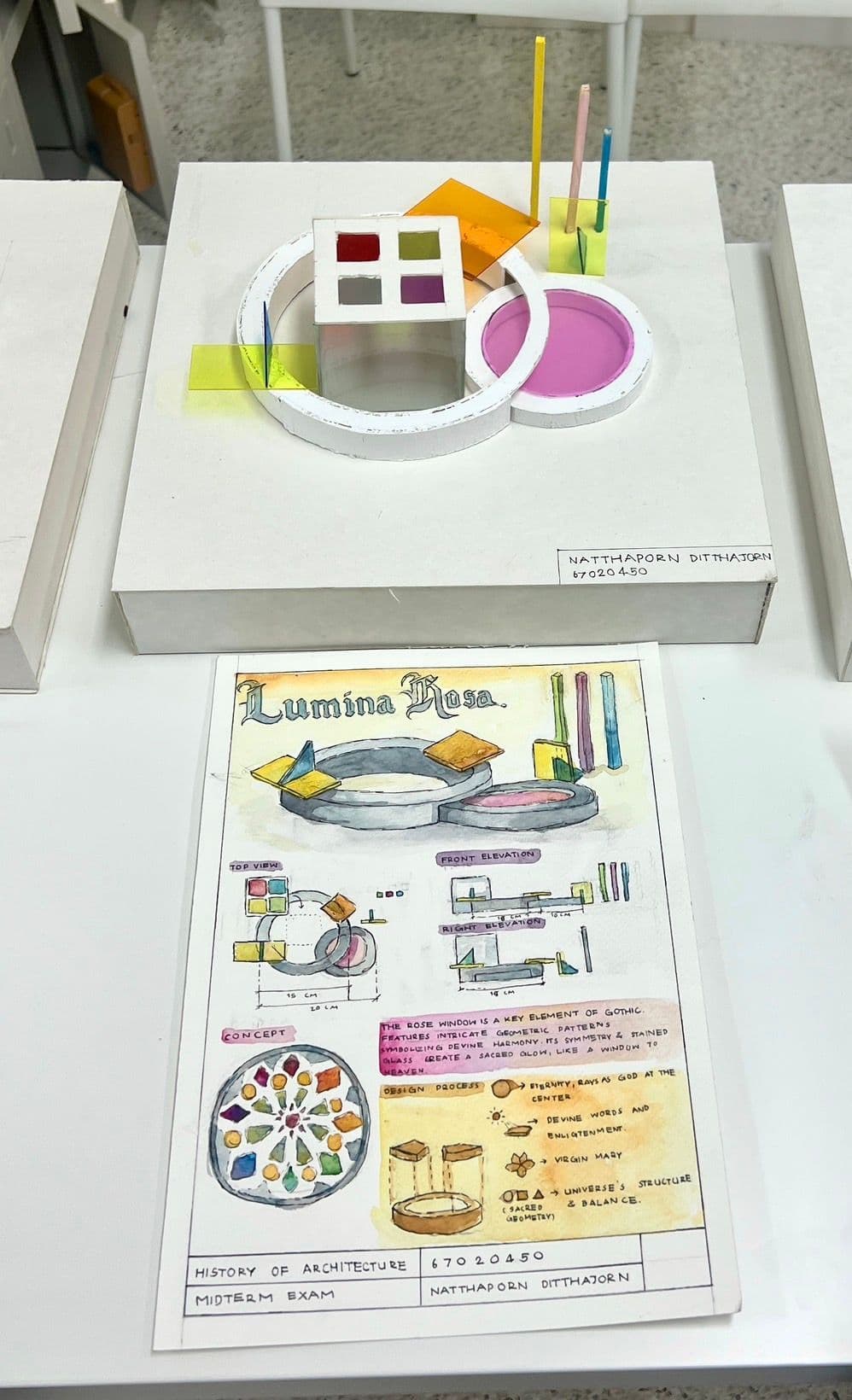
This conceptual model, inspired by the Rose Window in Gothic architecture, embodies intricate geometric patterns that reflect divine harmony and balance. Its symmetrical structure and the interplay of light passing through stained glass create a sense of movement, enhancing the sacred and mystical atmosphere. The composition evokes a celestial presence, like a window to heaven.

คณะศิลปศาสตร์
Layla, the hotel robot, is responsible for carrying guests’ luggage and guiding them to their accommodations. It is equipped with an internal map of the hotel, allowing it to navigate various locations efficiently. Additionally, it features an AI-powered system that enables interactive conversations in three major languages: Thai, English, and Chinese.

วิทยาลัยอุตสาหกรรมการบินนานาชาติ
This analysis focuses on the essential components of flight plans when operating at low altitudes. The study explores the critical elements that pilots and flight operators must consider to guarantee the safety of passengers, crew, and aircraft while flying at low altitudes. By examining factors such as weather conditions, airspace restrictions, terrain considerations, and emergency procedures, this analysis aims to provide valuable insights into optimizing flight planning processes for low-altitude operations