This project focuses on the development of an automatic license plate recognition system that supports both standard and special license plates in Thailand. By utilizing Machine Learning technology, the system enhances the efficiency of license plate reading. It can process data from both images and videos. Users can register and subscribe to the service, allowing them to send data for processing through RESTful API, WebSocket, and registered IP cameras.
ในปัจจุบัน ระบบการอ่านป้ายทะเบียนอัตโนมัติ มีการนำมาใช้กันอย่างกว้างขวาง เช่น ระบบตรวจสอบรถ เข้าออก ระบบจัดการลานจอดรถ ระบบขนส่งสาธารณะที่ใช้เก็บค่าผ่านทางแบบอัตโนมัติ ระบบรักษาความปลอดภัย เป็นต้น ความแม่นยำในการอ่านป้ายทะเบียนจึงเป็นสิ่งจำเป็นอย่างยิ่ง เพื่อประสิทธิภาพ และความถูกต้องของข้อมูล เทคโนโลยี Machine Learning จึงถูกนำมาประยุกต์ใช้ เพื่อเพิ่มประสิทธิภาพในการอ่านป้ายทะเบียน ไม่ว่าจะเป็นในรูปแบบของ Software Module ที่ติดตั้งแบบถาวร หรือเป็นบริการ E-service อย่างไรก็ตาม ระบบรูปแบบ Software Module มักพบปัญหาในการไม่ได้รับการอัปเดตอย่างสม่ำเสมอ และระบบรูปแบบ E-service ในปัจจุบันยังไม่สามารถอ่านป้ายทะเบียนของประเทศไทยได้อย่างมีประสิทธิภาพ เนื่องจากความซับซ้อนของภาษาไทย ที่เกิดจากป้ายทะเบียนรูปแบบพิเศษ เช่น ป้ายทะเบียนประมูลของกรมขนส่งทางบก ที่มีลวดลาย และรูปแบบตัวอักษรที่แตกต่างจากป้ายทะเบียนปกติ จากปัญหาที่กล่าวมา โครงการนี้จึงมีแนวคิดในการพัฒนา Machine Learning Model ที่ออกแบบมาเพื่อจัดการกับปัญหาเฉพาะของป้ายทะเบียนในประเทศไทย โดยมีเป้าหมายความแม่นยำในการอ่านป้ายทะเบียนอยู่ที่ 95 เปอร์เซ็นต์ พร้อมกับการพัฒนาบริการ E-service สำหรับการอ่านป้ายทะเบียนอัตโนมัติ ให้ผู้ที่สนใจสามารถเข้าใช้งาน Machine Learning Model ของเราได้ โดยผ่านการลงทะเบียนบนเว็บไซต์ จ่ายค่าสมัครใช้บริการรายเดือน และส่งข้อมูลในรูปแบบของรูปภาพผ่าน RESTful API, WebSocket และวิดีโอผ่านกล้อง IP ที่มีการลงทะเบียนเอาไว้กับระบบ นอกจากนี้ยังมีการพัฒนาเว็บไซต์สำหรับผู้ดูแลระบบ เพื่อช่วยในการบริหารจัดการและตรวจสอบการทำงานของระบบ
คณะครุศาสตร์อุตสาหกรรมและเทคโนโลยี
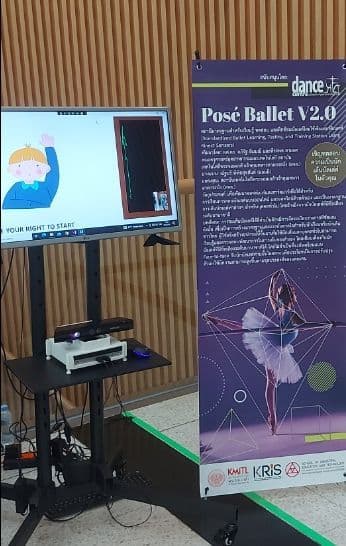
Ballet dancing requires clear and precise body gestures. To raise standard and motivation for Thai ballet dancers, this testing console is developed such that dancers and beginners are able to learn and keep track of their dancing progress. Their gestures can be compared with internationally recognized ballet dancers without face-to-face learning. This enables self-development according to their purposes and pace. The portable console is easy to use. Connect it to a monitor, turn on, and enjoy.
คณะสถาปัตยกรรม ศิลปะและการออกแบบ
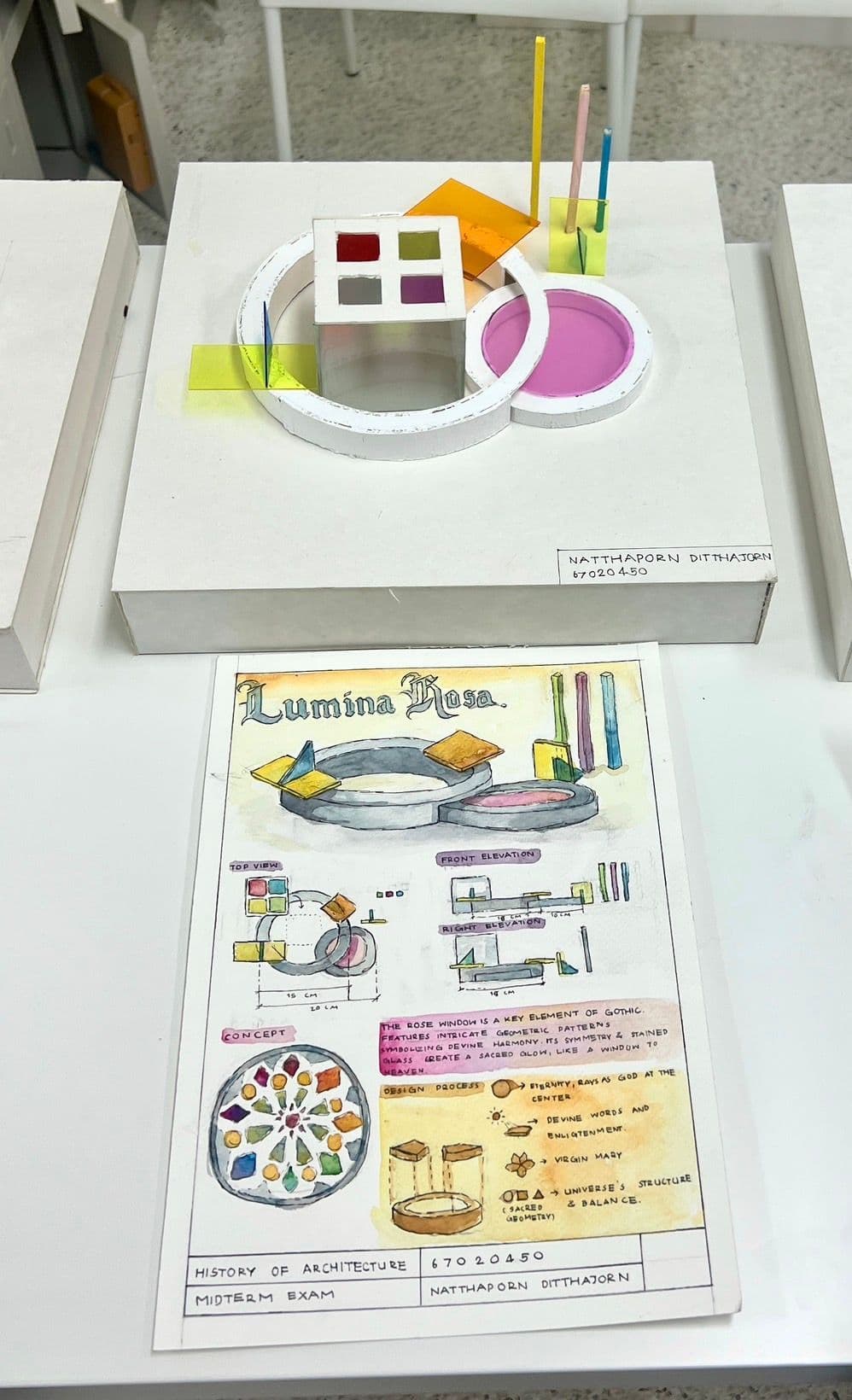
This conceptual model, inspired by the Rose Window in Gothic architecture, embodies intricate geometric patterns that reflect divine harmony and balance. Its symmetrical structure and the interplay of light passing through stained glass create a sense of movement, enhancing the sacred and mystical atmosphere. The composition evokes a celestial presence, like a window to heaven.

คณะอุตสาหกรรมอาหาร
This study aims to investigate the co-fermentation process between lactic acid bacteria (LAB) and Saccharomyces cerevisiae in the production of sour beer, with a focus on its impact on product quality, including pH, organic acid content, sugar content, and sensory characteristics. In this experiment, selected LAB strains and S. cerevisiae were utilized under controlled fermentation conditions. The microbial ratio was optimized to enhance growth and the production of key compounds. The findings indicate that co-fermentation significantly reduces pH compared to fermentation with yeast alone. Furthermore, an increase in lactic acid was observed due to sugar consumption by LAB, contributing to the distinctive flavor profile of sour beer.