

This study focused on the development of an edible film containing Terminalia chebula Retz extract for the treatment of oral ulcers. The film was designed to dissolve in the mouth without the need for swallowing or chewing, which is suitable for people with canker sores or oral inflammation. Terminalia chebula extract has been shown to have several pharmacological properties, including antimicrobial, antioxidant, and anti-inflammatory activities.
ฟิล์มรับประทานมักมีส่วนประกอบของสารต้านจุลินทรีย์หลากหลายชนิด รวมถึงกรดอินทรีย์ (Brink และคณะ, 2019) แบคทีเรียซิน (Ge และคณะ, 2017) น้ำมันหอมระเหย (Lee และคณะ, 2019; Evangelho และคณะ, 2019) และสารสกัด (Wai และคณะ, 2019) สารเหล่านี้จะถูกปล่อยออกมาในอาหารระหว่างการ จัดเก็บและช่วยเพิ่มความปลอดภัยของอาหาร สมอไทย (Terminalia chebula) ถูกนำมาใช้เป็นยาแผนโบราณเป็นเวลานาน มีการนำมาใช้กันอย่าง แพร่หลายใน การแพทย์พื้นบ้านและจัดอยู่ในตำรายาไทย ได้แก่ มหาพิกัดตรีผลา พิกัดตรีสมอ และพิกัดจตุ ผลาธิ มีสรรพคุณรักษาโรคต่างๆ เช่น ขับลม บิด ยาบำรุงตับ ย่อยอาหาร ยาแก้ท้องเสีย ยาแก้ปวด ยาถ่าย พยาธิ เป็นต้น ซึ่งพบสาร ออกฤทธิ์ทางชีวภาพที่สำคัญได้แก่ Arachidic acid Hebulanin Chebupentol Daucosterol Punicalagin Quercetin Sitosterol Tannin สารประกอบเหล่านี้มีสรรพคุณทางเภสัชวิทยา หลายประการ ยกตัวอย่างเช่น มีฤทธิ์ในการยับยั้งแบคทีเรีย ฤทธิ์ยับยั้งเชื้อรา ฤทธิ์ต้านสารก่อมะเร็ง ฤทธิ์ต้าน อนุมูลอิสระ ฤทธิ์ต้านเบาหวาน ฤทธิ์ต้านการอักเสบ และฤทธิ์ต้านเชื้อเอชไอวี (Bulbul และคณะ, 2022) สาเหตุของแผลร้อนในหรือแผลในปาก อาจเกิดจากการแพ้อาหาร หรือมีภาวะภูมิคุ้มกันผิดปกติ บาง รายเกิดจากการขาดสารอาหาร เช่น วิตามินบี 12 ขาดธาตุเหล็ก ขาดวิตามินซี นอกจากนี้ก็อาจเกิดจากโรค ลำไส้อักเสบ ความเครียด กัดโดนเยื่อบุปาก เคี้ยวของแข็ง แปรงฟันผิดวิธี รับประทานอาหารเผ็ดร้อน สูบบุหรี่ หรือฟันปลอมที่สวมไม่พอดี ยาสีฟันที่มีส่วนผสมของโซเดียมลอรีลซัลเฟต ก็อาจทำให้เกิดแผลในปากได้ (สมตระกูล และคณะ, 2017) ซึ่งการใช้สารสกัดจากสมอไทยที่มีสรรพคุณมากมายเติมลงไปในแผ่นฟิล์มที่บริโภคได้ เป็นวิธีการรักษา แผลในปากแบบใหม่เพื่อเยียวยาแผลในปากและเป็นทางเลือกใหม่สำหรับคนที่ไม่ชอบใช้ยาทาแผล
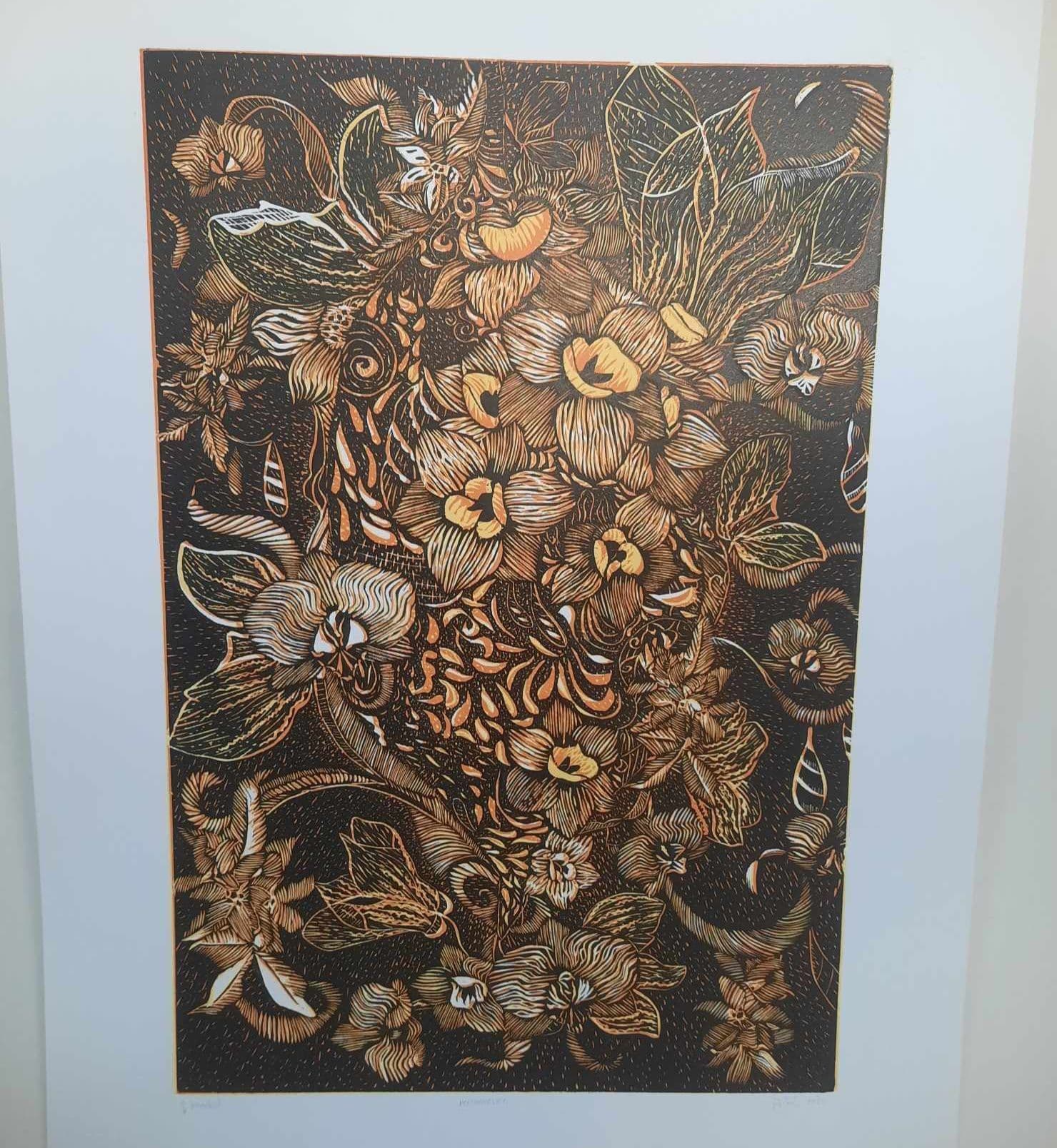
คณะสถาปัตยกรรม ศิลปะและการออกแบบ
A natural representation of new beginnings.
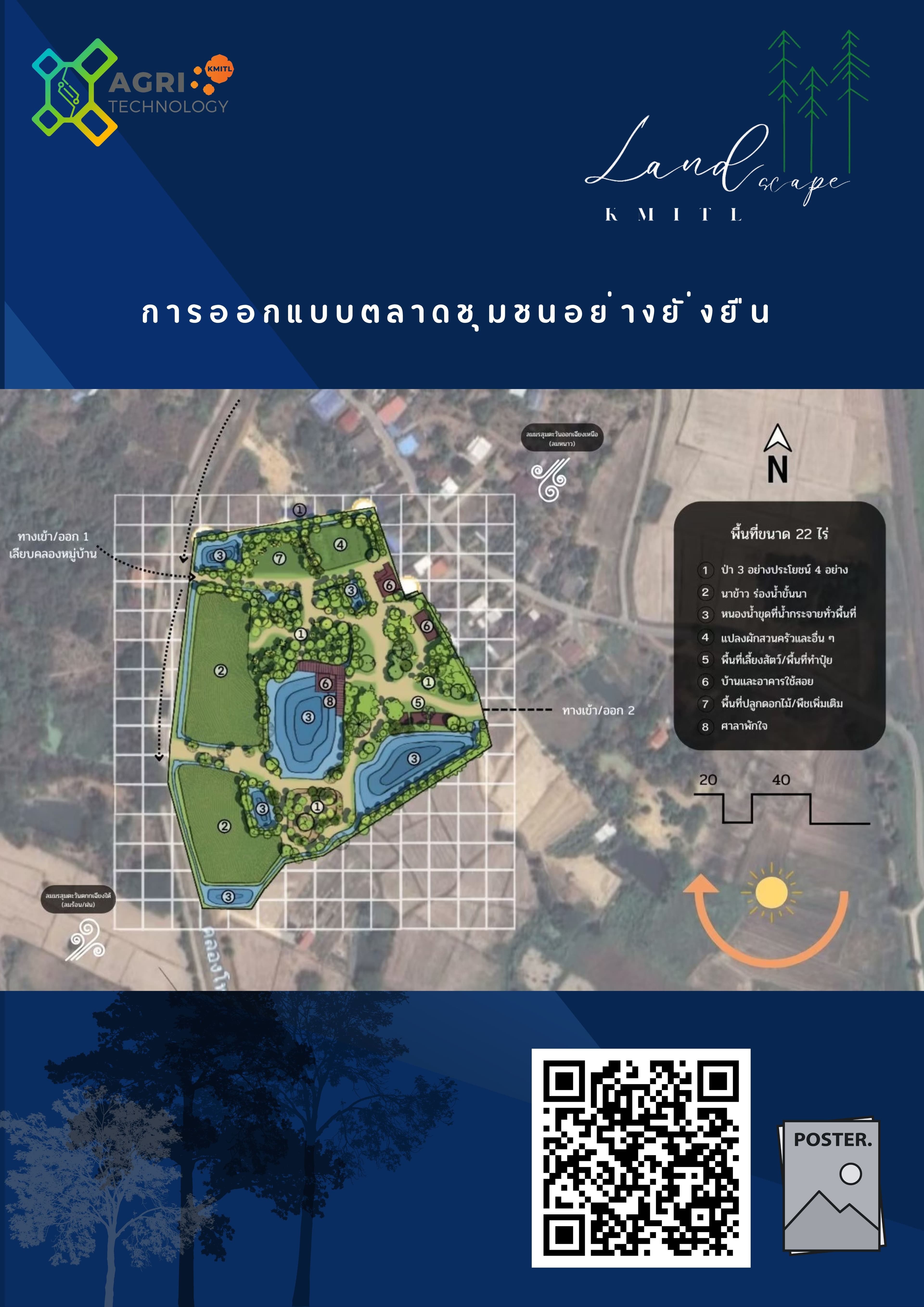
คณะเทคโนโลยีการเกษตร
The design site of 22 hectares of agricultural land in this area is located in Tatata District, Iglenburg Province. The design concept of this area aims to encourage farmers and communities to earn income from the agricultural products produced in this area, and emphasizes that this area is a "living market", which can not only create food from a variety of crops, but also establish a balanced ecosystem and promote biodiversity in this area. The market will become a sustainable market area, which is not only beneficial to society in promoting economy, but also beneficial to the environment. The area will serve as a social and learning center, where community members can fully exchange agricultural information and experience and stimulate the economy in the community in another way.
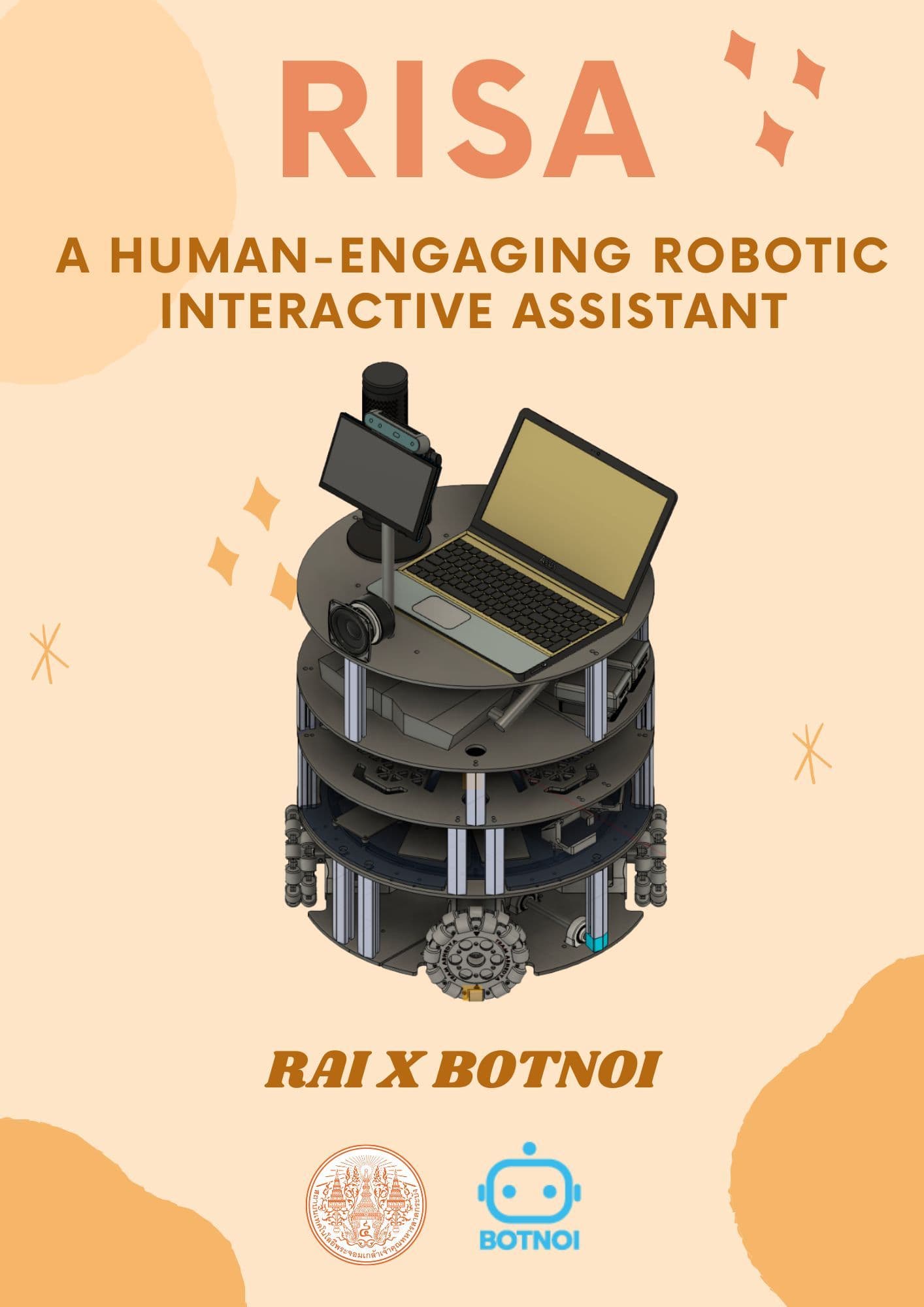
คณะวิศวกรรมศาสตร์
The integration of intelligent robotic systems into human-centric environments, such as laboratories, hospitals, and educational institutions, has become increasingly important due to the growing demand for accessible and context-aware assistants. However, current solutions often lack scalability—for instance, relying on specialized personnel to repeatedly answer the same questions as administrators for specific departments—and adaptability to dynamic environments that require real-time situational responses. This study introduces a novel framework for an interactive robotic assistant (Beckerle et al. , 2017) designed to assist during laboratory tours and mitigate the challenges posed by limited human resources in providing comprehensive information to visitors. The proposed system operates through multiple modes, including standby mode and recognition mode, to ensure seamless interaction and adaptability in various contexts. In standby mode, the robot signals readiness with a smiling face animation while patrolling predefined paths or conserving energy when stationary. Advanced obstacle detection ensures safe navigation in dynamic environments. Recognition mode activates through gestures or wake words, using advanced computer vision and real-time speech recognition to identify users. Facial recognition further classifies individuals as known or unknown, providing personalized greetings or context-specific guidance to enhance user engagement. The proposed robot and its 3D design are shown in Figure 1. In interactive mode, the system integrates advanced technologies, including advanced speech recognition (ASR Whisper), natural language processing (NLP), and a large language model Ollama 3.2 (LLM Predictor, 2025), to provide a user-friendly, context-aware, and adaptable experience. Motivated by the need to engage students and promote interest in the RAI department, which receives over 1,000 visitors annually, it addresses accessibility gaps where human staff may be unavailable. With wake word detection, face and gesture recognition, and LiDAR-based obstacle detection, the robot ensures seamless communication in English, alongside safe and efficient navigation. The Retrieval-Augmented Generation (RAG) human interaction system communicates with the mobile robot, built on ROS1 Noetic, using the MQTT protocol over Ethernet. It publishes navigation goals to the move_base module in ROS, which autonomously handles navigation and obstacle avoidance. A diagram is explained in Figure 2. The framework includes a robust back-end architecture utilizing a combination of MongoDB for information storage and retrieval and a RAG mechanism (Thüs et al., 2024) to process program curriculum information in the form of PDFs. This ensures that the robot provides accurate and contextually relevant answers to user queries. Furthermore, the inclusion of smiling face animations and text-to-speech (TTS BotNoi) enhanced user engagement metrics were derived through a combination of observational studies and surveys, which highlighted significant improvements in user satisfaction and accessibility. This paper also discusses capability to operate in dynamic environments and human-centric spaces. For example, handling interruptions while navigating during a mission. The modular design allows for easy integration of additional features, such as gesture recognition and hardware upgrades, ensuring long-term scalability. However, limitations such as the need for high initial setup costs and dependency on specific hardware configurations are acknowledged. Future work will focus on enhancing the system’s adaptability to diverse languages, expanding its use cases, and exploring collaborative interactions between multiple robots. In conclusion, the proposed interactive robotic assistant represents a significant step forward in bridging the gap between human needs and technological advancements. By combining cutting-edge AI technologies with practical hardware solutions, this work offers a scalable, efficient, and user-friendly system that enhances accessibility and user engagement in human-centric spaces.