


A natural representation of new beginnings.
ที่มาหัวข้อธรรมชาติ ได้มีการเอาความหมายของดอกไม้มาเล่นให้เกิดเป็นชิ้นงานนี้

คณะวิทยาศาสตร์
With the development of space technology, wide-field sky surveys using telescopes have expanded the range of new data available for time-domain astronomical research. Traditional data analysis methods can no longer respond quickly and accurately enough to the growing volume of data. Thus, classifying time-series data, such as light curves, has become a significant challenge in the era of big data. In modern times, analyzing light curves has become essential for using machine learning techniques to handle and filter through massive amounts of data. Machine learning algorithms can be divided into two categories: shallow learning and deep learning. Numerous researchers have proposed and developed a variety of algorithms for light curve classification. In this study, we experimented with Support Vector Machine (SVM) and XGBoost, which are shallow machine learning algorithms, as well as 1D-CNN and Long Short-Term Memory (LSTM), which are deep learning algorithms, which are branches of deep machine learning, to classify variable stars. The training and testing data used in this study were from the Optical Gravitational Lensing Experiment-III (OGLE-III), consisting of variable star data from the Large Magellanic Cloud (LMC), categorized into five main classes: Classical Cepheids, δ Scutis, eclipsing binaries, RR Lyrae stars, and Long-period variables. The results demonstrate the performance analysis of each machine learning algorithm type applied to light curve data, while also highlighting the accuracy and statistical metrics of the algorithms used in the experiments.
คณะวิทยาศาสตร์
The species Enterococcus lactis is closely related to E. faecium and is known for its beneficial and probiotic effects. In this study, strain RRS4 was isolated from Raphanus sativus Linn. and identified based on both phenotypic and genotypic characteristics. Strain RRS4 exhibited cell viability in environments with 2-8% NaCl, pH ranging from 4 to 9, and temperatures between 4°C and 45°C. Through comprehensive genomic analysis, strain RRS4 was confirmed to be E. lactis. E. lactis RRS4 demonstrated inhibitory effects against Vancomycin-resistant E. faecalis JCM 5803. Safety assessments via in silico methods, including KEGG annotation, indicated the absence of virulent and undesirable genes in E. lactis RRS4. VirulenceFinder analysis aligned virulence-related genes with those from three strains of E. lactis and four strains of E. faecium. While antibiotic resistance genes were found to be conserved, they did not correlate with key pathogenicity traits. Furthermore, safety evaluations highlighted that E. lactis RRS4 is generally safe, despite the presence of genes associated with antibiotic resistance. Lastly, we propose guidelines for assessing the safety of microbial strains using whole-genome analysis. These findings represent advancements in probiotic research.
คณะวิทยาศาสตร์
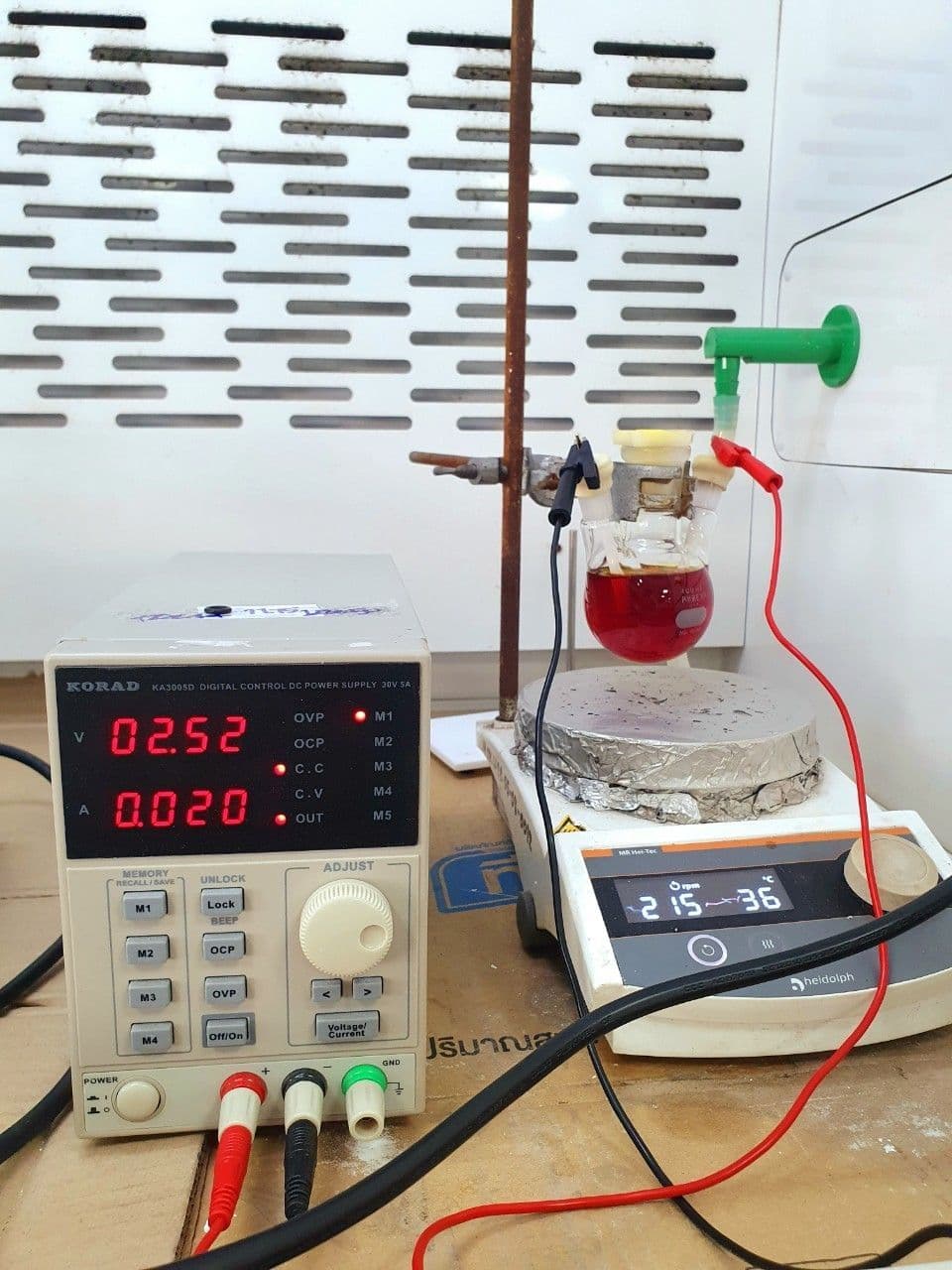
The synthesis using electrons as reagents instead of oxidants is a method for synthesizing drug molecules in a way that reduces the use of chemicals, thereby minimizing environmental pollution.