

This research presents the development of an AI-powered system designed to automate the identification and quantification of dental surgical instruments. By leveraging deep learning-based object detection, the system ensures the completeness of instrument sets post-procedure. The system's ability to process multiple images simultaneously streamlines the inventory process, reducing manual effort and potential errors. The extracted data on instrument quantity and type can be seamlessly integrated into a database for various downstream applications.
เนื่องจากในปัจจุบันงานทางด้านทันตกรรมมีความซับซ้อนและหลากหลาย อีกทั้งมีการใช้เครื่องมือทางทันตกรรมต่างๆจำนวนมาก โดยหลังจากที่ถูกนำเครื่องมือมาใช้ในการรักษาตามสถานที่ โรงพยาบาลหรือคลินิกทันตกรรม ถ้าไม่มีการจัดการและตรวจสอบกับอุปกรณ์ต่างๆเหล่านี้อาจทำให้เกิดปัญหาต่างๆตามมา เช่น การสูญหายของอุปกรณ์ ซึ่งอาจทำให้สูญเสียค่าใช้จ่ายในการซื้ออุปกรณ์ใหม่โดยไม่จำเป็น ดังนั้นการตรวจสอบและนับเครื่องมือเป็นกระบวนที่สำคัญอย่างมากในการช่วยลดการสูญเสียของอุปกรณ์และปัญหาอื่นๆในการจัดการกับเครื่องมือทันตกรรม การตรวจสอบและนับจำนวนเครื่องมือหลังการใช้รักษาเป็นกระบวนการที่สำคัญอย่างมากโดยมีการใช้เวลาในการตรวจสอบ รวบรวม จัดการ และนับจำนวนของเครื่องมือทั้งหมดโดยมีการใช้บุคลากรของทางโรงพยาบาลหรือคลินิกทันตกรรมและใช้วิธีการนับด้วยมือ ทำให้เกิดล่าช้า อีกทั้งอาจจะเกิดการนับจำนวนเครื่องมือที่ไม่ถูกต้องครบถ้วน มีการบันทึกข้อมูลซับซ้อน และใช้ทรัพยากรคนในการทำงานที่เยอะเกินความจำเป็นอีกด้วยซึ่งส่งผลกระทบต่อการจัดการวางแผนในกระบวนการใช้เครื่องมือในครั้งต่อไป โดยกระบวนการตรวจสอบและนับจำนวนเครื่องมือนี้นอกจากจะช่วยในเรื่องของการระบุชนิดและนับเครื่องมือแล้ว ยังสามารถช่วยเพิ่มประสิทธิภาพในการใช้งานเครื่องมือ วางแผนในการจัดซื้ออุปกรณ์ รวมถึงช่วยลดค่าใช้จ่ายในการจัดซื้อเครื่องมือใหม่อีกด้วย จากปัญหาดังกล่าว โครงงานนี้จึงได้พัฒนาระบบปัญญาประดิษฐ์สำหรับระบุชนิดเครื่องมือทันตกรรมหัตถการเพื่อตรวจนับจำนวนด้วยวิธีการเรียนรู้เชิงลึก โดยเป็นการตรวจนับความครบถ้วนของอุปกรณ์ที่นำไปใช้ มีใช้วิธีการตรวจจับวัตถุ(Object Detection) ซึ่งการตรวจจับวัตถุช่วยให้สามารถตรวจจับอุปกรณ์ทันตกรรหัตถการทั้งหมดหลังจากการใช้งาน เพื่อเพิ่มประสิทธิภาพ ความแม่นยำ อีกทั้งสามารถตรวจนับเครื่องมือต่างๆได้พร้อมกันหลายๆภาพเพื่อช่วยลดเวลาและความล่าช้าในกระบวนการตรวจสอบและนับจำนวนเครื่องมือทั้งหมด รวมถึงข้อมูลจำนวนและชนิดของอุปกรณ์ สามารถส่งออกไปยังฐานข้อมูลเพื่อนำข้อมูลไปใช้งานต่อได้อีกด้วย
คณะเทคโนโลยีการเกษตร
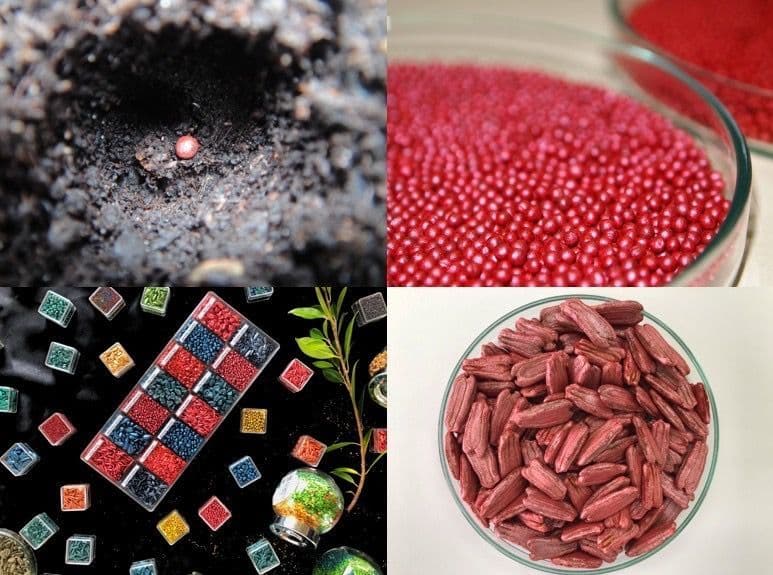
This experiment aimed to study the suitable types of polymers for coating with chlorophyll extract and the quality of cucumber seeds after coating. The experiment was planned using a Completely Randomized Design (CRD) with four replications, consisting of five methods involving seeds coated with different types of polymers: Polyvinylpyrrolidone, Sodium Alginate, Carboxy Methyl Cellulose, and Hydroxypropyl Methylcellulose, each polymer being coated alongside chlorophyll, with uncoated seeds serving as the control method. The coating substance was prepared by extracting chlorophyll from mango leaves, then mixed with each type of polymer at a concentration of 1%, using an 8% concentration of chlorophyll extract. The properties of each coating method, such as pH and viscosity of the coating substance, were examined before coating the cucumber seeds with a rotary disk coater model RRC150 at a coating rate of 1,100 milliliters per 1 kilogram of seeds. Subsequently, the seeds were dried to reach the initial moisture level using a hot air blower, and seed quality was assessed in various aspects, including seed moisture, germination rate under laboratory conditions, germination index, and seed fluorescence under a portable ultraviolet light illuminator, as well as light emission spectrum analysis using a Spectrophotometer. The experiment found that each type of polymer could be used to form a film together with chlorophyll, which had appropriate pH and viscosity for the coating without affecting seed quality and showed fluorescence on the seed surface both under portable ultraviolet light and spectral emission analysis with a Spectrophotometer. Using HPMC as the film-forming agent with chlorophyll was the most suitable method, enhancing seed fluorescence efficiency.

คณะครุศาสตร์อุตสาหกรรมและเทคโนโลยี
The Department of Engineering Education at KMITL offers courses in power electronics laboratory practices, which require the use of expensive imported training kits. This results in a loss of national revenue due to the purchase of these imported kits. Therefore, the developers propose a power electronics training kit that offers equivalent or superior functionality to the imported ones while being more cost-effective, making it suitable for student experiments.
คณะวิทยาศาสตร์
Otitis Media is an infection of the middle ear that can occur in individuals of all ages. Diagnosis typically involves analyzing images taken with an otoscope by specialized physicians, which relies heavily on medical experience to expedite the process. This research introduces computer vision technology to assist in the preliminary diagnosis, aiding expert decision-making. By utilizing deep learning techniques and convolutional neural networks, specifically the YOLOv8 and Inception v3 architectures, the study aims to classify the disease and its five characteristics used by physicians: color, transparency, fluid, retraction, and perforation. Additionally, image segmentation and classification methods were employed to analyze and predict the types of Otitis Media, which are categorized into four types: Otitis Media with Effusion, Acute Otitis Media with Effusion, Perforation, and Normal. Experimental results indicate that the classification model performs moderately well in directly classifying Otitis Media, with an accuracy of 65.7%, a recall of 65.7%, and a precision of 67.6%. Moreover, the model provides the best results for classifying the perforation characteristic, with an accuracy of 91.8%, a recall of 91.8%, and a precision of 92.1%. In contrast, the classification model that incorporates image segmentation techniques achieved the best overall performance, with an mAP50-95 of 79.63%, a recall of 100%, and a precision of 99.8%. However, this model has not yet been tested for classifying the different types of Otitis Media.