

This project involves the development of a plant care system for dormitories using IoT (Internet of Things). The system is implemented through programming on an ESP-32 board and controlled via sensors for automated watering. The commands are operated through smartphones, supporting both iOS and Android. It is expected that this project will make plant care in dormitories easier and more convenient.
ในปัจจุบันหลายพื้นที่ในเมืองมีความหนาแน่นของประชากรสูง เช่นหอพัก คอนโดมิเนียม หรือ อพาต์เม้น มักมีพื้นที่จำกัดสำหรับการปลูกต้นไม้ซึ่งเป็นไปใจในการสร้างสภาพแวดล้อมที่ดีและสุขภาพที่ดีให้กับผู้อยู่อาศัย การสร้างแอพพลิเคชันปลูกต้นไม้นี้ขึ้นมาเพื่อให้ผู้อาศัยสามารถปลูกต้นไม้ได้ในพื้นที่จำกัดและสามารถดูแลต้นไม้ได้เหมาะกับคนรุ่นใหม่ที่ไม่มีเวลาในการดูแลต้นไม้ก็สามารถปลูกพืชได้ซึ่งแอพพลิเคชันนี้ได้ออกแบบเพื่อให้ผู้ใช้งานสามารถเลือกต้นไม้ที่เหมาะสมกับพื้นที่จำกัดและมีคำแนะนำสำหรับการดูแลต้นไม้แก่ผู้ที่สนใจหรือต้องการศึกษา ด้วยความสำคัญดังกล่าว แอพพลิเคชันปลูกต้นไม้นี้ไม่เพียงแต่อำนวยความสะดวกให้กับผู้ใช้งานแต่ยังเป็นการสนับสนุนการพัฒนาที่ยั่งยืนและเต็มไปด้วยพื้นที่สีเขียว

วิทยาลัยนวัตกรรมการผลิตขั้นสูง
Since organic rice storage silos were faced with an insect problem, an owner solved this problem using the expert system (ES) in the controlled atmosphere process (CAP) under the required standard, fumigating insects with an N2, reducing O2 concentration to less than 2% for 21 days. This article presents the computational fluid dynamics (CFD) assisted ES successfully solved this problem. First, CFD was employed to determine the gas flow pattern, O2 concentration, proper operating conditions, and a correction factor (K) of silos. As expected, CFD results were consistent with the experimental results and theory, assuring the CFD’s credibility. Significantly, CFD results revealed that the ES controlled N2 distribution throughout the silos and effectively reduced O2 concentration to meet the requirement. Next, the ES was developed based on the inference engine assisted by CFD results and the sweep-through purging principle, and it was implemented in the CAP. Last, the experiments evaluated CAP’s efficacy in controlling O2 concentration and insect extermination in the actual silos. The experimental results and owner’s feedback confirmed the excellent efficacy of ES implementation; therefore, the CAP is effective and practical. The novel aspect of this research is a CFD methodology to create the inference engine and the ES.
คณะเทคโนโลยีการเกษตร
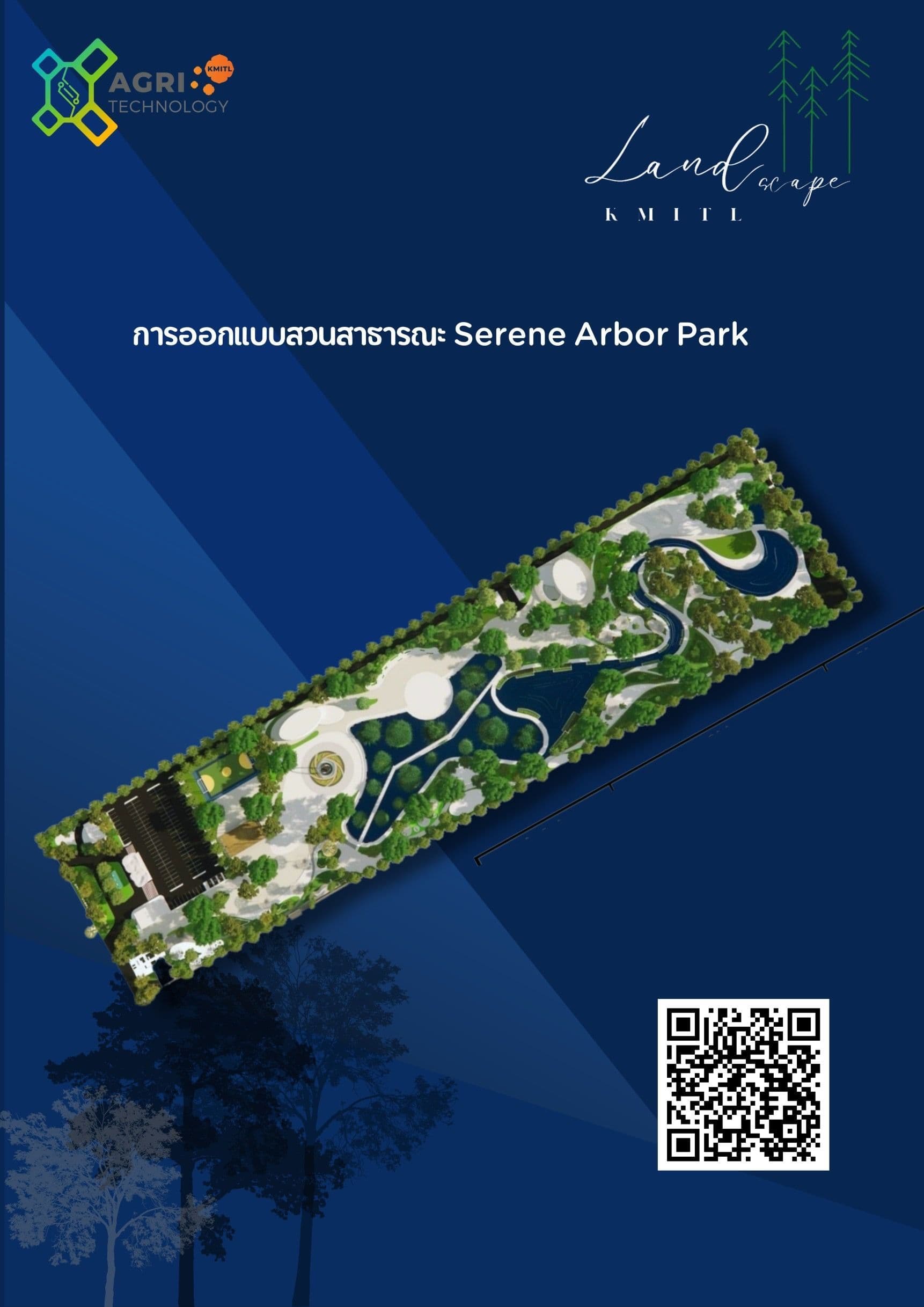
The design of a 50-rai public park in the Lat Krabang district of Bangkok aims to provide a recreational space for urban residents in Lat Krabang and nearby areas. The focus is on user groups such as students, university students, and working individuals, incorporating the concept of Universal Design to ensure that everyone in society can use the space equally. However, there is still an emphasis on creating active recreational areas to meet the sports and exercise needs of students, university students, and working individuals. The design of the Lat Krabang area, which is a low-lying region resembling a basin, includes features for water retention, water management, and water treatment for use within the park. The area will focus on exercise, sports, running, walking, relaxation, and educational garden spaces.
คณะสถาปัตยกรรม ศิลปะและการออกแบบ
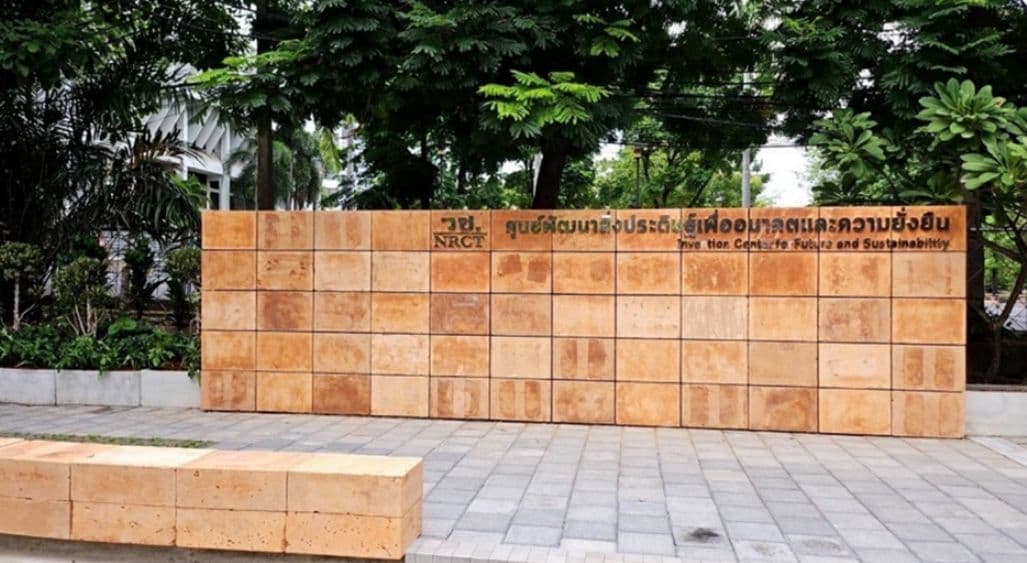
The " Center of Invention for Future and Sustainability Project (Continuing)" serves as a continuation of a pilot initiative focused on the retrofitting of older buildings (Vach. 7), specifically a five-story structure. The primary aim of this project is to develop methodologies for enhancing the sustainability of existing buildings in order to mitigate carbon dioxide emissions. In the execution of the Future and Sustainability Innovation Development Center Project (Continuing), a comprehensive analysis of relevant data and theoretical frameworks has been undertaken, leading to the formulation of a research methodology designed to identify optimal strategies for retrofitting older buildings to reduce carbon dioxide emissions. This approach is structured into three principal phases: the combustion of fuels associated with transportation, labor, and materials; the electricity consumption during the construction process; and the accumulation of greenhouse gases from both existing and new construction materials. The project employs an experimental research design, wherein empirical data is collected to evaluate and quantify the equivalent carbon dioxide emissions arising from the construction of new buildings compared to the retrofitting of the selected case study building. Subsequent analysis of the collected data revealed that retrofitting the existing structure—through the integration of sustainable design principles—resulted in greenhouse gas emissions of 11.88 kgCO2e/sq.m. In contrast, the emissions associated with new building construction amounted to 299.35 kgCO2e/sq.m., indicating a reduction in carbon dioxide emissions by a factor of approximately 26 when compared to the construction of new buildings.