

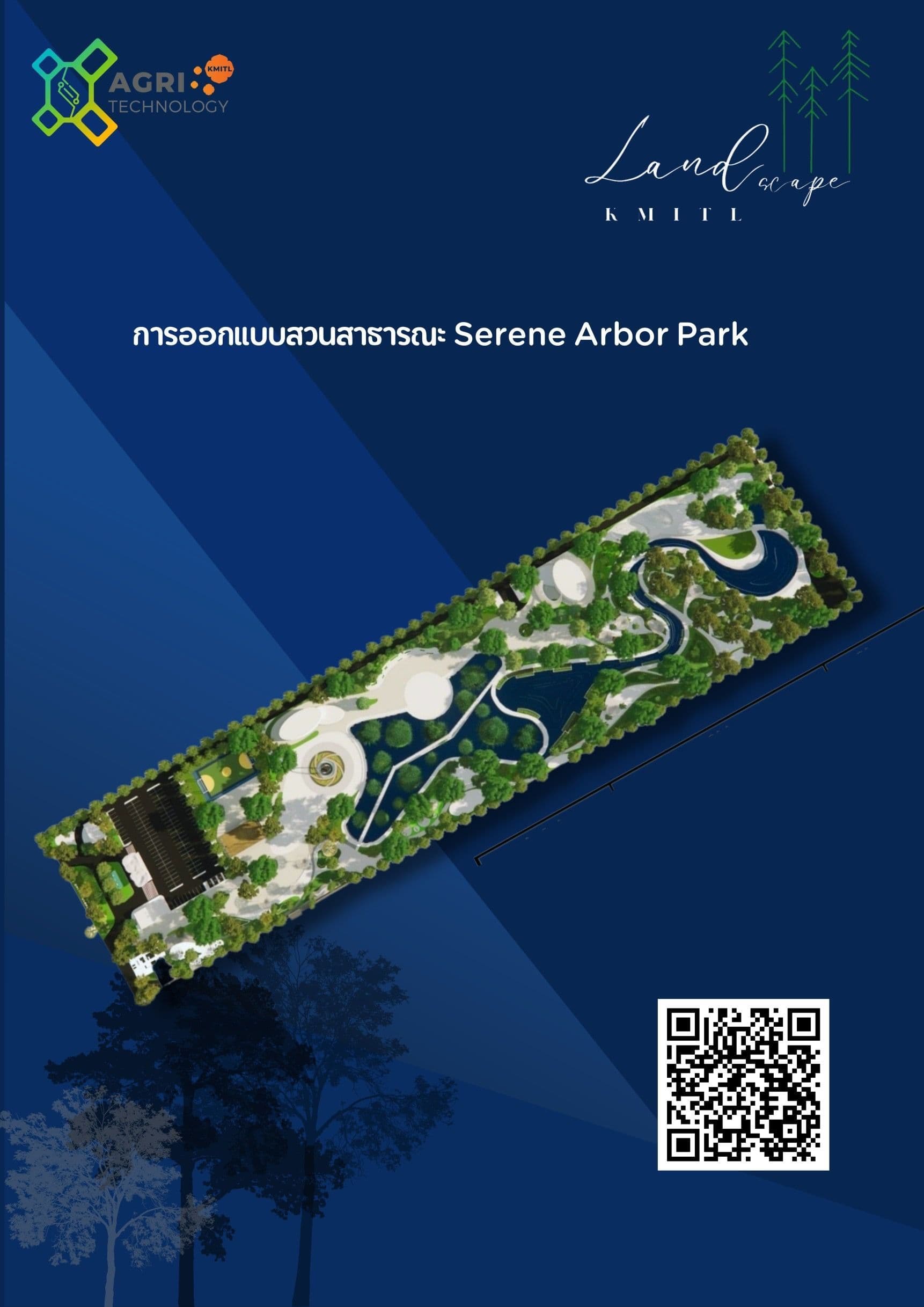
The design of a 50-rai public park in the Lat Krabang district of Bangkok aims to provide a recreational space for urban residents in Lat Krabang and nearby areas. The focus is on user groups such as students, university students, and working individuals, incorporating the concept of Universal Design to ensure that everyone in society can use the space equally. However, there is still an emphasis on creating active recreational areas to meet the sports and exercise needs of students, university students, and working individuals. The design of the Lat Krabang area, which is a low-lying region resembling a basin, includes features for water retention, water management, and water treatment for use within the park. The area will focus on exercise, sports, running, walking, relaxation, and educational garden spaces.
เพื่อศึกษาการออกแบบพื้นที่สีเขียวในเขตเมืองที่มีประชากรหนาแน่น เพื่อให้ยังคงอนุรักษ์พื้นที่สีเขียวและพัฒนาพื้นที่ให้เป็นพื้นที่พักผ่อนหย่อมใจ ของประชากร และเพื่อการศึกษาพฤติกรรมมนุษย์ สภาพแวดล้อม และการออกแบบภูมิทัศน์

คณะวิทยาศาสตร์
The current residential solar panels lack an adequate monitoring system, which hinders their optimal utilization. This research aims to design an Internet of Things (IoT) monitoring system and employ machine learning techniques to predict the current and voltage generated by solar panels. Experimental studies have revealed a correlation between dust accumulation and the current output of solar panels. The proposed system facilitates the prediction of the optimal time for cleaning solar panels.
คณะวิศวกรรมศาสตร์
This project has been developed to address medical challenges related to the process of counting and classifying blood cells from samples, a task that requires both time and high precision. To reduce the workload of medical personnel, the developers have created a platform and an artificial intelligence (AI) system capable of automatically classifying and counting cells from sample images. This system is designed to assist medical laboratory technicians by enabling them to work more efficiently and accurately, reducing the time required for analysis. Furthermore, it promotes the advancement of medical technology, ensuring effective usability from classrooms and laboratories to hospitals.
คณะเทคโนโลยีการเกษตร
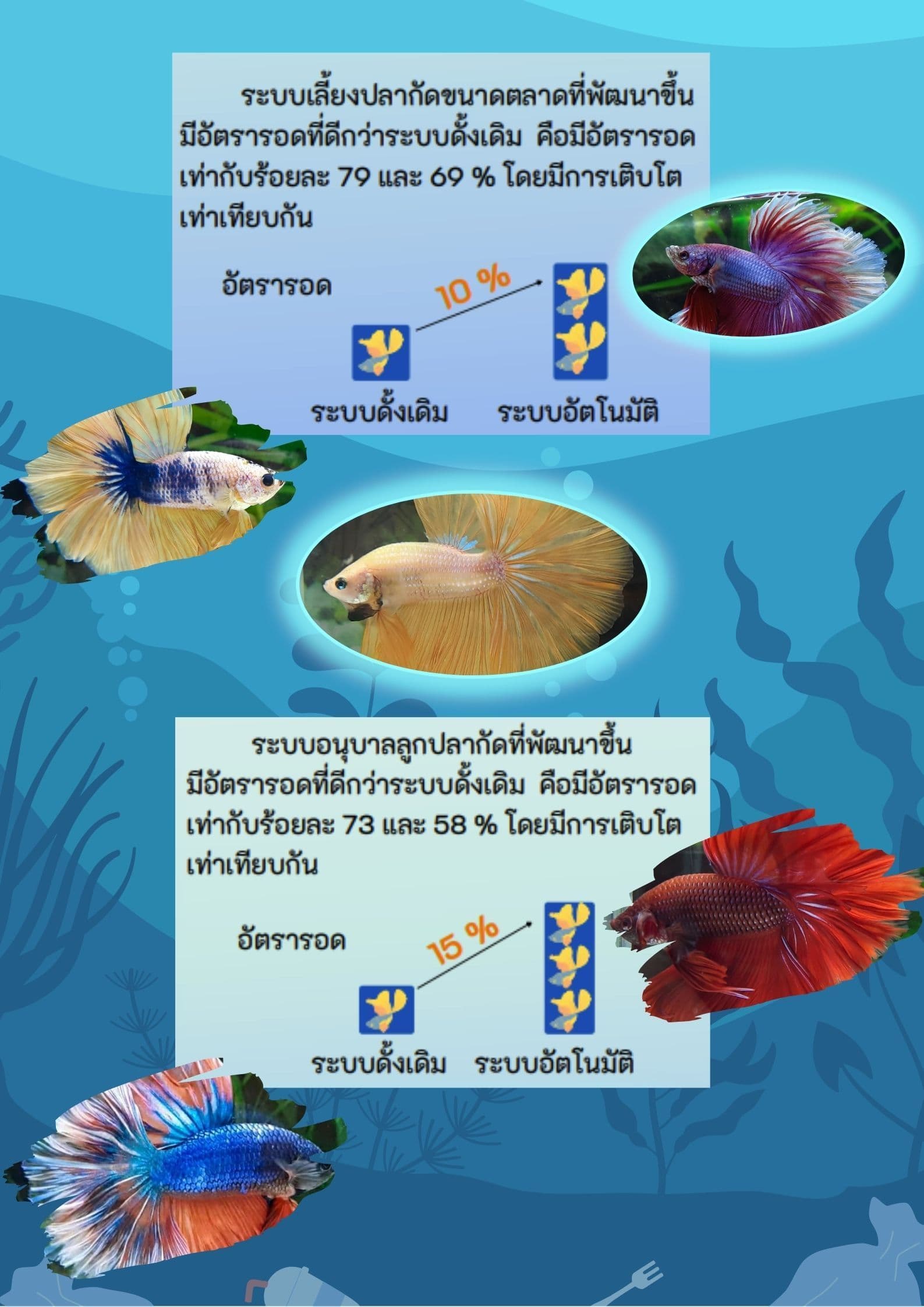
Siamese fighting fish (Betta splendens) is an ornamental fish that is the first exported economically valuable fish in the country, but there is a limitation to increase the production of betta fish due to climate variability and the shortage of Thai workers. This research aims to develop 2 systems: a betta fish fry nursery system and a market-sized betta fish rearing system by using automated technology to precisely control the water quality in the system and reduce labor costs. Using precise automation consists of two systems: a minimal-waste system, which repurposes some of the waste generated from farming, and a zero-waste system, which treats and recycles all wastewater from farming. These systems aim to address issues related to water quality, animal welfare, and labor requirements in Betta fish farming. Experimental results show that these systems improve Betta fish survival rates by 10-15% compared to traditional methods. When considering net returns, the zero- waste system provides the highest profitability.