

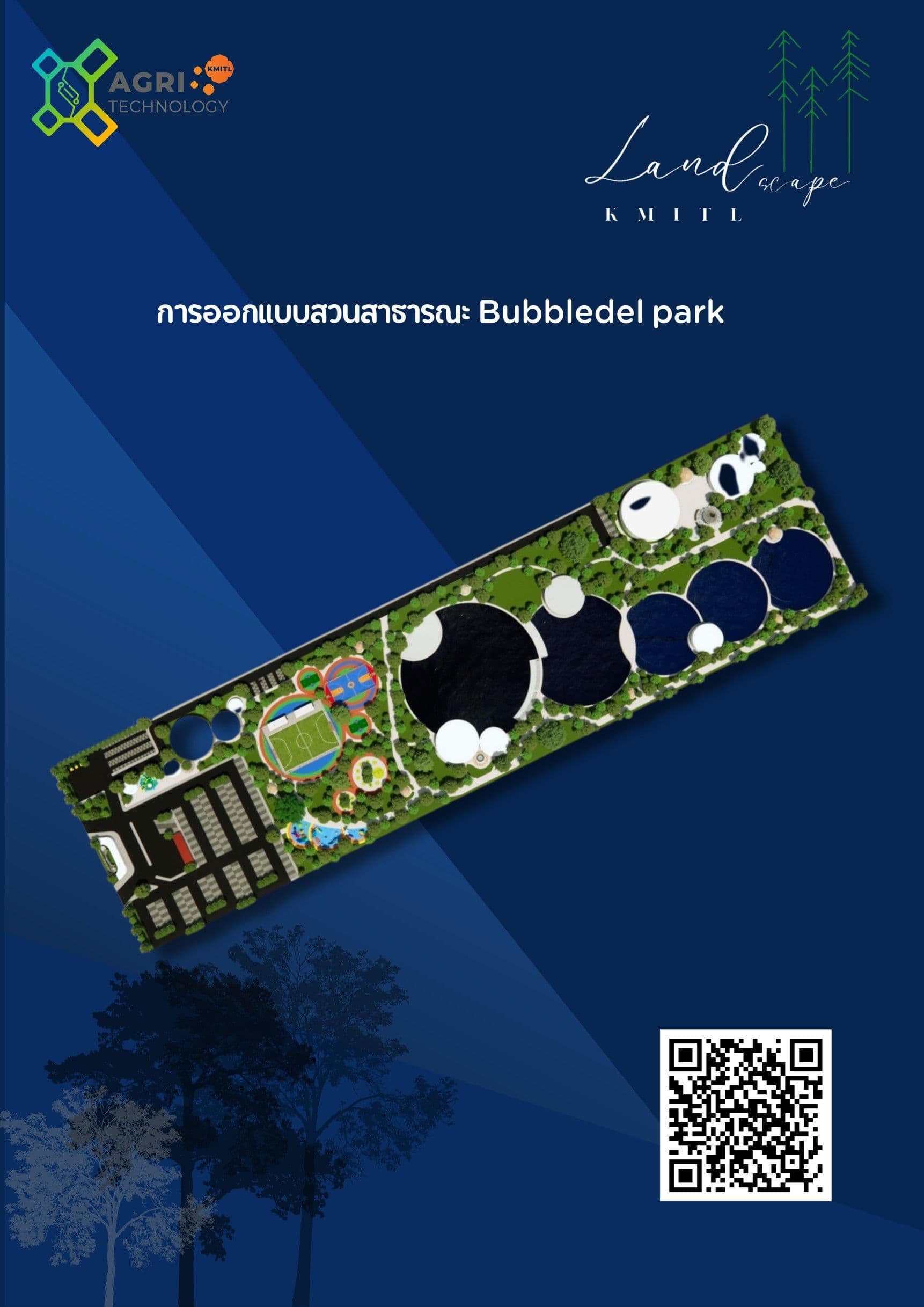
The Public Park Project: Bubbledel Park is a new-style public park located at Suan Phra Nakhon in Lat Krabang District, Bangkok. Designed to be modern and entertaining, the park incorporates the concept of using bubbles to add vibrancy and create a unique connection with nature, unlike any other place.
สวนสาธารณะที่เกิดด้วยจินตนาการที่เต็มไปด้วยความมหัศจรรย์และความสุข สวนแห่งนี้โดดเด่นด้วยพื้นที่สีเขียวเข้ามาประดับประดาไปด้วยฟองอากาศที่เปรียบเสมือนลอยขึ้นสู่ท้องฟ้า ให้เห็นสีสันที่สวยงาม แต่ยังสามารถสัมผัสได้และให้ความรู้สึกเหมือนอยู่ในโลกแห่งความฝัน ถูกออกแบบมาเพื่อให้ผู้คนได้ผ่อนคลาย สนุกสนาน และเชื่อมต่อกับธรรมชาติในแบบที่ไม่เหมือนที่ใด แบ่งโซนได้อย่างชัดเจน นอกจากนี้ ยังมีกิจกรรมที่น่าสนใจ เช่น การเล่นกีฬากลางแจ้ง เวที และลานอเนกประสงค์ในการชมการแสดงต่างๆ ทำให้ที่นี่เป็นสถานที่ในอุดมคติสำหรับทุกเพศ ทุกวัย
คณะวิศวกรรมศาสตร์
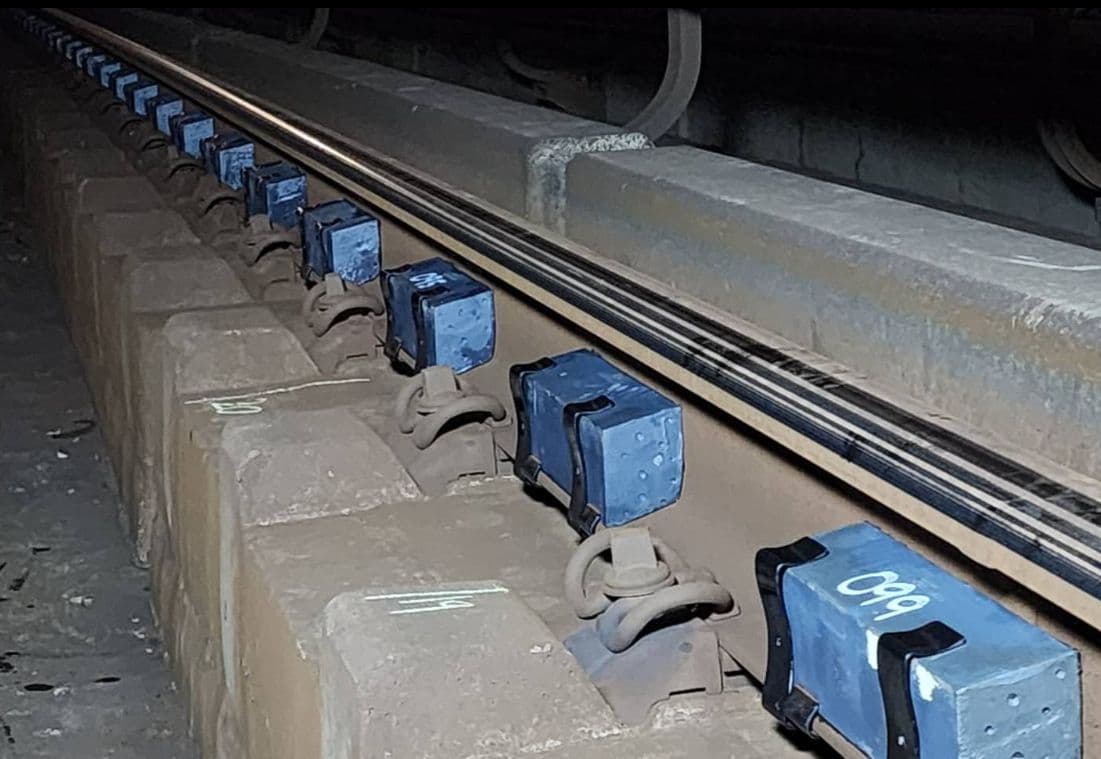
Nowadays, rail transportation has a significant impact on people's lives and economic growth. Consequently, the number of rail systems being built around our country has dramatically increased. This process causes various types of pollution, such as noise and rail-way vibration, which can badly affect the life of citizens who live nearby. The most popular way to solve this problem recently is to decrease the noise from the sound source or to adjust the vibration by attaching a Track Damper to the railway. This technique is being used in many countries especially in Europe and Australia because it is cheap and has high efficiency. The key piece called Track Dampers are made by AUT company’s Thailand for a period of time. The company produces Track Dampers for the owner of the technology so as to sell more than 300,000 pieces of it overseas. Furthermore, the demand of Track Dampers grows as the railway systems expand. Unfortunately, the imported synthetic materials, which are used to create Track Dampers, are made from environmentally unfriendly sources. As a result, this research aims to develop the product to be environmentally-safe by replacing some imported materials with Thai’s local content; which are natural rubber and rubber crumbs. Furthermore, the product will be added value by mounting with embedded sensors for real-time monitoring of track vibration, noise, and rail temperature. All embedded devices developed will sense, collect, and automatically send to cloud by wireless technology platform. The AI and IOT platform will also be developed for safety, security, and maintenance proposed of railway track system. However, in conducting research, there will be close collaboration with AUT company through design, production, and testing. The outcome of this research is to upgrade AUT company from tier 2 manufacturer (TRL 8-9) to tier 1 manufacturer (TRL 7-8) which will be served the Thailand competitiveness enhancing strategic goal.

คณะวิทยาศาสตร์
The current residential solar panels lack an adequate monitoring system, which hinders their optimal utilization. This research aims to design an Internet of Things (IoT) monitoring system and employ machine learning techniques to predict the current and voltage generated by solar panels. Experimental studies have revealed a correlation between dust accumulation and the current output of solar panels. The proposed system facilitates the prediction of the optimal time for cleaning solar panels.
คณะเทคโนโลยีการเกษตร
Dwarf whipray (Brevitrygon heterura) is a common species found in a local market in the Gulf of Thailand. However, like many other species of stingrays, it is threatened by overfishing and habitat destruction. Therefore, an accurate species identification is crucial because conservation efforts may vary depending on the species. This study aims to understand morphological variation of B. heterura in the Gulf of Thailand by morphometric study and genetic analysis. During October 2022 and February 2023, we obtained 49 samples from research vessels fish landing ports and local fish markets. We observed two distinct groups based on 43 morphological variables/ratios. B. heterura samples from Chanthaburi, Rayong, Chonburi, Samut Sakhon, Nakhon Si Thammarat and Songkla provinces, called “group A," typically have longer snout length than those from Prachuap Khiri Khan provinces, called “group B" according to external morphological characters for species identification. Three morphological variables/ratios were significantly different between groups A and B. Main characters to explain intraspecific variations between group A and group B are further discussed. DNA barcoding based on a fragment of the cytochrome c oxidase subunit I (COI) gene were obtain from eight samples of group A and eight samples from group B. Pairwise percent sequence divergence (p-distance) for COI between group A and group B were 0.0-2.5. This study contributes to the understanding of variations of morphology and genetics of B. heterura in the Gulf of Thailand.