
Dwarf whipray (Brevitrygon heterura) is a common species found in a local market in the Gulf of Thailand. However, like many other species of stingrays, it is threatened by overfishing and habitat destruction. Therefore, an accurate species identification is crucial because conservation efforts may vary depending on the species. This study aims to understand morphological variation of B. heterura in the Gulf of Thailand by morphometric study and genetic analysis. During October 2022 and February 2023, we obtained 49 samples from research vessels fish landing ports and local fish markets. We observed two distinct groups based on 43 morphological variables/ratios. B. heterura samples from Chanthaburi, Rayong, Chonburi, Samut Sakhon, Nakhon Si Thammarat and Songkla provinces, called “group A," typically have longer snout length than those from Prachuap Khiri Khan provinces, called “group B" according to external morphological characters for species identification. Three morphological variables/ratios were significantly different between groups A and B. Main characters to explain intraspecific variations between group A and group B are further discussed. DNA barcoding based on a fragment of the cytochrome c oxidase subunit I (COI) gene were obtain from eight samples of group A and eight samples from group B. Pairwise percent sequence divergence (p-distance) for COI between group A and group B were 0.0-2.5. This study contributes to the understanding of variations of morphology and genetics of B. heterura in the Gulf of Thailand.
ปลากระเบนสกุล Brevitrygon เป็นกลุ่มปลากระเบนที่จัดอยู่ในชั้น (class) Chondrichthyes อันดับ Myliobatiformes จัดอยู่ในกลุ่มปลากระดูกอ่อน สามารถพบได้ ทั้งในน้ำจืด น้ำกร่อยและทะเล ลักษณะส่วนใหญ่ของปลาอันดับนี้ ครีบอกจะแผ่ออกทางด้านข้าง ลำตัวค่อนข้างแบนลงคล้ายกับจาน มีเหงือกจำนวน 5 คู่อยู่ล่างของลำตัวช่วงส่วนหัวบริเวณที่ต่อจากส่วนท้ายตาจะมีช่องสำหรับน้ำเข้า (spiracle) ในแต่ละวงศ์ (family) จะมีลักษณะเด่นที่แตกต่างกัน ปลากระเบนสกุล Brevitrygon จัดอยู่ ในวงศ์ Dasyatidea ซึ่งมีลักษณะเด่นอยู่ที่หางยาวคล้ายแส้ ปลากระเบนสกุลนี้จากการศึกษามีทั้งหมด 4 ชนิด (Last et al. 2016) จากการรวบรวมข้อมูลจากต่างประเทศพบว่า ปลากระเบนสกุล Brevitrygon สามารถเจอใน ประเทศไทย 2 ชนิด ได้แก่ ปลากระเบนตุ๊กตา (B. heterura) และกระบาง (B. imbricata) (Last et al. 2016) โดยปลากระบางสามารถพบที่ทะเลฝั่งอันดามันเท่านั้น ซึ่งแตกต่างกับปลากระเบน ตุ๊กตาที่จะพบได้ทั้งบริเวณฝั่งอ่าวไทยและฝั่งอันดามัน แต่จากการรวบรวมรายงานข้อมูลปลากระดูกอ่อน ที่พบในน่านน้ำไทยและน่านน้ำใกล้เคียงโดยมีการจัดลำดับทางอนุกรมวิธาน (ทัศพล และคณะ, 2562) ได้พบว่ามีการเจอปลา กระเบนที่มีลักษณะที่คล้ายคลึง (Look- alike species) กับปลากระบางอาศัยใน บริเวณอ่าวไทย จึงได้มีการเรียกชื่อปลากระเบนชนิดนี้ว่า B. cf. imbricate ดังนั้นจึงจ้าเป็นต้องมี การศึกษาเพื่อยืนยันชนิดของปลากระเบนสกุล Brevitrygon ที่พบในน่านน้ำไทย และเพื่อตรวจสอบและ เปรียบเทียบความแตกต่างของลักษณะทางอนุกรมวิธานจากสัณฐานวิทยาภายนอกของปลากระเบนสกุลนี้ จากการการสำรวจโดยกรมประมงตั้งแต่ปี พ.ศ. 2547 ไปจนถึง 2560 มีแนวโน้มที่มีการศึกษาและค้นพบ ปลากระดูกอ่อนชนิดใหม่เพิ่มขึ้นเรื่อย ๆ (Krajangdara, 2017) ตรงกันข้ามกับการศึกษา ชนิดของปลากระดูกอ่อนที่คล้ายคลึงกันในประเทศไทย ซึ่งมีแนวโน้มลดลงและไม่ได้รับความนิยม ทำให้ข้อมูลทางวิชาการด้านอนุกรมวิธานยังมีไม่เพียงพอ รวมไปถึงปลากระเบนสกุล Brevitrygon ที่เป็นปลากระเบนที่พบจำนวนมากในประเทศไทย แต่ยังมีความไม่ชัดเจนและคล้ายคลึงกันของลักษณะภายนอก ในแต่ละชนิดของปลา กระเบนสกุลนี้ ซึ่งควรได้รับการตรวจสอบเพื่อยืนยันถึงสายพันธุ์ของปลากระเบน สกุลนี้เพื่อความถูกต้องของฐานข้อมูลในประเทศไทย การศึกษาในครั้งนี้จึงได้ทำการศึกษาการ อนุกรมวิธานทั้งลักษณะภายนอกและการวัดสัดส่วนในสัดส่วนต่าง ๆ ของปลากระเบนเพื่อเปรียบเทียบและหาความแตกต่างและนำเทคนิคทางชีวโมเลกุลมาศึกษาเพื่อตรวจสอบและยืนยันความถูกต้องของชนิดปลากระเบนในสกุลนี้ การศึกษาในครั้งนี้จึงมีความสำคัญสำหรับงานด้านการอนุกรมวิธานเพื่อใช้ในการจัดการทรัพยากรปลากระเบนที่ไม่ได้รับความสนใจเพื่อเป็นฐานข้อมูลในการอนุรักษ์และความหลากหลายของปลากระดูกอ่อน รวมไปถึงเพื่อยืนยันชนิดของปลากระเบนสกุล Brevitrygon ในประเทศไทย
วิทยาลัยอุตสาหกรรมการบินนานาชาติ
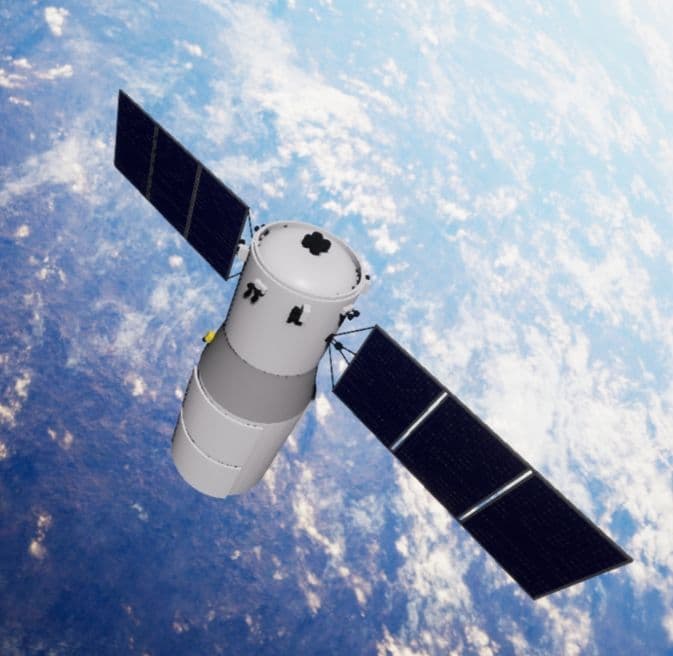
The capture of a target spacecraft by a chaser is an on-orbit docking operation that requires an accurate, reliable, and robust object recognition algorithm. Vision-based guided spacecraft relative motion during close-proximity maneuvers has been consecutively applied using dynamic modeling as a spacecraft on-orbit service system. This research constructs a vision-based pose estimation model that performs image processing via a deep convolutional neural network. The pose estimation model was constructed by repurposing a modified pretrained GoogLeNet model with the available Unreal Engine 4 rendered dataset of the Soyuz spacecraft. In the implementation, the convolutional neural network learns from the data samples to create correlations between the images and the spacecraft’s six degrees-of-freedom parameters. The experiment has compared an exponential-based loss function and a weighted Euclidean-based loss function. Using the weighted Euclidean-based loss function, the implemented pose estimation model achieved moderately high performance with a position accuracy of 92.53 percent and an error of 1.2 m. The in-attitude prediction accuracy can reach 87.93 percent, and the errors in the three Euler angles do not exceed 7.6 degrees. This research can contribute to spacecraft detection and tracking problems. Although the finished vision-based model is specific to the environment of synthetic dataset, the model could be trained further to address actual docking operations in the future.

วิทยาลัยการจัดการนวัตกรรมและอุตสาหกรรม
This research aims to develop a horse treat product that meets the nutritional and health needs of horses by using natural ingredients with beneficial properties, such as oats, wheat flour, corn flour, and organic molasses. These ingredients are rich in fiber, vitamins, and essential minerals for horses, while also enhancing digestive efficiency, reducing the risk of colic, and providing an appropriate energy source. The treat is designed with a shape suitable for a horse’s chewing behavior and is infused with Thai fruit flavors, such as pineapple and ripe mango, to attract horses and make consumption easier. The production process emphasizes cleanliness and safety by selecting organic ingredients and avoiding harmful preservatives. The packaging is designed to maintain product quality for an extended period, prevent moisture, and be convenient for horse owners to use. Additionally, the treat can be used as a reward during horse training, helping to strengthen the bond between the horse and its owner while reducing equine stress. This product serves as both a health-boosting snack and an effective training tool, making it suitable for horses that require highly nutritious supplements. It also provides a new option for horse owners seeking a safe and beneficial product for their horse’s overall well-being.
วิทยาเขตชุมพรเขตรอุดมศักดิ์
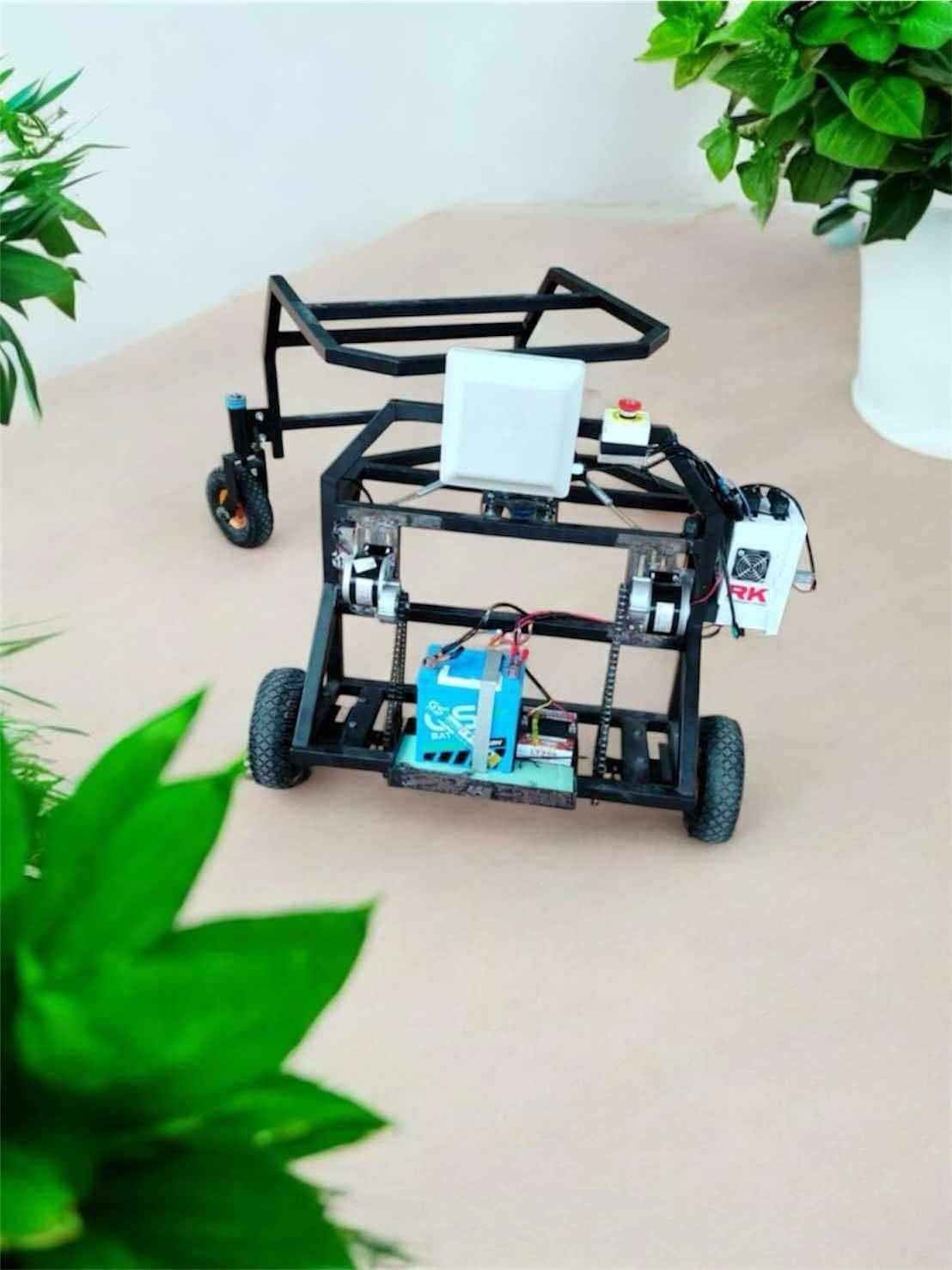
This project aims to design and develop a propulsion system for agricultural equipment using RFID technology and evaluate its movement performance on different surfaces, including concrete and grass. The experiment focuses on examining the tag detection range under transmission power levels of 20 dBm, 23 dBm, and 26 dBm, as well as the impact of antenna angles on detection efficiency. Additionally, the system was tested in three movement scenarios: straight path, left turn, and right turn, at distances of 2 meters, 4 meters, and 6 meters. The results indicate that the system achieved the highest average speed of 0.4736 m/s and an average turning angle of 91.6° when moving in a straight path on a concrete surface at a distance of 4 meters. On a grass surface at the same distance, the average speed was 0.4483 m/s, with an average turning angle of 91.1°. For left and right turns, the movement on the concrete surface generally exhibited a higher average speed than on grass, particularly at a distance of 4 meters, where differences in turning angles were observed. This study provides insights into the factors affecting the movement of agricultural mowing equipment and serves as a foundation for enhancing the efficiency of propulsion systems in future developments.