

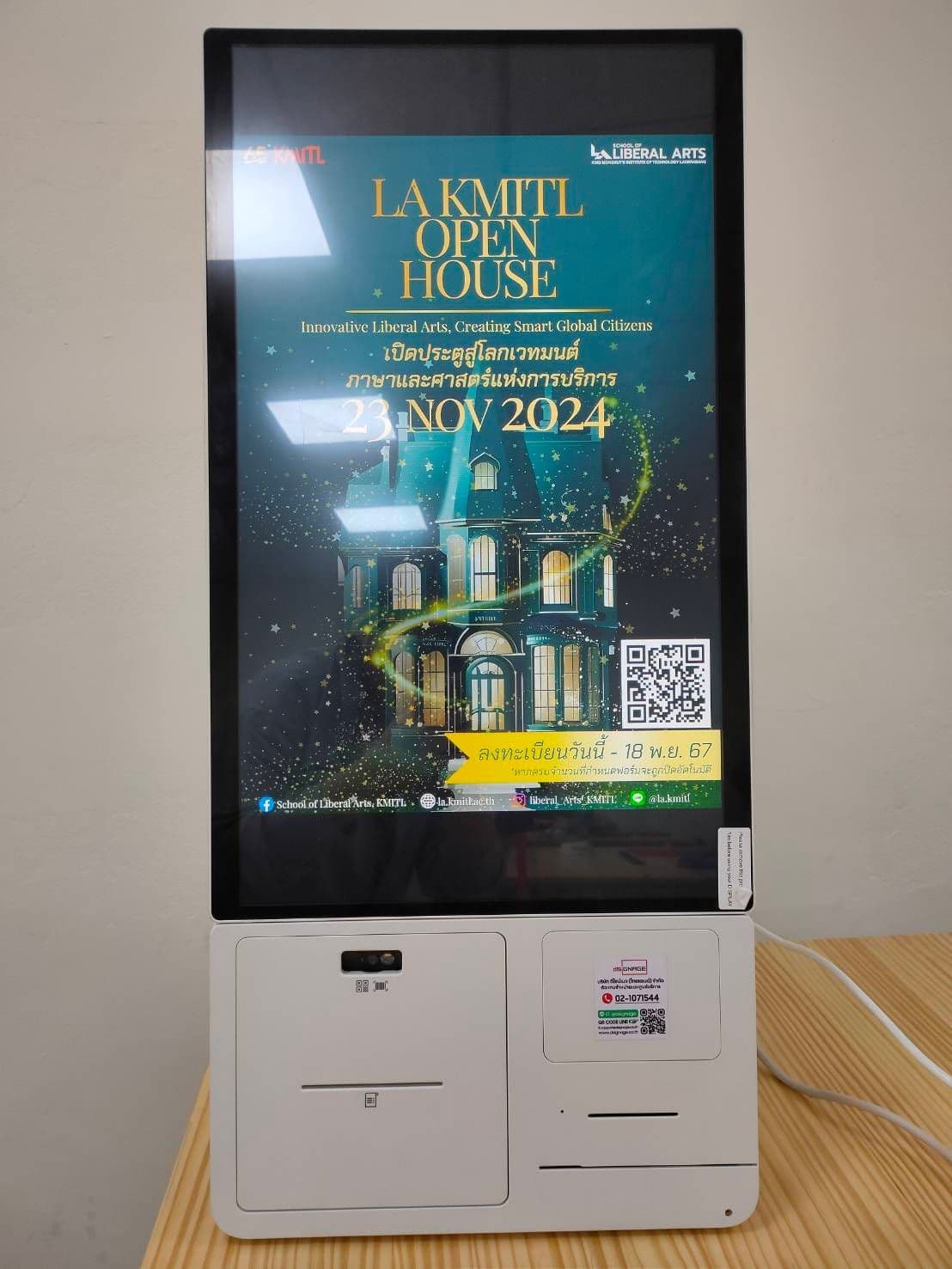
This project presents an interactive kiosk system designed to facilitate students, staff, and visitors within the university campus. The kiosk provides real-time event updates, news, and university document access via QR codes or email. It integrates a 3D map of the engineering department with navigation assistance, allowing users to locate offices and other facilities efficiently. Additionally, it features a room booking system, enabling users to reserve spaces through an online platform and check in via QR code scanning at the kiosk. By integrating digital technology and smart urban solutions, this system enhances accessibility, campus management, and visitor experience.
As KMITL continues to grow with an increasing number of students, there is a greater need for efficient campus navigation and accessible information. In this new era of technology, it is essential to upgrade our systems to better facilitate the university community, starting with the RAI department. Many students, especially newcomers, struggle with locating buildings and facilities due to unfamiliar location names across the campus. This interactive kiosk serves as a one-stop service, providing students, staff, and visitors with essential university information, including admission details, without the need to search elsewhere. By integrating smart solutions, this project enhances accessibility, convenience, and overall campus experience.

คณะวิทยาศาสตร์
The development of a fruit spoilage detection system originates from the need to reduce agricultural product losses, a global issue affecting both the agricultural and food distribution industries. Spoiled fruit can negatively impact product quality and result in significant economic losses. The primary goal of this system is to assist in screening and removing unsuitable fruit from the supply chain, thereby preserving product quality and meeting consumer demands for fresh produce. The system was designed to simulate the sorting process by utilizing images as a key factor in detecting spoiled fruit. Experimental results demonstrated high efficiency and rapid prediction capabilities, highlighting the system’s potential for practical applications.
คณะเทคโนโลยีการเกษตร
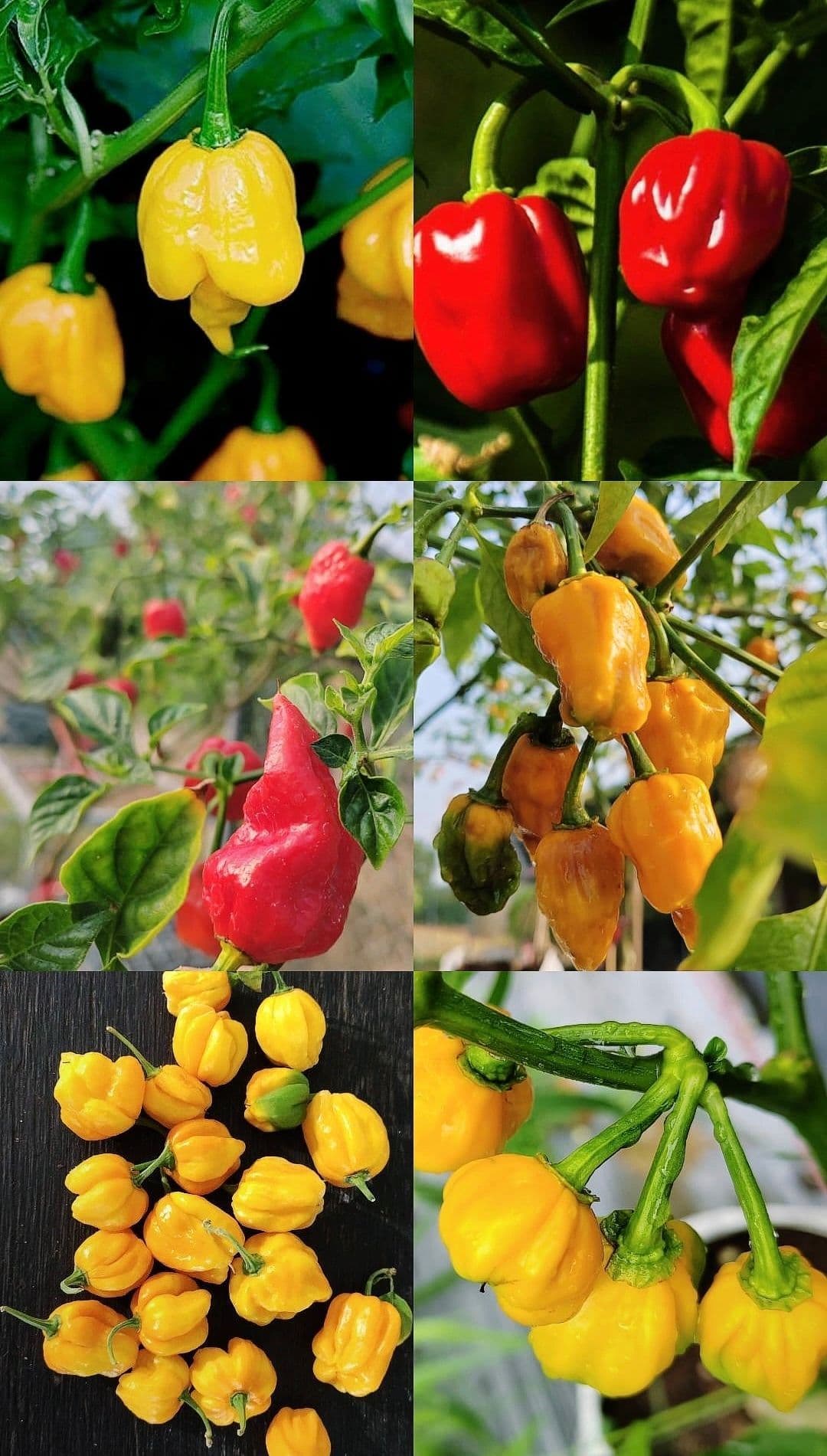
Capsicum chinense is a high-potential economic crop in the food and pharmaceutical industries due to its role as a primary source of capsaicin, a bioactive compound with significant physiological effects. However, capsaicin levels and fruit quality will be influenced by genetic factors, environmental conditions, and genetic-by-environment (G×E) interactions, leading to variability in capsaicin biosynthesis. This study will aim to analyze the impact of different environmental conditions on the growth, fruit quality, and capsaicin content of C. chinense ‘Scotch Bonnet’. The field experiments will be conducted at the demonstration plots of the Faculty of Agricultural Technology, King Mongkut’s Institute of Technology Ladkrabang, during two growing seasons: July–October (rainy season) and December–April (dry season). Four condition environments will be evaluated, and environmental parameters such as temperature, relative humidity, and light quality will be monitored to assess their effects on plant physiology and capsaicin biosynthesis. Additionally, an F1 hybrid breeding program will be established using six parental lines through a Half-diallel mating design, generating 15 hybrid combinations. The general combining ability (GCA) and specific combining ability (SCA) will be assessed to identify promising hybrid combinations with high and stable capsaicin content and yield. The findings from this study will be expected to provide valuable insights into optimizing cultivation conditions for high-pungency chili production and supporting the development of F1 hybrid seeds with commercial viability and consistent capsaicin levels.
คณะครุศาสตร์อุตสาหกรรมและเทคโนโลยี
The Research aims to create Computer Assisted Instruction (CAI) on Kitchen Design for Residence for 20 undergraduate students at the Interior Environmental Design Division, School of Industrial Education and Technology, King Mongkut’s Institute of Technology Ladkrabang. This CAI is a self-learning program for Interior environmental design courses focused on kitchen design for residences. The program is designed to interact with students to create learner engagement and improve learning achievement by providing course content and end-of-chapter quizzes. The research hypothesis is CAI: Interior Environmental Design: Kitchen design for residence affects learners’ learning achievement and students' knowledge toward learning by this CAI. The Development testing (DT) with E1/E2 is the criterion for this instructional media to examine learning achievement. The research findings indicate that CAI is an effective instructional media, scoring 71.50/89.00, which meets the criteria of 80/80, demonstrating students’ learning achievement. Students achieved higher scores than before by using Computer-Assisted Instruction (CAI).