

The development of a fruit spoilage detection system originates from the need to reduce agricultural product losses, a global issue affecting both the agricultural and food distribution industries. Spoiled fruit can negatively impact product quality and result in significant economic losses. The primary goal of this system is to assist in screening and removing unsuitable fruit from the supply chain, thereby preserving product quality and meeting consumer demands for fresh produce. The system was designed to simulate the sorting process by utilizing images as a key factor in detecting spoiled fruit. Experimental results demonstrated high efficiency and rapid prediction capabilities, highlighting the system’s potential for practical applications.
ระบบตรวจจับผลไม้เน่ามีที่มาจากความต้องการในการลดการสูญเสียผลผลิตทางการเกษตร ซึ่งเป็นปัญหาที่เกิดขึ้นทั่วโลกโดยเฉพาะในอุตสาหกรรมการเกษตรและการจัดจําหน่ายอาหาร ผลไม้ที่เน่าเสียจะส่งผลกระทบต่อคุณภาพของผลิตภัณฑ์และสามารถก่อให้เกิดความสูญเสียทางเศรษฐกิจได้อย่างมาก การพัฒนาระบบตรวจจับผลไม้เน่าจึงมีเป้าหมายเพื่อช่วยในการคัดกรองและแยกผลไม้ที่ไม่เหมาะสมออกจากกระบวนการจัดส่ง เพื่อรักษาคุณภาพของสินค้าและตอบสนองต่อความต้องการของผู้บริโภคที่ต้องการผลไม้สดใหม่

คณะสถาปัตยกรรม ศิลปะและการออกแบบ
This research focuses on the design of a Metaverse Prototype Thai Film Archive (Public Organization) to study immersive experiences. The aims were to: 1) examine design concepts and technologies for digital immersion, 2) create and showcase these designs in the Metaverse cinema, and 3) evaluate the results and formulate knowledge for virtual exhibition design using qualitative research methods, including prototype testing with participant interviews to assess satisfaction. The design principles consisted of architectural, exhibition, and user experience concepts, leading to a virtual world creation process involving 3D structural modeling, interactive functionalities, and exhibition layout before prototype testing. The evaluation included tests by ten participants and group discussions on overall experience, cinema content value, Metaverse design, and educational enhancement in museums. The design evaluation indicated a 70% positive overall experience, with half of the users finding stable usability. However, significant viewing barriers were identified, with a high need for operational instructions and navigational aids. Content understanding and Metaverse interaction were perceived positively, and the educational aspect was highly valued. The study concludes that while the overall experience was good, technology limitations (as of 2023) and interaction challenges require ongoing refinement to improve stability and usability, although the educational value was affirmed as strong.
คณะวิศวกรรมศาสตร์
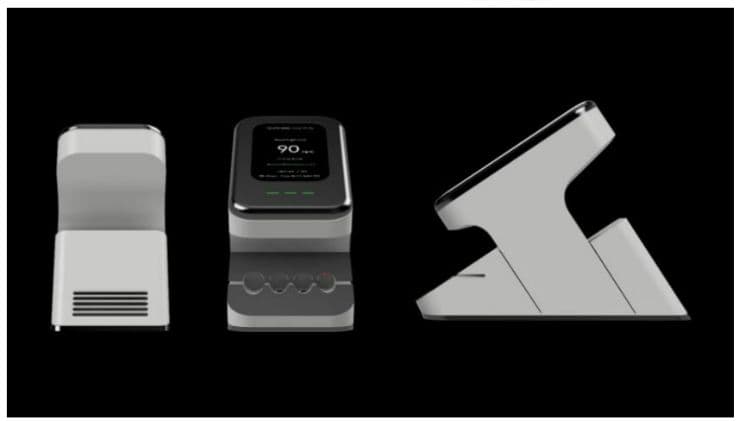
This research aims to develop a portable prototype device for non-invasive blood glucose and vital sign monitoring, integrating Near-Infrared Spectroscopy (NIR) with biosensor systems and Artificial Intelligence (AI)-based data analysis. The device addresses the limitations of conventional blood-drawing methods that are impractical for elderly patients and those in remote areas. Designed to be user-friendly, low-cost, and capable of real-time result display, the device is intended for use in community-based healthcare settings such as local clinics and sub-district health promotion hospitals, with strong potential for future commercial development.
คณะอุตสาหกรรมอาหาร
Most rice is consumed as cooked, milled rice, but a small portion is also ground into flour or separated into a starch fraction and used by the food industry as a gluten-free ingredient. This study aims to find out if different types of rice flour and starch, such as white and colored rice, could be used in industry. This study employs green modification techniques to slow down the digestion process by combining polyphenols with starch. Our initial study found that the raw colored rice has a lower glycemic index than other types of rice, such as brown or white rice. Another study that looked at how the quality of colored rice flour was changed by different methods also discovered that out of the six green methods (annealing, heat moisture treatment, ultrasound, pregelatinization, wet-microwave, and dry-microwave). It found that ultrasound improved the polyphenol bioaccessibility in the rice flour and reduced the digestion rate. The pregelatinization process led to the flour having high solubility and an estimated glycemic index. Different techniques affected the flour/starch quality in different ways. Therefore, for further industrial application, it could also be easier to select the method for food product based on their required techno-functional quality of flour/starch. In addition to the modification techniques, this study showed that the high bioaccessible polyphenol content and high polyphenol content in rice greatly slowed down the rate of digestion. This study also open for further exploring the possibility of using high polyphenol agricultural waste to modify starch and flour in a sustainable manner.