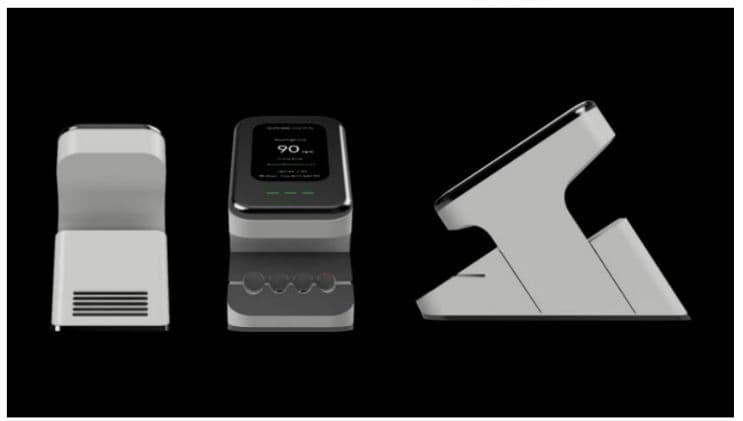
This research aims to develop a portable prototype device for non-invasive blood glucose and vital sign monitoring, integrating Near-Infrared Spectroscopy (NIR) with biosensor systems and Artificial Intelligence (AI)-based data analysis. The device addresses the limitations of conventional blood-drawing methods that are impractical for elderly patients and those in remote areas. Designed to be user-friendly, low-cost, and capable of real-time result display, the device is intended for use in community-based healthcare settings such as local clinics and sub-district health promotion hospitals, with strong potential for future commercial development.
ในปัจจุบัน การตรวจวัดระดับน้ำตาลในเลือดและสัญญาณชีพ เช่น อัตราการเต้นของหัวใจ อุณหภูมิ และระดับออกซิเจนในเลือด เป็นกระบวนการที่จำเป็นสำหรับผู้ป่วยโรคเรื้อรัง โดยเฉพาะผู้ป่วยเบาหวานและโรคหัวใจ อย่างไรก็ตาม เทคโนโลยีที่มีอยู่ในปัจจุบันส่วนใหญ่มักเป็นแบบรุกล้ำ เช่น การเจาะเลือด ซึ่งไม่สะดวกในการใช้งานระยะยาว และไม่เหมาะกับกลุ่มประชากรผู้สูงอายุหรือผู้ที่อาศัยในพื้นที่ห่างไกล แม้ว่าจะมีอุปกรณ์ทางการแพทย์ที่สามารถวัดสัญญาณชีพได้หลายค่า แต่ยังไม่มีเครื่องมือที่สามารถตรวจวัดระดับกลูโคสในเลือดแบบไม่รุกล้ำที่ใช้งานง่าย ต้นทุนต่ำ และเหมาะสมกับบริบทของชุมชนหรือคลินิกท้องถิ่น โครงการนี้จึงมุ่งพัฒนาอุปกรณ์ต้นแบบแบบพกพา ซึ่งใช้เทคนิค Near-Infrared Spectroscopy (NIR) ร่วมกับระบบเซนเซอร์ชีวภาพและการวิเคราะห์ข้อมูลด้วยปัญญาประดิษฐ์ (AI) เพื่อให้สามารถตรวจวัดกลูโคสและสัญญาณชีพได้แบบไม่ต้องเจาะเลือด ชุดตรวจดังกล่าวจะถูกออกแบบให้ใช้งานง่าย มีต้นทุนการผลิตต่ำ และสามารถแสดงผลการวิเคราะห์แบบ real-time ผ่านหน้าจอ เพื่อให้เหมาะกับการใช้งานนอกสถานพยาบาล เช่น ในคลินิกชุมชน โรงพยาบาลส่งเสริมสุขภาพตำบล หรือแม้แต่ในบ้านของผู้ป่วยเอง อีกทั้งยังมีศักยภาพในการนำไปจัดแสดงในงานนิทรรศการ เพื่อให้ประชาชนทั่วไปเข้าถึงความเข้าใจเรื่องเทคโนโลยีสุขภาพที่กำลังพัฒนา และสามารถนำไปต่อยอดในเชิงพาณิชย์ได้ในอนาคต
คณะอุตสาหกรรมอาหาร
Spent coffee grounds (SCG) are a byproduct of the coffee brewing process, and their quantity continues to increase due to the growing global coffee consumption. SCG contain beneficial compounds such as polysaccharides, dietary fibers, and antioxidants, which can be utilized in various applications, including prebiotic extraction. This study focuses on extracting prebiotics from SCG using acid hydrolysis and enzymatic hydrolysis methods to evaluate their potential in promoting the growth of beneficial gut microorganisms. The expected results of this research include adding value to coffee industry waste, reducing organic waste, and providing a sustainable approach to developing prebiotic products for use in the food and health industries. Furthermore, this study aligns with sustainable resource utilization and environmentally friendly practices.

คณะวิทยาศาสตร์
Listeriosis is a severe foodborne illness characterized by a fatality rate exceeding 30%, attributed to the pathogen Listeria monocytogenes. This study evaluated 160 lactic acid bacteria (LAB) isolated from Thai pickled crabs for their potential as agents against L. monocytogenes and for their probiotic properties and probiogenomic characteristics. Among these strains, strain DRC3-2 exhibited activity through the synthesis of bacteriocin DRC3-2, which significantly inhibited L. monocytogenes ATCC 19115 in spot-on-lawn assays. Phenotypic and whole-genome analyses revealed that strain DRC3-2 thrived in environments with 2-6% NaCl, pH values ranging from 3 to 9, and temperatures between 25 and 45°C. Based on average nucleotide identity (ANI) and digital DNA‒DNA hybridization (dDDH) values, strain DRC3-2 was taxonomically classified as Lactococcus lactis subsp. hordinae. The production of bacteriocin DRC3-2 peaked during the late stationary phase, following its synthesis in the early exponential growth phase. BAGEL4 analysis identified the putative novel bacteriocin DRC3-2 as lactococcin A and B, with respective bit-scores of 40.05 and 36.58. In silico safety assessments confirmed the nonpathogenic nature of strain DRC3-2 in humans, highlighting its absence of antibiotic resistance genes. Finally, this investigation underscores the novel bacteriocin DRC3-2 for application in the prevention and treatment of L. monocytogenes infections.

คณะวิทยาศาสตร์
Agricultural products and by-products are important raw materials in various industries including cosmetics and pharmaceuticals. Agro-based fibers have the composition, properties and structure that make them suitable for uses as composite-cosmetic industry. Upon microwave digestion, cellulose have been successfully synthesized into nanocrystalline cellulose (NCC) with lengths from 50-1000 nm, widths between 5-70 nm. Nanocrystalline cellulose was grafted with cosmetic active ingredients such as glycerin), sodium hyaluronate), glycolic acid, and nicotinamide. The beauty active ingredients attached nanocelluloses can penetrate through the skin to enhance beauty and youth.