

Design and Development of a Remote Battery Management System This research focuses on the design and development of a battery management system that enables remote monitoring and control, allowing users to customize battery cell properties as needed. The system is specifically designed for use with graphene battery cells and can be effectively applied to alternative energy systems for residential use.
1. เพิ่มประสิทธิภาพการจัดการพลังงาน – ระบบบริหารจัดการแบตเตอรี่ที่สามารถควบคุมและมอนิเตอร์ระยะไกลช่วยให้สามารถจัดการพลังงานได้อย่างมีประสิทธิภาพ ลดการสูญเสียพลังงาน และเพิ่มอายุการใช้งานของแบตเตอรี่ 2. รองรับเทคโนโลยีแบตเตอรี่กราฟีน – แบตเตอรี่กราฟีนมีศักยภาพสูงในการเก็บพลังงานและมีอายุการใช้งานยาวนาน โครงการนี้ช่วยทดสอบและพัฒนาการนำแบตเตอรี่กราฟีนไปใช้ในระบบพลังงานทางเลือก 3. เพิ่มความสะดวกและความปลอดภัยในการใช้งาน – การควบคุมและมอนิเตอร์แบตเตอรี่จากระยะไกลช่วยลดความเสี่ยงจากการเกิดปัญหาทางเทคนิค เช่น การชาร์จไฟเกินหรืออุณหภูมิสูงเกินไป ทำให้ระบบมีความปลอดภัยมากขึ้น 4. ส่งเสริมการพัฒนาเทคโนโลยีภายในประเทศ – โครงการนี้ช่วยสนับสนุนการพัฒนาเทคโนโลยีแบตเตอรี่และระบบบริหารจัดการพลังงานภายในประเทศ ลดการพึ่งพาเทคโนโลยีจากต่างประเทศ และเพิ่มขีดความสามารถในการแข่งขันด้านพลังงาน

คณะวิศวกรรมศาสตร์
This research focuses on the design and development of a high-power converter to regulate energy supply from solar cells (Photovoltaic: PV) to a hydrogen production unit (Electrolyzer), which is a crucial component in advancing renewable energy in alignment with the RE100 initiative. Specifically, this study targets Green Hydrogen, which is generated through the water electrolysis process using clean energy from solar cells, ensuring zero emissions and environmental sustainability. The proposed converter includes of a Three-Level NPC Inverter, transformer, Full-Bridge Rectifier, and LC filter to enhance the power quality supplied to the electrolyzer. The system's design and simulation were conducted using MATLAB and Simulink to evaluate circuit performance and analyze operational efficiency. Simulation was conducted using MATLAB and Simulink to evaluate circuit performance and analyze operational efficiency. Additionally, a microcontroller-based control system is integrated with a gate driver circuit to optimize the electrolysis process by reducing power losses. This proposed converter effectively converts PV energy into suitable voltage and current levels for the electrolyzer while maintaining high hydrogen production efficiency.
คณะวิทยาศาสตร์
Sugar production from sugarcane is a complex process that requires precise control. One of the major issues is sugar loss, which can result from various factors, particularly "burnt cane," before being sent to the mill. This affects the quality of the sugarcane and the efficiency of sugar extraction, along with the performance of the machinery and the properties of the cane, which impact the amount of sugar extracted. This study aims to analyze the factors that influence sugar loss in the sugar production process, using quantitative data from a sugar factory. Nine variables were examined, including mechanical efficiency, machine downtime per day, cane waiting time per day, sand content in cane juice, pol extraction efficiency, overall working time efficiency, cane juice purity, cane sugar content (C.C.S.), and burnt cane. The data were analyzed using correlation analysis to examine relationships between variables and regression modeling to predict sugar loss. The results showed that mechanical efficiency, cane sugar content, and the amount of sand or impurities in the cane juice were significantly correlated with sugar loss. Mechanical efficiency had a direct relationship with the amount of cane milled, which improved sugar production. On the other hand, burnt cane, or cane that was burnt before harvesting, resulted in reduced sugar extraction and impacted the quality of the sugar. Therefore, reducing sugar loss in the production process can be achieved by improving machine efficiency, reducing impurities in cane juice, and managing burnt cane, which will improve sugar production efficiency in the future.
วิทยาเขตชุมพรเขตรอุดมศักดิ์
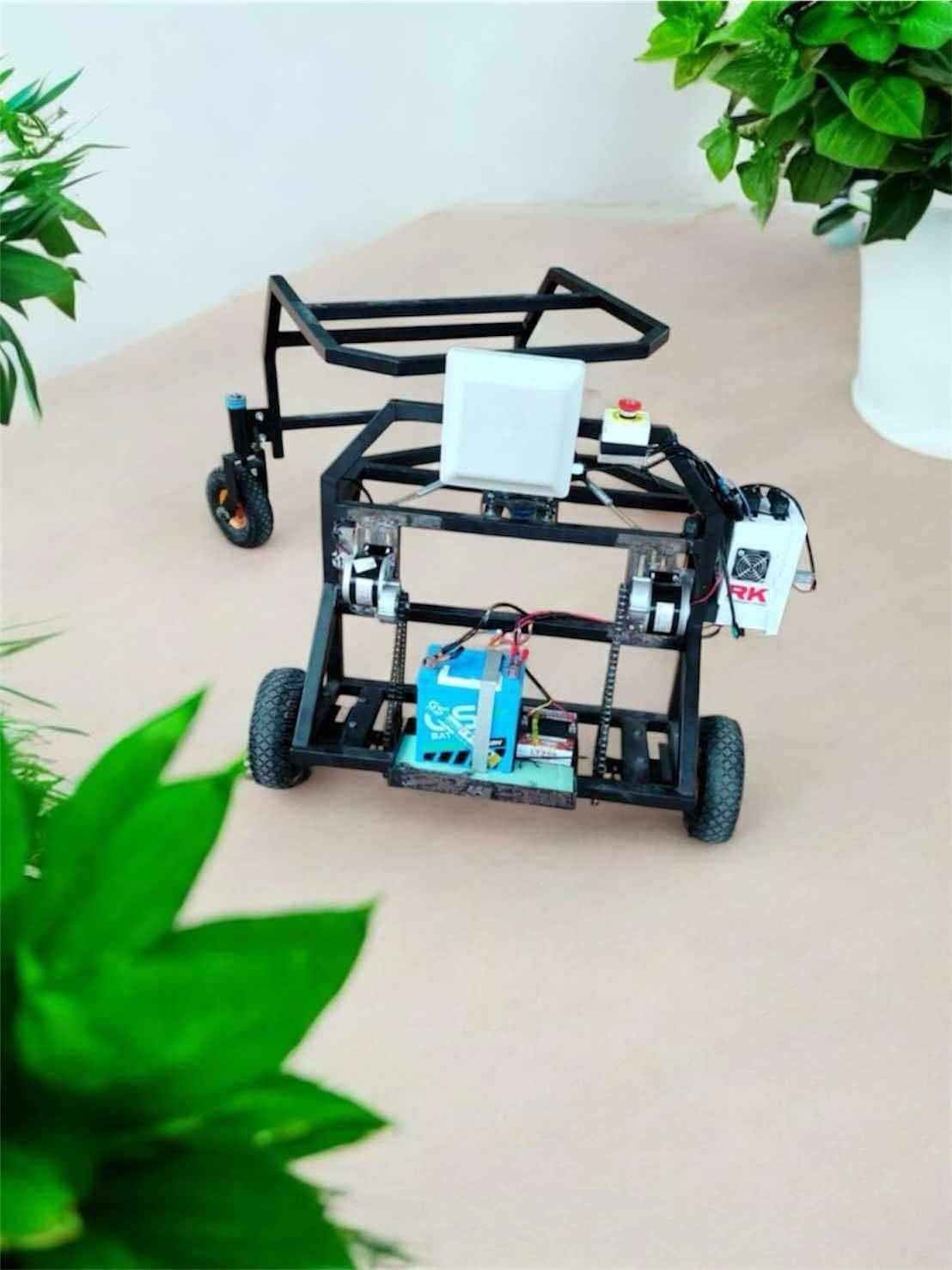
This project aims to design and develop a propulsion system for agricultural equipment using RFID technology and evaluate its movement performance on different surfaces, including concrete and grass. The experiment focuses on examining the tag detection range under transmission power levels of 20 dBm, 23 dBm, and 26 dBm, as well as the impact of antenna angles on detection efficiency. Additionally, the system was tested in three movement scenarios: straight path, left turn, and right turn, at distances of 2 meters, 4 meters, and 6 meters. The results indicate that the system achieved the highest average speed of 0.4736 m/s and an average turning angle of 91.6° when moving in a straight path on a concrete surface at a distance of 4 meters. On a grass surface at the same distance, the average speed was 0.4483 m/s, with an average turning angle of 91.1°. For left and right turns, the movement on the concrete surface generally exhibited a higher average speed than on grass, particularly at a distance of 4 meters, where differences in turning angles were observed. This study provides insights into the factors affecting the movement of agricultural mowing equipment and serves as a foundation for enhancing the efficiency of propulsion systems in future developments.