

Sugar production from sugarcane is a complex process that requires precise control. One of the major issues is sugar loss, which can result from various factors, particularly "burnt cane," before being sent to the mill. This affects the quality of the sugarcane and the efficiency of sugar extraction, along with the performance of the machinery and the properties of the cane, which impact the amount of sugar extracted. This study aims to analyze the factors that influence sugar loss in the sugar production process, using quantitative data from a sugar factory. Nine variables were examined, including mechanical efficiency, machine downtime per day, cane waiting time per day, sand content in cane juice, pol extraction efficiency, overall working time efficiency, cane juice purity, cane sugar content (C.C.S.), and burnt cane. The data were analyzed using correlation analysis to examine relationships between variables and regression modeling to predict sugar loss. The results showed that mechanical efficiency, cane sugar content, and the amount of sand or impurities in the cane juice were significantly correlated with sugar loss. Mechanical efficiency had a direct relationship with the amount of cane milled, which improved sugar production. On the other hand, burnt cane, or cane that was burnt before harvesting, resulted in reduced sugar extraction and impacted the quality of the sugar. Therefore, reducing sugar loss in the production process can be achieved by improving machine efficiency, reducing impurities in cane juice, and managing burnt cane, which will improve sugar production efficiency in the future.
อุตสาหกรรมน้ำตาลของประเทศไทยเป็นอุตสาหกรรมเกษตรแปรรูปที่มีความสำคัญ โดยมีความโดดเด่นจากการใช้วัตถุดิบภายในประเทศในการผลิตน้ำตาลเพื่อบริโภคภายในประเทศ รวมทั้งสามารถส่งออกส่วนเกินเพื่อสร้างรายได้ให้กับโรงงานผลิตน้ำตาลและเกษตรกรชาวไร่อ้อยซึ่งมีจำนวนมากกว่า 200,000 ครัวเรือน สร้างรายได้มูลค่ากว่า 200,000 ล้านบาทต่อปี ปัจจุบันประเทศไทยมีโรงงานผลิตน้ำตาลจำนวน 51 แห่ง มีอัตรากำลังการผลิตอ้อยสูงถึง 365 ล้านตันต่อปี แต่ในความเป็นจริง โรงงานผลิตน้ำตาลในประเทศไทยมีอ้อยที่ใช้ผลิตเพียง 105 ล้านตันต่อปีเท่านั้น ซึ่งอ้อย 105 ล้านตันจะถูกนำไปหีบในระยะเวลา 4-5 เดือน ตั้งแต่เดือนธันวาคมถึงเดือนเมษายนของทุกปี ซึ่งสามารถผลิตน้ำตาลทรายได้ประมาณ 11-11.5 ล้านตัน โดยผลผลิตนี้จะถูกแบ่งเพื่อบริโภคภายในประเทศประมาณ 2.5 ล้านตัน และส่วนที่เหลือจะถูกส่งออกนำรายได้เข้าประเทศ การผลิตน้ำตาลจากอ้อยเป็นกระบวนการที่มีความซับซ้อนและต้องการการจัดการอย่างมีประสิทธิภาพเพื่อให้ได้ผลผลิตสูงสุด ถ้าพิจารณาปริมาณอ้อยและผลผลิตน้ำตาล จะแสดงให้เห็นถึงประสิทธิภาพการผลิตน้ำตาลของโรงงาน ซึ่งจะขึ้นอยู่กับปัจจัยหลัก 2 ประการคือ 1) อ้อย เป็นวัตถุดิบหลักในการผลิต 2) กระบวนการผลิตที่เกี่ยวข้องกับการสกัดน้ำตาลจากอ้อยผ่านหลายขั้นตอน ตั้งแต่การหีบ การทำให้สิ่งสกปรกจับตัว การระเหยเพื่อลดน้ำในน้ำอ้อย การตกผลึกน้ำตาล การแยกผลึกออกจากกากน้ำตาล และการทำให้ผลึกน้ำตาลแห้ง กระบวนการเหล่านี้ทำงานต่อเนื่อง หากมีการหยุดชะงักในกระบวนการใดกระบวนการหนึ่ง อาจทำให้การสูญเสียน้ำตาลเกิดขึ้น เช่น สูญเสียน้ำตาลในกากอ้อย โมลาส หรือกากตะกรันหม้อกรอง รวมถึงการสูญเสียน้ำตาลที่ไม่สามารถระบุแหล่งได้ อย่างไรก็ตาม หนึ่งในปัจจัยที่มีผลกระทบอย่างมากต่อการสูญเสียน้ำตาลคือ "การเผาอ้อย" ซึ่งเป็นกระบวนการที่เกษตรกรบางส่วนใช้ในการเตรียมอ้อยก่อนการเก็บเกี่ยว การเผาอ้อยทำให้คุณภาพของอ้อยลดลง และทำให้การสกัดน้ำตาลมีประสิทธิภาพต่ำลง ส่งผลต่อผลผลิตน้ำตาลที่ได้ นอกจากนี้ การเผาอ้อยยังทำให้เกิดสิ่งปนเปื้อนในน้ำอ้อย เช่น เถ้าถ่าน หรือควัน ซึ่งมีผลต่อการผลิตน้ำตาลในกระบวนการต่างๆ ต่อไป การศึกษาครั้งนี้จึงวัตถุประสงค์เพื่อวิเคราะห์ปัจจัยที่ส่งผลต่อการสูญเสียน้ำตาลในกระบวนการผลิตน้ำตาลจากอ้อย โดยใช้ข้อมูลเชิงปริมาณจากโรงงานน้ำตาล ครอบคลุม 9 ตัวแปร ได้แก่ ประสิทธิภาพเครื่องจักร (Mechanical efficiency), จำนวนชั่วโมงหยุดเครื่องจักรในหนึ่งวัน (Stoppage), จำนวนชั่วโมงหยุดรออ้อยในหนึ่งวัน (Due to Cane), ปริมาณทรายในน้ำอ้อย (Sand), ประสิทธิภาพการหีบสกัดอ้อย (Pol Extraction), ประสิทธิภาพเวลาการทำงานโดยรวม (Overall Time), ค่าความบริสุทธิ์ของน้ำอ้อย (Purity), ค่าปริมาณน้ำตาลในอ้อย (C.C.S.), และปริมาณอ้อยไฟไหม้ (Burn Cane) โดยจะทำการวิเคราะห์ข้อมูลด้วยค่าสหสัมพันธ์ (Correlation) เพื่อตรวจสอบความสัมพันธ์ระหว่างตัวแปร และแบบจำลองการถดถอย (Regression Model) เพื่อพยากรณ์การสูญเสียน้ำตาล การศึกษาครั้งนี้จึงมีความสำคัญในการพัฒนากระบวนการผลิตอย่างยั่งยืน ช่วยให้โรงงานน้ำตาลสามารถลดการสูญเสียน้ำตาลระหว่างกระบวนการผลิต และเพิ่มประสิทธิภาพในการผลิตน้ำตาล ซึ่งจะนำไปสู่การลดต้นทุนการผลิตและสร้างความสามารถในการแข่งขันในตลาดน้ำตาลได้ในระยะยาว

คณะแพทยศาสตร์
Background: The RGL3 gene plays a role in key signal transduction pathways and has been implicated in hypertension risk through the identification of a copy number variant deletion in exon 6. Genome-wide association studies have highlighted RGL3 as associated with hypertension, providing insights into the genetic underpinnings of the condition and its protective effects on cardiovascular health. Despite these findings, there is a lack of data that confirms the precise role of RGL3 in hypertension. Additionally, the functional impact of certain variants, particularly those classified as variants of uncertain significance, remains poorly understood. Objectives: This study aims to analyze alterations in the RGL3 protein structure caused by mutations and validate the location of the ligand binding sites. Methods: Clinical variants of the RGL3 gene were obtained from NCBI ClinVar. Variants of uncertain significance and likely benign were analyzed. Multiple sequence alignment was conducted using BioEdit v7.7.1. AlphaFold 2 predicted the wild-type and mutant 3D structures, followed by quality assessment via PROCHECK. Functional domain analysis of RasGEF, RASGEF_NTER, and RA domains was performed, and BIOVIA Discovery Studio Visualizer 2024 was used to evaluate structural and physicochemical changes. Results: The analysis of 81 RGL3 variants identified 5 likely benign and 76 variants of uncertain significance (VUS), all of which were missense mutations. Structural modeling using AlphaFold 2 revealed three key domains: RasGEF_NTER, RasGEF, and RA, where mutations induced conformational changes. Ramachandran plot validation confirmed 79.7% of residues in favored regions, indicating an overall reliable structure. Moreover, mutations within RasGEF and RA domains altered polarity, charge, and stability, suggesting potential functional disruptions. These findings provide insight into the structural consequences of RGL3 mutations, contributing to further functional assessments. Discussion & Conclusion: The identified RGL3 mutations induced physicochemical alterations in key domains, affecting charge, polarity, hydrophobicity, and flexibility. These changes likely disrupt interactions with Ras-like GTPases, impairing GDP-GTP exchange and cellular signaling. Structural analysis highlighted mutations in RasGEF and RA domains that may interfere with activation states, potentially affecting protein function and stability. These findings suggest that mutations in RGL3 could have functional consequences, emphasizing the need for further molecular and functional studies to explore their pathogenic potential.
คณะเทคโนโลยีการเกษตร
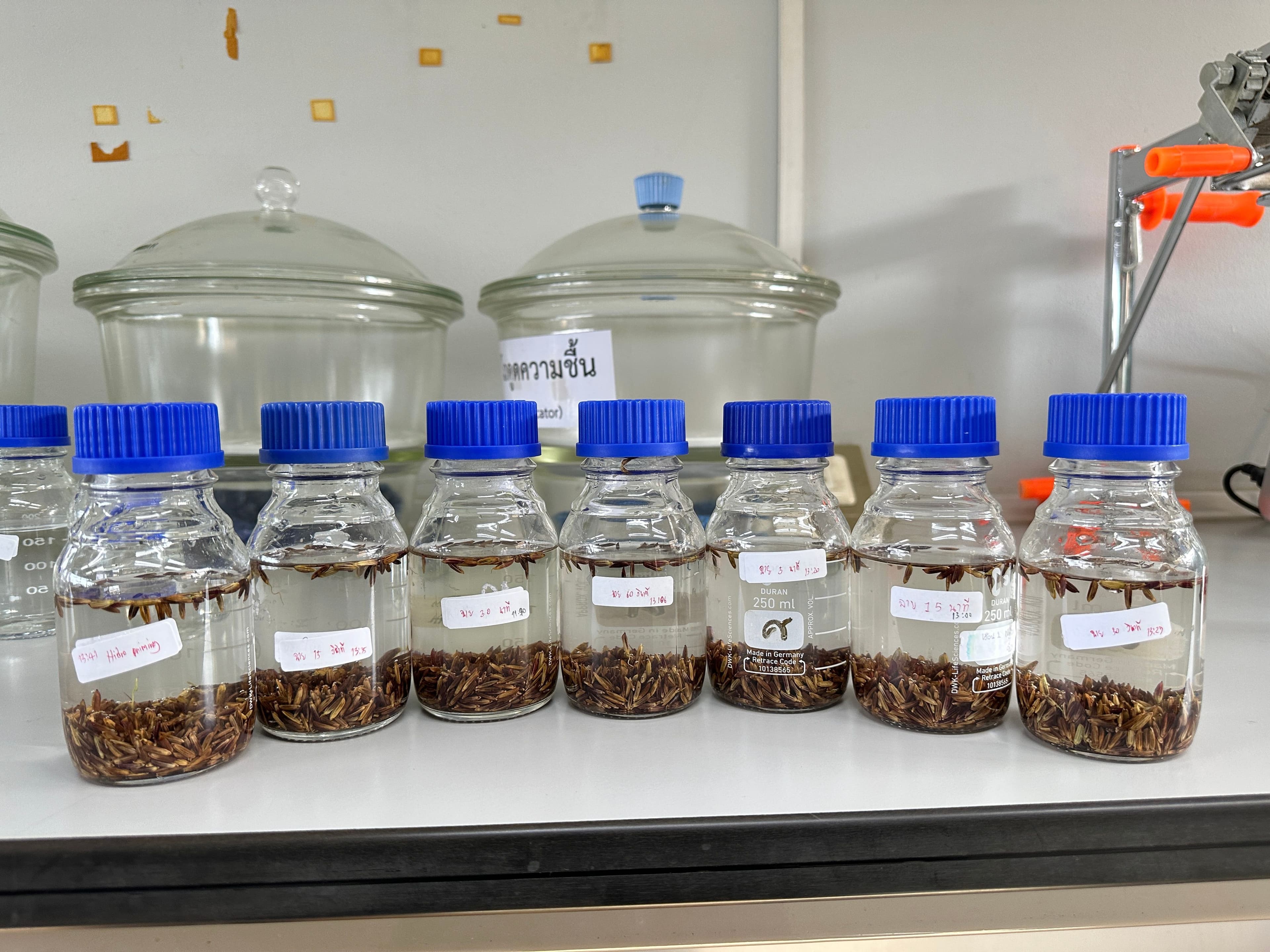
การทดลองนี้จึงมีวัตถุประสงค์เพื่อศึกษาผลของน้ำที่ผ่านการฉายพลาสมาในเวลาที่แตกต่างกันต่อคุณภาพการงอกของเมล็ดพันธุ์ข้าวไรซ์เบอรี่ เพื่อเป็นการยกระดับคุณภาพความงอกของเมล็ดพันธุ์ข้าวไรซ์เบอรี่
คณะเทคโนโลยีสารสนเทศ
In the era where information technology plays a significant role in various fields, the use of website to support education has become essential. This case study focuses on the development of a website for the Object Oriented Programming (OOP) course at King Mongkut's Institute of Technology Ladkrabang (KMITL) to facilitate instructors and teaching assistants in grading, assessing student work, and tracking student progress. The developed system helps reduce grading errors, ensures accurate and timely assessments, and enables efficient monitoring of students' academic performance. Additionally, the platform allows students to schedule project submissions and track their grades, while providing statistical data on student performance. This development aims to modernize and enhance the quality of teaching and learning.