

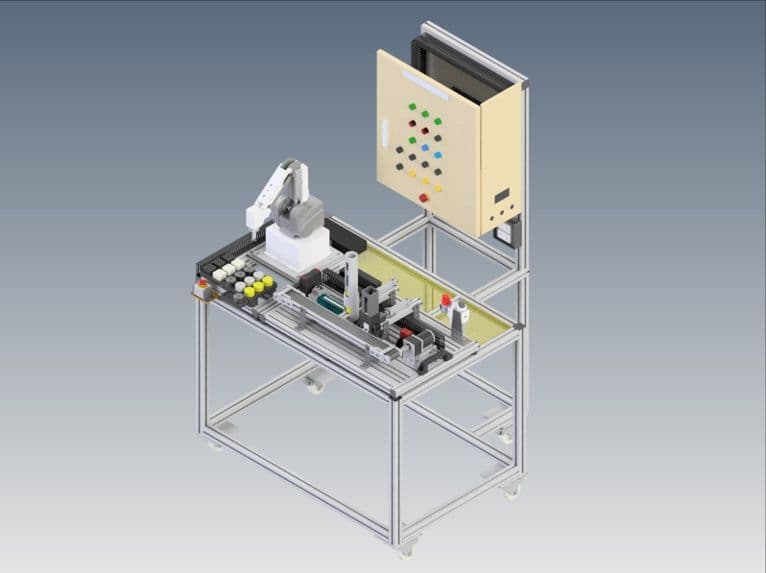
This Project has been undertaken to address the need for skill development and knowledge enhancement in pneumatic systems and automation control, which are crucial in today’s manufacturing industry. Pneumatic systems play a vital role in various production processes, including machine control, automated devices, and assembly lines. However, the Department of Measurement and Control Engineering currently lacks a laboratory dedicated to the study and experimentation of pneumatic systems due to the deterioration and lack of maintenance of the previously used equipment. This has resulted in students missing the opportunity to practice essential skills required in the industrial sector. The authors of this thesis recognize the necessity of reviving and developing a pneumatic laboratory that can effectively support teaching, learning, and research activities. This project focuses on studying and developing industrial robotic arm control systems and pneumatic systems, integrating modern technologies such as Programmable Logic Controllers (PLC) and AI Vision. These systems are intended to be applicable to real-world industrial contexts. The outcomes of this project are expected to not only enhance the understanding of relevant technologies but also aim to transform the laboratory into a vital learning hub for current and future students. Furthermore, this initiative seeks to improve the competitiveness of students in the job market and support the development of innovations in the manufacturing industry in the years to come.
จากการศึกษาและประสบการณ์ในการฝึกงานของคณะผู้จัดทำ พบว่าระบบนิวเมติกส์และ PLC เป็นองค์ประกอบสำคัญในระบบอุตสาหกรรมยุคใหม่ โดยช่วยควบคุมและเพิ่มประสิทธิภาพในสายการผลิต ในอนาคตเทคโนโลยี AI Vision จะเข้ามามีบทบาทสำคัญในการพัฒนาอุตสาหกรรมการผลิต ด้วยความสามารถในการตรวจจับ วิเคราะห์ และประมวลผลข้อมูลภาพอย่างแม่นยำ ช่วยเพิ่มความแม่นยำในการควบคุมคุณภาพผลิตภัณฑ์ ลดข้อผิดพลาดในการผลิต และเพิ่มความสามารถในการปรับตัวให้เข้ากับกระบวนการที่ซับซ้อนมากขึ้น AI Vision สามารถใช้ในอุตสาหกรรมเพื่อตรวจสอบข้อบกพร่องของผลิตภัณฑ์แบบเรียลไทม์ วิเคราะห์ข้อมูลเพื่อเพิ่มประสิทธิภาพการผลิต และช่วยให้ระบบอัตโนมัติสามารถเรียนรู้และพัฒนาได้อย่างต่อเนื่อง โดยผสานกับ PLC และระบบนิวเมติกส์เพื่อให้เกิดความแม่นยำและการตอบสนองที่รวดเร็ว นอกจากนี้ AI Vision ยังสามารถพัฒนาไปสู่การตรวจสอบกระบวนการผลิตแบบอัจฉริยะ ช่วยลดต้นทุนในการดำเนินงาน และเพิ่มขีดความสามารถในการแข่งขันของภาคอุตสาหกรรมในอนาคต
วิทยาลัยเทคโนโลยีและนวัตกรรมวัสดุ
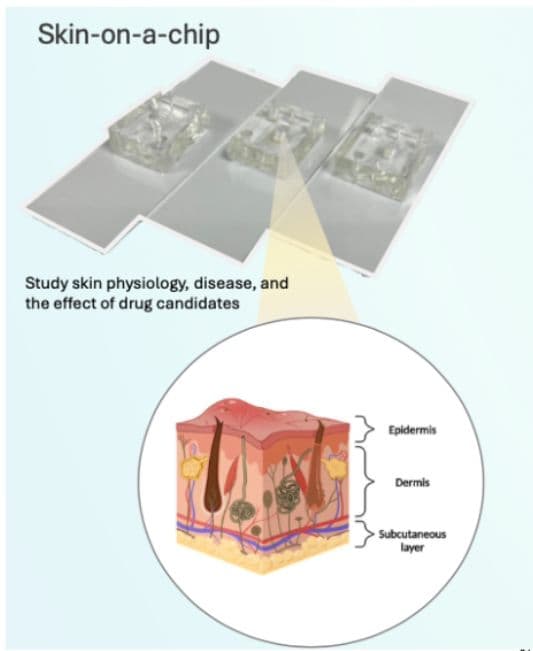
This research aims to develop and test a Skin-on-a-Chip (SoC) device that integrates skin cells and endothelial cells within a microfluidic system to closely simulate the biological environment of human skin. The device reduces reliance on animal testing while lowering research costs and time, and improves the accuracy of pharmaceutical and cosmeceutical ingredient testing. The project targets TRL 5 prototype development alongside patent filing and pilot-scale manufacturing process development, with a clear pathway toward commercial readiness within two years.

คณะแพทยศาสตร์
Background: The RGL3 gene plays a role in key signal transduction pathways and has been implicated in hypertension risk through the identification of a copy number variant deletion in exon 6. Genome-wide association studies have highlighted RGL3 as associated with hypertension, providing insights into the genetic underpinnings of the condition and its protective effects on cardiovascular health. Despite these findings, there is a lack of data that confirms the precise role of RGL3 in hypertension. Additionally, the functional impact of certain variants, particularly those classified as variants of uncertain significance, remains poorly understood. Objectives: This study aims to analyze alterations in the RGL3 protein structure caused by mutations and validate the location of the ligand binding sites. Methods: Clinical variants of the RGL3 gene were obtained from NCBI ClinVar. Variants of uncertain significance and likely benign were analyzed. Multiple sequence alignment was conducted using BioEdit v7.7.1. AlphaFold 2 predicted the wild-type and mutant 3D structures, followed by quality assessment via PROCHECK. Functional domain analysis of RasGEF, RASGEF_NTER, and RA domains was performed, and BIOVIA Discovery Studio Visualizer 2024 was used to evaluate structural and physicochemical changes. Results: The analysis of 81 RGL3 variants identified 5 likely benign and 76 variants of uncertain significance (VUS), all of which were missense mutations. Structural modeling using AlphaFold 2 revealed three key domains: RasGEF_NTER, RasGEF, and RA, where mutations induced conformational changes. Ramachandran plot validation confirmed 79.7% of residues in favored regions, indicating an overall reliable structure. Moreover, mutations within RasGEF and RA domains altered polarity, charge, and stability, suggesting potential functional disruptions. These findings provide insight into the structural consequences of RGL3 mutations, contributing to further functional assessments. Discussion & Conclusion: The identified RGL3 mutations induced physicochemical alterations in key domains, affecting charge, polarity, hydrophobicity, and flexibility. These changes likely disrupt interactions with Ras-like GTPases, impairing GDP-GTP exchange and cellular signaling. Structural analysis highlighted mutations in RasGEF and RA domains that may interfere with activation states, potentially affecting protein function and stability. These findings suggest that mutations in RGL3 could have functional consequences, emphasizing the need for further molecular and functional studies to explore their pathogenic potential.
คณะเทคโนโลยีการเกษตร
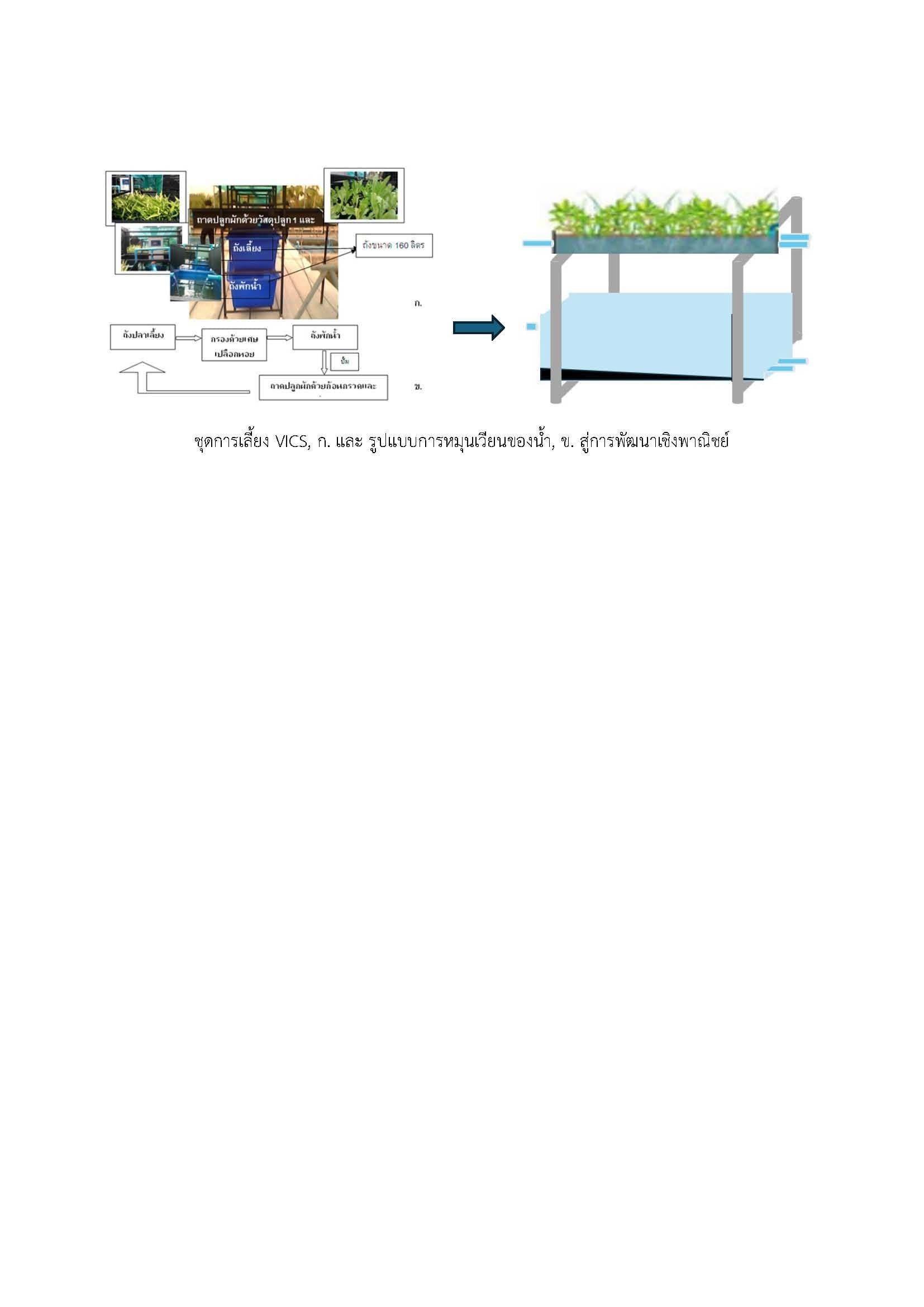
The innovation of the vertical aquaponics system for rearing golden apple snails integrating with vegetable cultivation by using substrates to water treatment. The system aims to maximize the use of vertical space, save water, and produce safe vegetables for consumption or commercial purposes, and to support living things. The golden apple snail excretes wastes/leftover food scraps that are filtered on the substrates used for water treatment. Meanwhile, natural bacteria help change these wastes into nutrients that plants can use. Therefore, the system is environmentally friendly.