

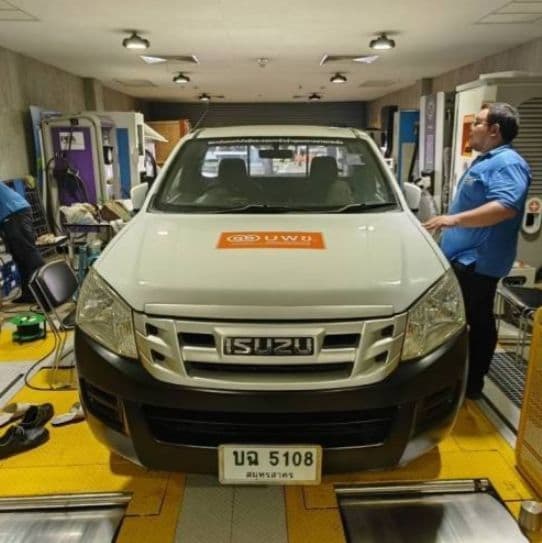
ยานยนต์ไฟฟ้าดัดแปลง
ปัจจุบันมีการพัฒนาเทคโนโลยียานยนต์ที่ขับเคลื่อนด้วยพลังงานไฟฟ้า (Electric Vehicle: EV) ทดแทนเทคโนโลยียานยนต์พลังงานน้ำมันเชื้อเพลิง (Internal Combustion Engine: ICE) เพื่อลดปัญหามลพิษสิ่งแวดล้อมที่มีแนวโน้มสูงขึ้นในทุกประเทศทั่วโลก ซึ่งประเทศไทยเริ่มมีการผลักดันนโยบายการส่งเสริมยานยนต์พลังงานไฟฟ้าผ่านหลายกระทรวงที่เกี่ยวข้องตลอดระยะเวลาที่ผ่านมา เช่น การนำรถโดยสารไฟฟ้ามาทดสอบให้บริการประชาชนผ่านหน่วยงาน ขสมก. แต่อุปสรรคสำคัญของโครงการคือต้นทุนเริ่มต้นของราคายานยนต์ไฟฟ้ามีราคาสูง แม้ว่ายานยนต์ไฟฟ้าจะมีค่าดำเนินการต่อระยะทางต่ำกว่าการใช้เชื้อเพลิงฟอสซิลมากก็ตาม จึงทำให้ผู้ประกอบการยังไม่ให้ความสนใจในการเปลี่ยนการใช้งานจากรถเครื่องยนต์สันดาปภายในเป็นยานยนต์ไฟฟ้า ดังนั้นการดัดแปลงรถเดิมเป็นรถไฟฟ้าจึงเป็นทางเลือกหนึ่งที่จะช่วยลดต้นทุนส่วนนี้ลงได้ โครงการนี้จะใช้เทคโนโลยีนี้กับการดัดแปลงรถกระบะเก่าให้เป็นรถ 2 แถวไฟฟ้า เพราะการใช้งานรถ 2 แถวมีระยะทางเฉลี่ยต่อวันค่อนข้างคงที่ ทำให้การออกแบบที่เหมาะสมมีเงื่อนไขที่ไม่เป็นอุปสรรคมากนัก และผู้ประกอบการขับรถ 2 แถว มีข้อจำกัดด้านงบประมาณในการเปลี่ยนไปใช้ยานยนต์ไฟฟ้า ดังนั้นโครงการนี้จะส่งผลให้เป็นการผลักดันให้เกิดการเปลี่ยนแปลงไปใช้งานยานยนต์ไฟฟ้ามากขึ้น นอกจากนี้เมื่อรถเครื่องยนต์สันดาปลดลงจะช่วยทำให้สิ่งแวดล้อมดีขึ้นด้วยย

คณะบริหารธุรกิจ
JALA is a brand that established a business around jasmine rice wax scented candles with the aim of addressing the stress people face in everyday life. The brand utilizes "Aromatherapy" to help relax the mind and alleviate stress. The scented candles made from jasmine rice wax are an innovative product, distinguished by their clean burn, safety for users and the environment, and high vitamin E content that nourishes the skin. They also retain a unique fragrance that provides true relaxation. JALA aims to offer products that blend traditional Thai elements with modern design, making their scented candles not only therapeutic but also a reflection of Thai culture and modern identity. The brand caters to health-conscious and environmentally aware consumers.

วิทยาลัยเทคโนโลยีและนวัตกรรมวัสดุ
The development of skin-on-a-chip models plays a crucial role in research for drug and cosmetic development. Traditional approaches often utilize two-dimensional (2D) methods that rely on culturing cells on flat surfaces, resulting in a lack of complexity in skin structure and realistic cell interactions. Moreover, traditional methods have limitations in mimicking fluid flow and nutrient circulation, which affects the accuracy of pharmaceutical testing and the prediction of drug effects. This has led to the advancement of three-dimensional (3D) skin models using new microfluidic technology, enhancing the realism of skin structure by replicating both the epidermis and dermis layers, as well as simulating fluid flow similar to physiological conditions in the human body. The design of 3D systems allows for more realistic cell arrangement and interactions, enabling better simulation of skin functions and increasing the accuracy in evaluating the effects of various substances on cell responses, including absorption, inflammation, and wound healing. Therefore, the development of three-dimensional (3D) skin models not only addresses the limitations of traditional methods but also represents a significant step forward in creating models that can be effectively applied in drug testing and pharmaceutical product development.

คณะวิศวกรรมศาสตร์
This capstone project develops an AI-powered chatbot to address cybersecurity vulnerabilities, leveraging the Common Vulnerabilities and Exposures (CVE) system and the Common Vulnerability Scoring System (CVSS). The chatbot will provide accessible and informative support for understanding and mitigating these vulnerabilities, potentially leading to significant improvements in cybersecurity practices.