


A sweet made from flour and added to give it a chewy texture similar to chewing gum.
เพื่อเป็นการฝึกฝนการทำธุรกิจโดยการเริ่มจากการวิเคราะห์และคัดเลือกวัตถุดิบที่เป็นทรัพยากรในพื้นที่และการทำธุรกิจ
คณะเทคโนโลยีการเกษตร
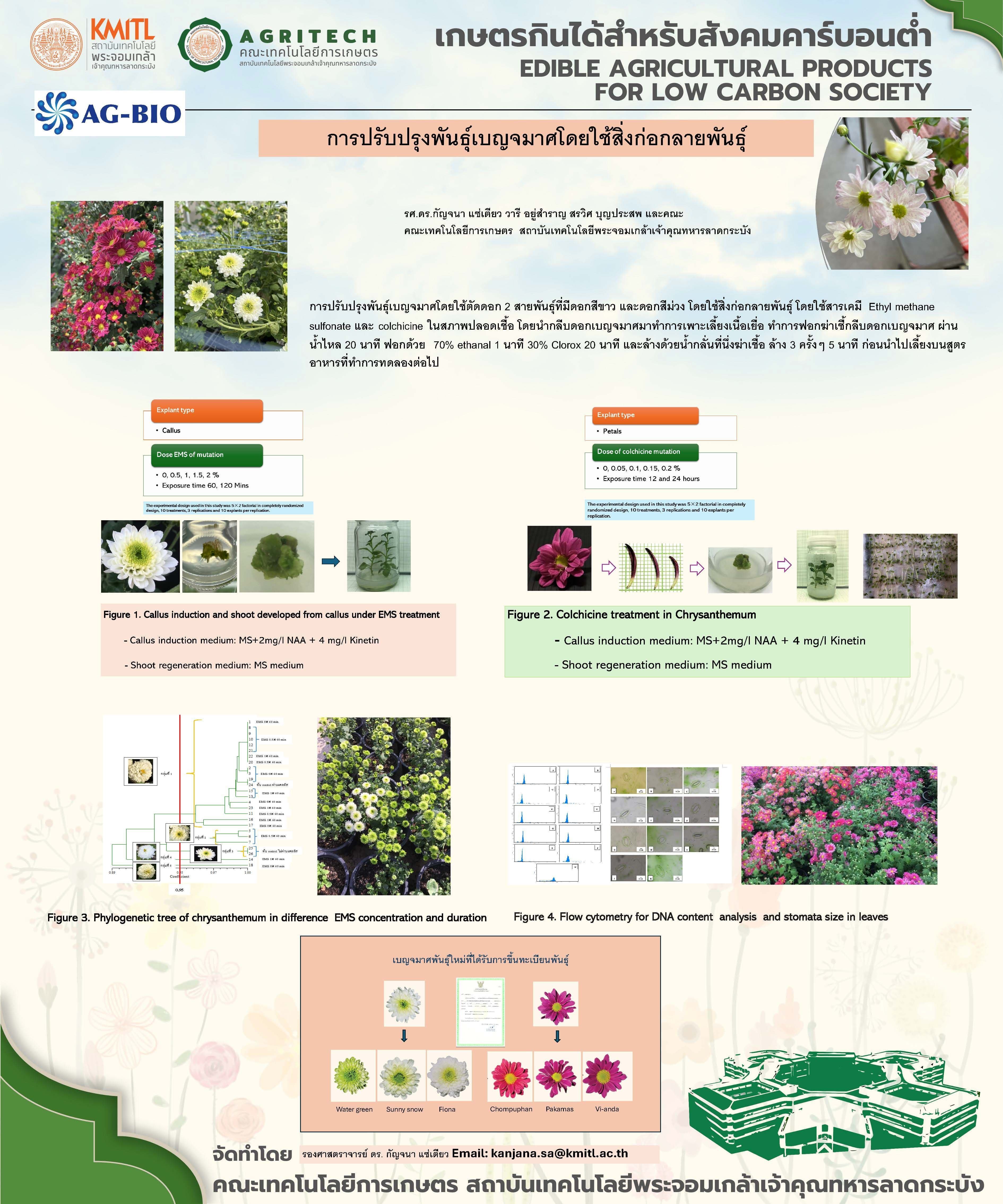
This study examines the effects of chemical mutagens, ethyl methane sulfonate (EMS) and colchicine in inducing mutations in Chrysanthemum spp. through tissue culture techniques. In vitro cultures of Chrysanthemum were treated with various concentrations of EMS and colchicine to assess their impact on shoot regeneration and mutation frequency. Results indicated that EMS significantly increased phenotypic variability, leading to enhanced flower color and size, while colchicine treatment effectively induced polyploidy, resulting in plants with greater flower size and overall vigor. Morphological assessments, along with genetic analyses using molecular markers, confirmed the mutations associated with these treatments. The integration of chemical mutagenesis with tissue culture presents a promising approach for developing novel Chrysanthemum varieties with improved ornamental traits.
คณะเทคโนโลยีการเกษตร
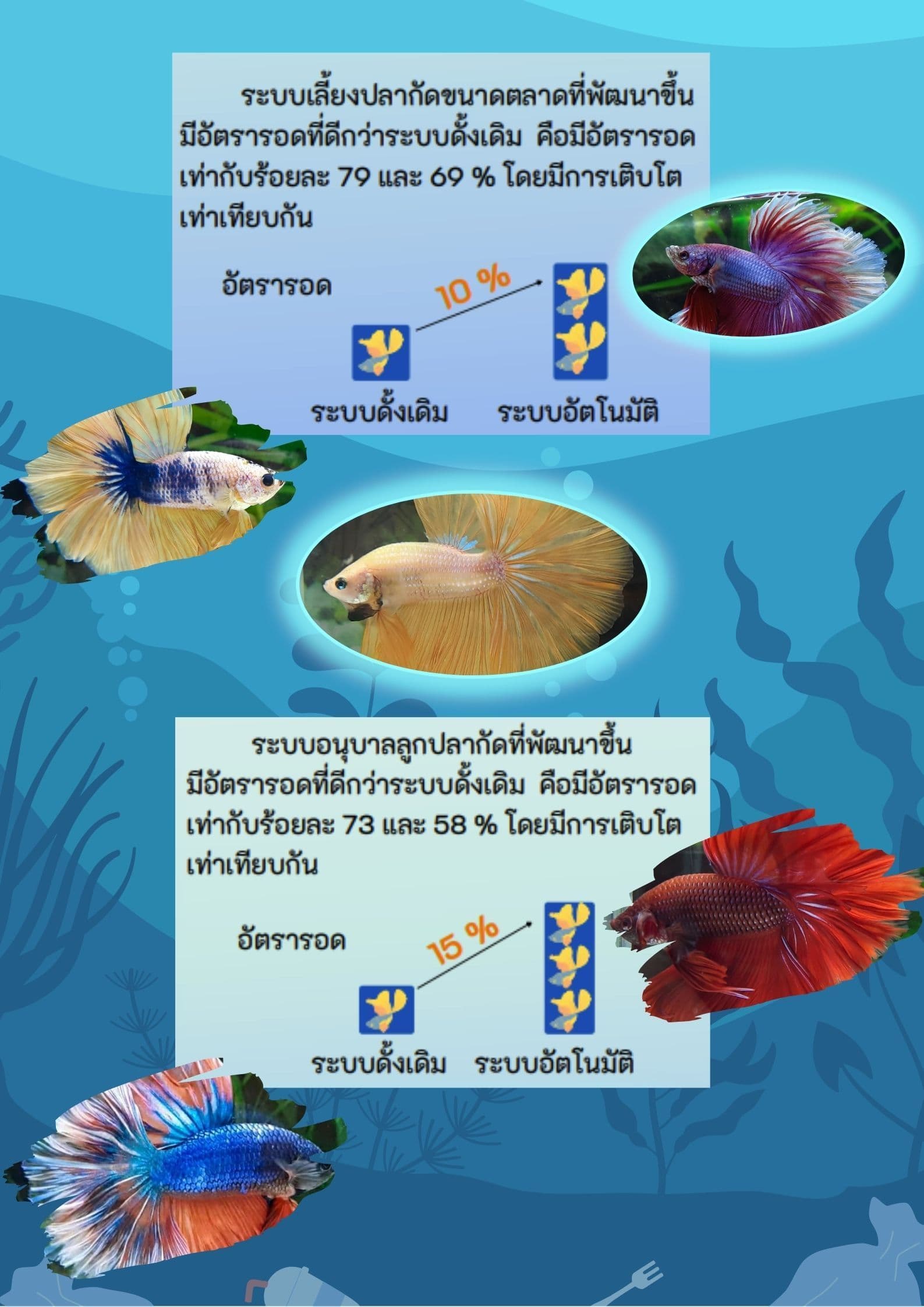
Siamese fighting fish (Betta splendens) is an ornamental fish that is the first exported economically valuable fish in the country, but there is a limitation to increase the production of betta fish due to climate variability and the shortage of Thai workers. This research aims to develop 2 systems: a betta fish fry nursery system and a market-sized betta fish rearing system by using automated technology to precisely control the water quality in the system and reduce labor costs. Using precise automation consists of two systems: a minimal-waste system, which repurposes some of the waste generated from farming, and a zero-waste system, which treats and recycles all wastewater from farming. These systems aim to address issues related to water quality, animal welfare, and labor requirements in Betta fish farming. Experimental results show that these systems improve Betta fish survival rates by 10-15% compared to traditional methods. When considering net returns, the zero- waste system provides the highest profitability.
คณะวิศวกรรมศาสตร์
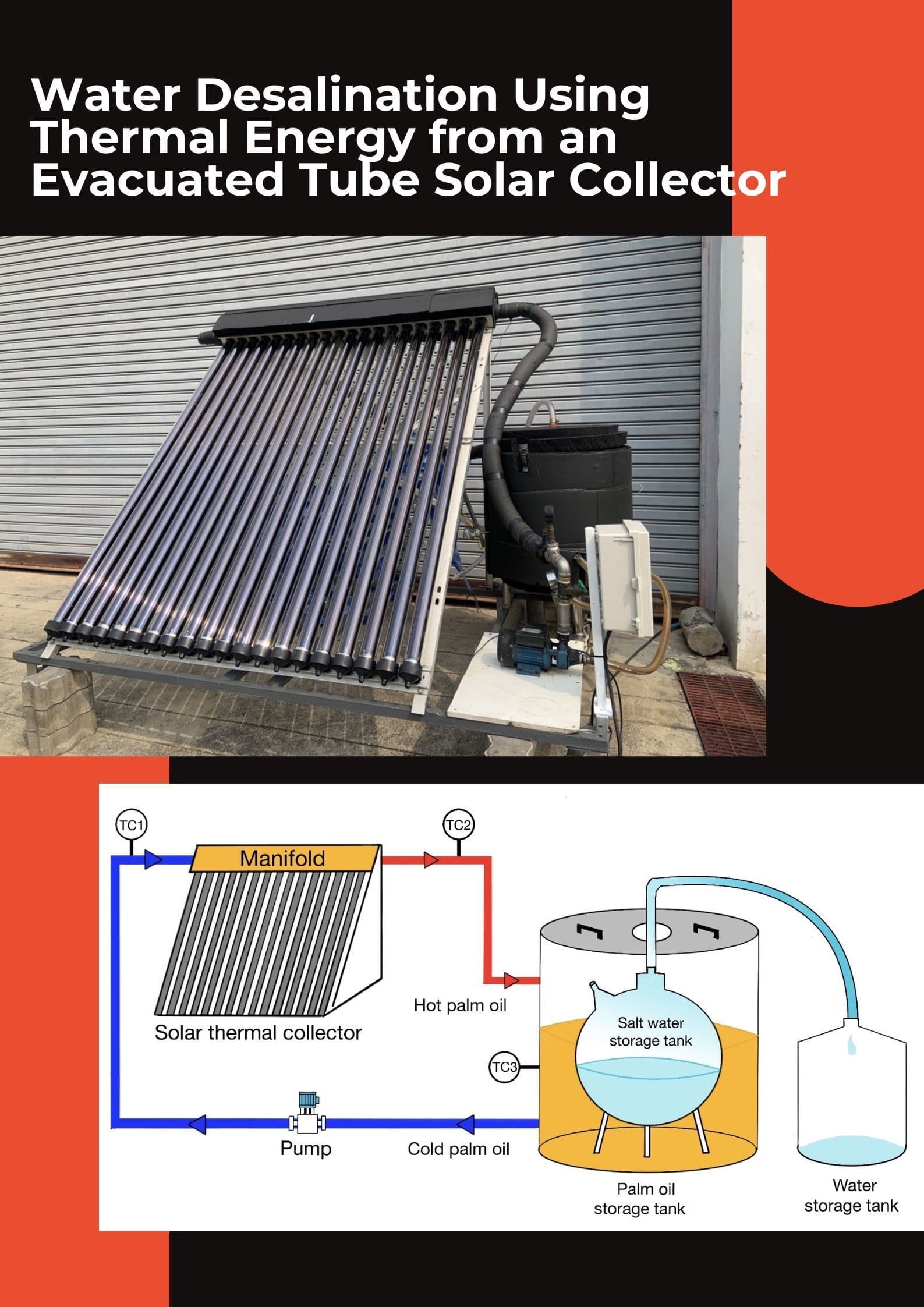
Freshwater scarcity is a global crisis due to limited accessible freshwater resources and rising demand. Seawater desalination is a key solution but is energy-intensive and reliant on fossil fuels, leading to high costs and environmental impacts. This study aims to investigate the use of solar thermal energy from an evacuated tube collector for freshwater production via evaporation and condensation. The focus is on analyzing system efficiency by comparing freshwater yield with energy input. The findings may contribute to the development of sustainable desalination technologies suitable for freshwater-scarce regions.