

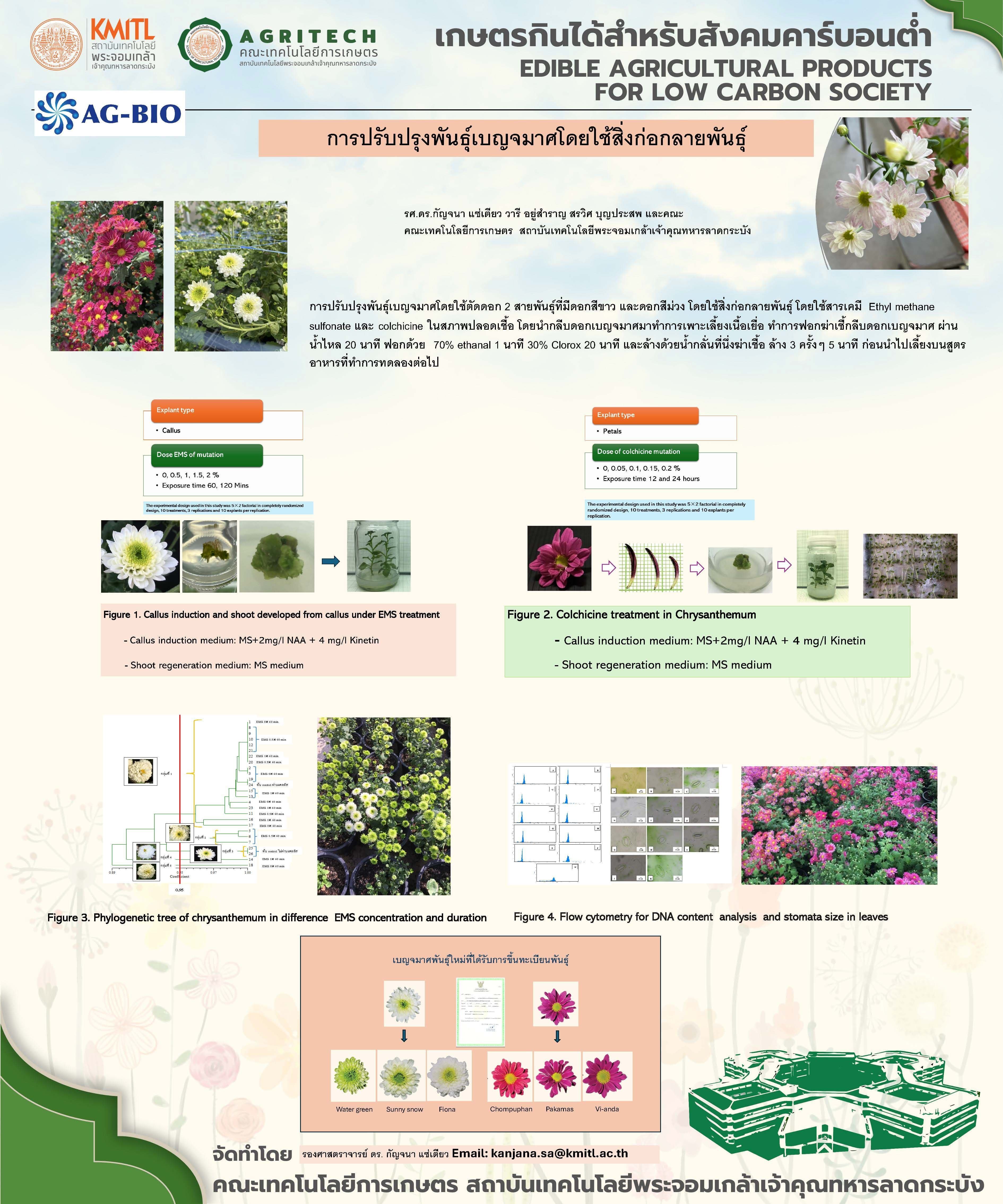
This study examines the effects of chemical mutagens, ethyl methane sulfonate (EMS) and colchicine in inducing mutations in Chrysanthemum spp. through tissue culture techniques. In vitro cultures of Chrysanthemum were treated with various concentrations of EMS and colchicine to assess their impact on shoot regeneration and mutation frequency. Results indicated that EMS significantly increased phenotypic variability, leading to enhanced flower color and size, while colchicine treatment effectively induced polyploidy, resulting in plants with greater flower size and overall vigor. Morphological assessments, along with genetic analyses using molecular markers, confirmed the mutations associated with these treatments. The integration of chemical mutagenesis with tissue culture presents a promising approach for developing novel Chrysanthemum varieties with improved ornamental traits.
การสร้างพันธุ์ใหม่ของเบญจมาศจากการกลายพันธุ์โดยใช้สารก่อการกลายและการเพาะเลี้ยงเนื้อเยื่อ การชักนำการกลายพันธุ์โดยใช้สารละลาย EMS และ สารละลายโคลชิซิน เป็นที่นิยมใช้ในการปรับปรุงพันธุ์เนื่องจากก่อให้เกิดการกลายพันธุ์ในระดับยีน ส่งผลให้มีการเปลี่ยนแปลงลักษณะทางสัณฐานวิทยา คณะผู้วิจัยได้ทำการปรับปรุงพันธุ์เบญจมาศโดยใช้สารละลายโคลชิซิน และสารละลายเอทิลมีเทนซัลโฟเนต ในสภาพปลอดเชื้อ Asoko et al. (2020) รายงานการปรับปรุงพันธุ์เบญจมาศพันธุ์ canter โดยการเพาะเลี้ยงกลีบดอกร่วมกับการแช่สารละลายโคลชิซินในสภาพปลอดเชื้อ พบว่ากลีบดอกที่แช่โคลชิซินที่ระดับความเข้มข้น 0.1 0.15% เป็นเวลา 12 ชั่วโมง และ 24 ชั่วโมงและชักนำผ่านแคลลัสได้ต้นกลายพันธุ์ที่มีกลีบดอกสีชมพูส้ม และการปรับปรุงพันธุ์เบญจมาศพันธุ์ vivic โดยใช้กลีบดอกแช่สารละลาย EMS ที่ระดับความเข้มข้น 0.5 และ 1% เป็นเวลา 60 นาทีโดยการชักนำผ่านแคลลัส ได้ลักษณะกลีบดอกเป็นดอกซ้อนมากขึ้น (วารี, 2562; Yoosumran et al. 2018) เช่นเดียวกับ Latado et al. (2004) ศึกษาการกลายพันธุ์ของเบญจมาศโดยใช้สารละลายเอทิลมีเทนซัลโฟเนต (EMS) นำก้านดอกอ่อนจุ่มแช่สารละลาย EMS ความเข้มข้น 0.77 เปอร์เซ็นต์ เป็นเวลา 1 ชั่วโมง 45 นาที ทำให้กลีบดอกเปลี่ยนสี เช่น สีชมพูส้ม สีชมพูอ่อน สีบรอนซ์ สีขาว สีเหลือง และสีส้ม ส่วนลักษณะภายนอกเหมือนดอกชุดควบคุม จากการศึกษาพบว่าสารละลาย EMS มีประสิทธิภาพในการกลายพันธุ์ของเบญจมาศในหลอดทดลอง และยังทำให้สีดอกเบญจมาศเปลี่ยนแปลงจากเดิม นอกจากนี้ Gantait et al. (2011) ศึกษาการเพิ่มชุดโครโมโซมของต้นเยอบีราโดยใช้สารโคลชิซินในสภาพปลอดเชื้อ โดยใช้ส่วนยอดที่เพาะได้ในสภาพปลอดเชื้อไปแช่สารโคลชิซินความเข้มข้น 0.01, 0.05, 0.10, 0.50 และ 1.00 เปอร์เซ็นต์ เป็นเวลา 2, 4 และ 8 ชั่วโมง พบว่า ความเข้มข้น 0.1 เปอร์เซ็นต์ เป็นเวลา 8 ชั่วโมง สามารถชักนำให้เกิดการกลายพันธุ์แบบเททราพลอยด์ได้ดีที่สุด โดยสามารถชักนำให้เกิดการกลายพันธุ์ได้ถึง 64 เปอร์เซ็นต์ เมื่อทำการย้ายปลูกพบว่า ต้นเยอบีราที่เป็นเททราพลอยด์มีการเจริญเติบโตช้ากว่า เมื่อเปรียบเทียบกับต้นเยอบีราที่เป็นดิพลอยด์ นอกจากนี้ยังพบว่า ต้นเยอบีราที่เป็นเททราพลอยด์มีขนาดใบ ดอกที่ใหญ่ขึ้น และมีก้านชูดอกยาวขึ้นและแข็งกว่าต้นเยอบีราที่เป็นต้นดิพลอยด์ การออกดอกเบญจมาศขึ้นอยู่กับจำนวนแสงต่อวัน โดยเบญจมาศจะออกดอกเมื่อมีความยาววันสั้นลงในหนึ่งวัน เช่น ในช่วงต้นฤดูหนาว แต่ถ้าช่วงแสงยาว เบญจมาศจะเติบโตทางลำต้น คือต้นสูงขึ้น มีใบเพิ่มขึ้นเรื่อยๆ ดังนั้น ถ้าต้องการบังคับให้เบญจมาศมีดอกได้ตลอดปีนั้น จะต้องทำดังนี้ ในช่วงฤดูที่มีวันยาว เช่น ฤดูร้อนและฤดูฝน ในตอนกลางวันปล่อยให้เบญจมาศมีการเจริญเติบโตจนกระทั้งได้ต้นสูงตามต้องการ จากนั้นใช้ผ้าดำคลุมแปลงปลูกในช่วงตอนเย็นเพื่อให้วันสั้นลง เบญจมาศจะเกิดตาดอกและพัฒนาเป็นดอกต่อไป ส่วนในฤดูหนาวที่มีวันสั้นนั้น ต้องปล่อยให้เบญจมาศมีการเจริญเติบโตทางลำต้นเสียก่อน โดยการใช้การติดตั้งหลอดไฟเป็นระยะ ๆ เหนือแปลงและเปิดไฟให้หลังจากดวงอาทิตย์ตก เพื่อยืดวันให้ยาวขึ้นจนกระทั้งได้ต้นสูงตามต้องการ จึงงดการให้แสงกลับเข้าสู่วันสั้นตามสภาพวันสั้นของฤดูหนาวตามเดิม เบญจมาศก็จะเกิดตาดอก แต่อยากไรก็ตาม การปลูกเบญจมาศในสภาพฤดูร้อนของไทยนั้น ถ้าคลุมด้วยผ้าดำในช่วงเวลาเย็นเพื่อให้วันสั้นลง ขณะที่อุณหภูมิภายนอกค่อนข้างสูง จะทำให้เกิดหยดน้ำภายในผ้าคลุม ซึ่งเป็นสาเหตุให้เกิดโรคได้ง่าย และการที่อุณหภูมิสูงเกินไป จะทำให้เบญจมาศบางพันธุ์ไม่เกิดตาดอกหรือดอกมีขนาดเล็ก นอกจากนี้ยังทำให้ดอกมีสีซีดลงดังนั้นในฤดูร้อนจึงควรปลูกในบริเวณพื้นที่สูงจะดีกว่า เนื่องจากอุณหภูมิจะต่ำกว่าในพื้นราบ ในปี 2559 ได้เริ่มทำการปรับปรุงพันธุ์เบญจมาศโดยใช้สารก่อกลายพันธุ์ในสภาพปลอดเชื้อ ในปี 2561เป็นการนำต้นที่ได้จากการชักนำให้เกิดการกลายพันธุ์มาทำการทดลองออกปลูกเพื่อคัดเลือกต้นที่เหมาะสมสำหรับใช้เป็นพันธุ์ใหม่ และในปี 2563 นี้ทำการขยายต้นในสภาพปลอดเชื้อ เพิ่มปริมาณกิ่งชำเพื่อออกปลูกดูความคงตัวของลักษณะทางพันธุกรรม และขึ้นทะเบียนพันธุ์

คณะวิทยาศาสตร์
This project presents the development of an automatic recycling machine for plastic bottles and cans, utilizing Machine Learning for packaging classification through image processing, integrated with smart sensor systems for quality inspection and operation control. The system connects to a Web Application for real-time monitoring and control. Once the packaging type is verified, the system automatically calculates the refund value and processes payment through e-wallet or issues cash vouchers. The system can be installed in public spaces to promote waste segregation at source, reduce contamination, and increase recycling efficiency. It also provides financial incentives to encourage public participation in waste management. This project demonstrates the potential of combining Machine Learning and smart sensor systems in developing accurate, convenient, and sustainable waste management solutions.
วิทยาเขตชุมพรเขตรอุดมศักดิ์
This project focuses on developing a work tracking system for team members. Python is used to extract data from Excel files and import it into a SQL Server database for systematic data management. The system includes a function to notify task status via LINE and displays reports via Power BI, allowing supervisors to track progress and evaluate team members' performance efficiently. Additionally, the system helps promote work and time management skills for team members.
คณะวิศวกรรมศาสตร์
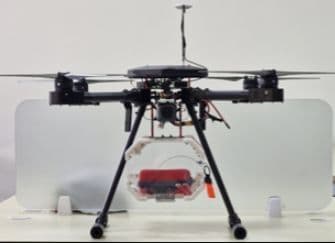
One of the most important aspects of responding to a medical case is the response time. In general, most fatalities are due to the patient not being able to reach the hands of the doctor in time. This also includes the arrival of medical equipment to the scene. The human brain will start to degrade in function after 3 minutes of oxygen starvation which conventional road transportation method first responders presently use is usually unable to reach the site in this golden 3 minutes, resulting in fatalities during transport or before the arrival of first responders at the scene. Therefore, medical equipment transport by fully autonomous aircraft is explored. This is done through drone deliveries which is much quicker than road methods as the equipment could be flown straight to the site as it is not affected by traffic, road conditions, and navigation. In this project, we will explore an aerial delivery system for medical equipment such as Automatic External Defibrillators (AEDs), First aid equipment, and other small requested medical devices. This will be done through a DJI drone platform and their SDK application. The main goal for this project is to decrease the response time by using an autonomous aerial drone to deliver medical equipment.