
KMITL Expo 2026 LogoKMITL 66th Anniversary Logo

Smart BMS Demonstrator for EV Energy Management – Empowering the Future of Education and Thai Industry

Smart BMS Demonstrator for EV Energy Management – Empowering the Future of Education and Thai Industry

Abstract

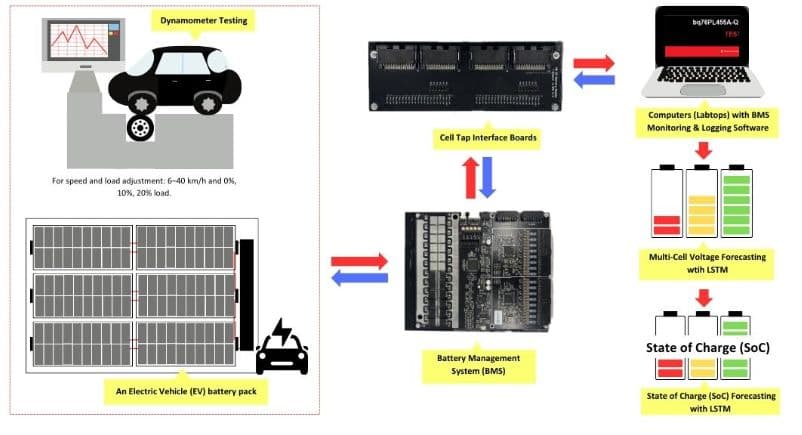
This research develops a "Smart Battery Management System (BMS) Demonstration Kit for Electric Vehicles" — a scaled-down prototype that measures battery cell voltage, current, and temperature while precisely controlling cell balancing and charge-discharge processes, supported by a real-time dashboard. The kit integrates LSTM and GRU AI models for accurate prediction of battery voltage and State of Charge (SoC) under varying load conditions, enabling early anomaly detection and predictive maintenance. Designed for exhibition displays and as a teaching resource for higher education and vocational institutions, this demonstration kit delivers meaningful impact across education, research, and innovation development in Thailand's electric vehicle industry.

Objective

ในยุคที่โลกกำลังเปลี่ยนผ่านสู่ระบบพลังงานสะอาด ยานยนต์ไฟฟ้า (EV) ได้กลายเป็นหนึ่งในเทคโนโลยีสำคัญที่ถูกขับเคลื่อนทั้งในระดับนโยบายภาครัฐและอุตสาหกรรมยานยนต์ทั่วโลก โดยเฉพาะในประเทศไทยที่รัฐบาลได้ประกาศวิสัยทัศน์ “30@30” เพื่อให้ยานยนต์ไฟฟ้ามีสัดส่วนการผลิตไม่น้อยกว่า 30% ของการผลิตรถยนต์ภายในประเทศภายในปี พ.ศ. 2573 อย่างไรก็ตาม แม้จะมีการเติบโตของตลาด EV อย่างต่อเนื่อง แต่ยังพบข้อจำกัดสำคัญคือ การขาดแคลนองค์ความรู้และระบบประกอบที่มีคุณภาพในประเทศ โดยเฉพาะ ระบบบริหารจัดการแบตเตอรี่ หรือ BMS (Battery Management System) ซึ่งถือเป็นหัวใจสำคัญของการควบคุมความปลอดภัย ประสิทธิภาพ และอายุการใช้งานของแบตเตอรี่ใน EV จากประสบการณ์ของทีมวิจัยที่ได้ดำเนินโครงการต่อยอดระบบ BMS สำหรับยานยนต์ไฟฟ้า ทีมพบว่าผู้ประกอบการภายในประเทศส่วนใหญ่ยังขาดความรู้ความเข้าใจเกี่ยวกับมาตรฐาน BMS ที่ถูกต้อง และมีการนำระบบราคาถูกจากต่างประเทศที่ไม่มีการควบคุมคุณภาพมาใช้งานในเชิงพาณิชย์ ทำให้เกิดความเสี่ยงทั้งในด้านประสิทธิภาพและความปลอดภัยของผู้ใช้งาน อีกทั้งยังไม่มีต้นแบบหรือชุดจัดแสดงที่สามารถอธิบายการทำงานของ BMS และเทคโนโลยี AI ที่เกี่ยวข้องในลักษณะที่เข้าใจง่าย และสามารถนำไปใช้ในงานด้านการเรียนการสอน หรือนิทรรศการวิชาการเพื่อการขยายผลได้จริง ด้วยเหตุนี้โครงการนี้จึงมีวัตถุประสงค์เพื่อพัฒนา “ชุดสาธิตระบบ BMS อัจฉริยะสำหรับยานยนต์ไฟฟ้า” ที่สามารถแสดงการทำงานของระบบควบคุมแบตเตอรี่ พร้อมการวิเคราะห์ข้อมูลแรงดันและสถานะประจุ (SoC) แบบเรียลไทม์โดยใช้โมเดลปัญญาประดิษฐ์ เช่น LSTM และ GRU ซึ่งพัฒนาโดยทีมวิจัย พร้อมแสดงผลผ่านแดชบอร์ดที่เข้าใจง่าย เหมาะแก่การจัดแสดงในงาน KMITL Innovation EXPO 2026 และยังสามารถใช้ในห้องเรียนหรือการอบรมวิชาชีพได้ในระยะยาว โครงการนี้จึงมีความสำคัญทั้งในเชิงวิชาการ อุตสาหกรรม และสังคม โดยเป็นสื่อกลางเชื่อมโยงองค์ความรู้ด้านเทคโนโลยีแบตเตอรี่ การจัดการพลังงานและ AI เข้ากับผู้เรียน นักพัฒนาและผู้ประกอบการ พร้อมทั้งสามารถเป็นต้นแบบสำหรับการต่อยอดสู่อุปกรณ์ BMS ที่ผลิตได้เองในประเทศในอนาคต ช่วยลดการพึ่งพาต่างประเทศและเพิ่มขีดความสามารถในการแข่งขันของอุตสาหกรรม EV ไทยอย่างยั่งยืน
Other Innovations

Water Desalination Using Thermal Energy from an Evacuated Tube Solar Collector

คณะวิศวกรรมศาสตร์

Water Desalination Using Thermal Energy from an Evacuated Tube Solar Collector

Freshwater scarcity is a global crisis due to limited accessible freshwater resources and rising demand. Seawater desalination is a key solution but is energy-intensive and reliant on fossil fuels, leading to high costs and environmental impacts. This study aims to investigate the use of solar thermal energy from an evacuated tube collector for freshwater production via evaporation and condensation. The focus is on analyzing system efficiency by comparing freshwater yield with energy input. The findings may contribute to the development of sustainable desalination technologies suitable for freshwater-scarce regions.

Read more
Design of a Processing Room for Red Pork Offal

คณะวิศวกรรมศาสตร์

Design of a Processing Room for Red Pork Offal

This project aims to propose a design for a red offal processing room in a pork processing plant that processes 500 pigs per day or 80 pigs per hour. Each pig weighs approximately 105 kilograms, with 3.47% of the weight consisting of red offal. The process involves separating liver, gall bladder, heart, lungs, spleen, and kidneys as required. These parts are then chilled in cold water to reduce their temperature to below 7°C before packaging and sealing. Sorting is based on the number of pieces and weight, depending on the type of product. The processing times of sorting chilling and packaging vary depending on the product's type and size. The design was developed using data collected from the current production line and referenced standards. The room layout was planned using Systematic Layout Planning (SLP) principles to analyze activity relationships within the room and define functional areas. Equipment sizes and the required number of operators were calculated to ensure optimal use of space. The red offal processing room was designed with an area of 56 square meters. After the layout design was completed, a 3D model was created using SketchUp 2024, and the workflow and operations were simulated and analyzed using Flexsim 2024

Read more
Diabetes Meal Management Application

คณะวิศวกรรมศาสตร์

Diabetes Meal Management Application

The Diabetes Meal Management Application is a digital health tool designed to empower Type 2 diabetic patients in managing their diet and blood sugar levels more effectively. With features like personalized meal recommendations, nutrient tracking, and seamless integration with wearable blood glucose monitors via Blood sugar measuring device (CGM), the application enables users to monitor glucose fluctuations in real time and adjust dietary choices accordingly. Built with the Flutter framework and supported by a backend of Express.js and MongoDB, the application prioritizes a user-friendly interface, ensuring easy navigation and encouraging consistent engagement with meal planning and health tracking. Preliminary user trials show that the application contributes to more stable blood sugar levels and improved adherence to dietary recommendations, helping users reduce health risks associated with diabetes complications. By offering a proactive approach to diabetes management, the application reduces the need for frequent clinical interventions, thus potentially lowering medical costs over time. This project highlights the promising role of digital health solutions in supporting personalized diabetes care, emphasizing the potential for scalable, user-centered interventions that foster long-term health improvements for diabetic patients.

Read more