

This project aims to propose a design for a red offal processing room in a pork processing plant that processes 500 pigs per day or 80 pigs per hour. Each pig weighs approximately 105 kilograms, with 3.47% of the weight consisting of red offal. The process involves separating liver, gall bladder, heart, lungs, spleen, and kidneys as required. These parts are then chilled in cold water to reduce their temperature to below 7°C before packaging and sealing. Sorting is based on the number of pieces and weight, depending on the type of product. The processing times of sorting chilling and packaging vary depending on the product's type and size. The design was developed using data collected from the current production line and referenced standards. The room layout was planned using Systematic Layout Planning (SLP) principles to analyze activity relationships within the room and define functional areas. Equipment sizes and the required number of operators were calculated to ensure optimal use of space. The red offal processing room was designed with an area of 56 square meters. After the layout design was completed, a 3D model was created using SketchUp 2024, and the workflow and operations were simulated and analyzed using Flexsim 2024
บริษัท เบทาโกร จำกัด (มหาชน) ได้มีแผนการขยายโรงงานแปรรูปสุกรทั้งในประเทศและต่างประเทศ การออกแบบกระบวนการผลิตจึงเป็นสิ่งสำคัญที่ทำให้โรงงานที่จะก่อตั้งนั้นสามารถใช้งานได้อย่างมีประสิทธิภาพทั้งในด้านกระบวนการการผลิตและความสะอาด เพื่อทำให้สินค้าที่ส่งมอบแก่ผู้บริโภคมีคุณภาพที่ดี โดยผลิตภัณฑ์ที่สำคัญของโรงงานแปรรูปสุกร ได้แก่ กลุ่มชิ้นส่วนสุกรตัดแต่ง และกลุ่มเครื่องในสุกร ซึ่งประกอบไปด้วยเครื่องในแดง และเครื่องในขาว โครงงานนี้ได้รับมอบหมายให้ศึกษากระบวนการทำงานเพื่อออกแบบห้องเครื่องในแดงให้รองรับการผลิตที่สูงขึ้นและมีความหลากหลายของผลิตภัณฑ์มากขึ้น โดยกระบวนการทำงานภายในห้องถูกต้องเป็นไปตามหลักการปฏิบัติที่ดีสำหรับโรงแปรรูปสุกรของกรมปศุสัตว์
คณะวิศวกรรมศาสตร์
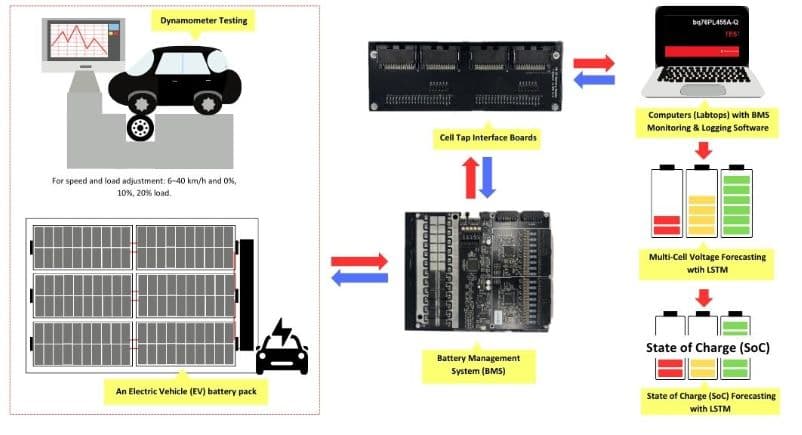
This research develops a "Smart Battery Management System (BMS) Demonstration Kit for Electric Vehicles" — a scaled-down prototype that measures battery cell voltage, current, and temperature while precisely controlling cell balancing and charge-discharge processes, supported by a real-time dashboard. The kit integrates LSTM and GRU AI models for accurate prediction of battery voltage and State of Charge (SoC) under varying load conditions, enabling early anomaly detection and predictive maintenance. Designed for exhibition displays and as a teaching resource for higher education and vocational institutions, this demonstration kit delivers meaningful impact across education, research, and innovation development in Thailand's electric vehicle industry.

คณะเทคโนโลยีการเกษตร
The project focuses on designing and creating Art Toy Mascots that reflect the identities of the 12 departments in the Faculty of Agricultural Technology. It combines the concepts of art and agricultural technology to promote better understanding and easy recognition of each department. The project utilizes creative design and artistic toy production techniques.
คณะวิทยาศาสตร์
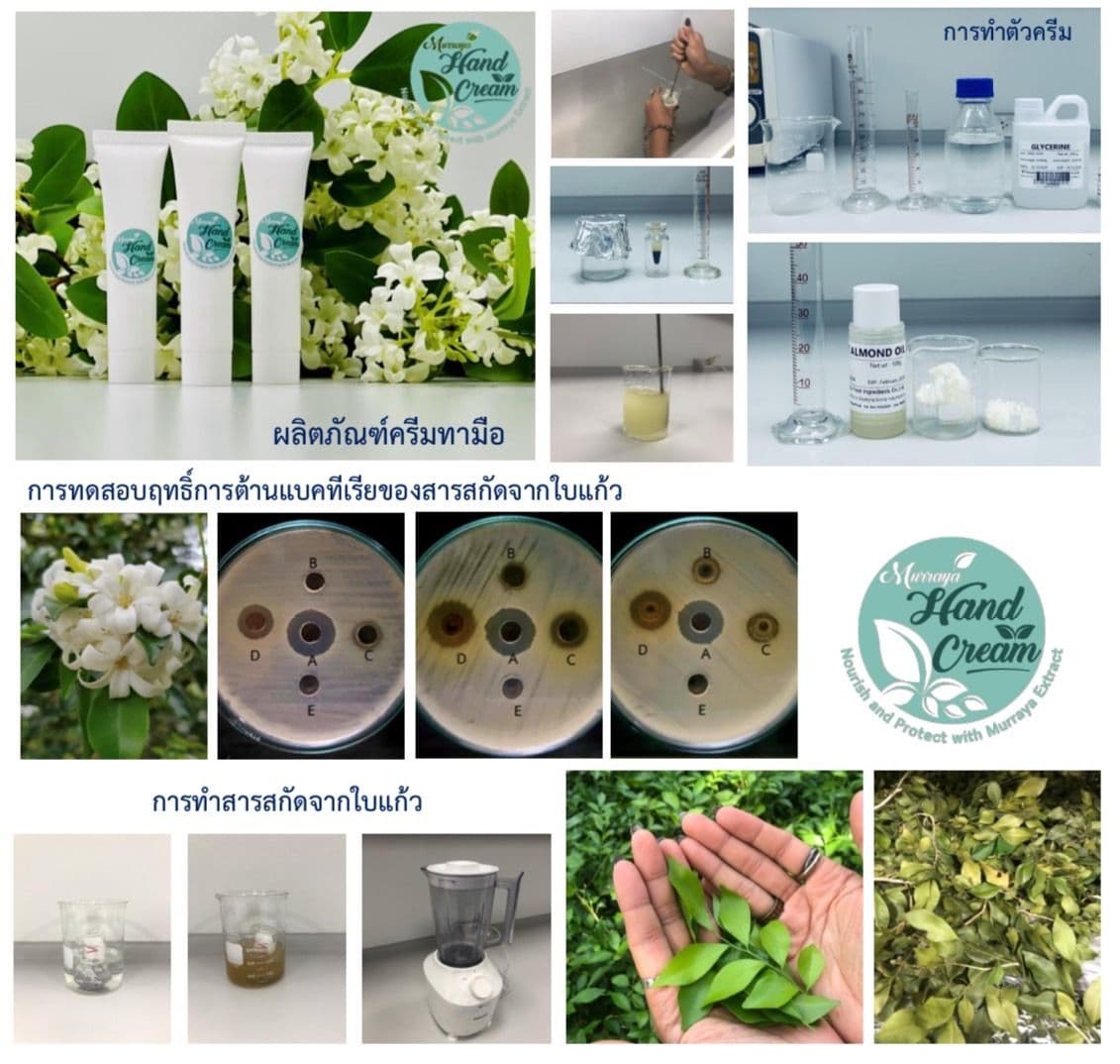
Development of Hand Cream from Murraya Extract Using an Eco-Friendly Extraction Process. This research focuses on extracting active compounds from Murraya paniculata using a water-based, environmentally friendly method. The extract exhibits outstanding antibacterial properties and anti-oxidant. It is incorporated into a hand cream formulation.