
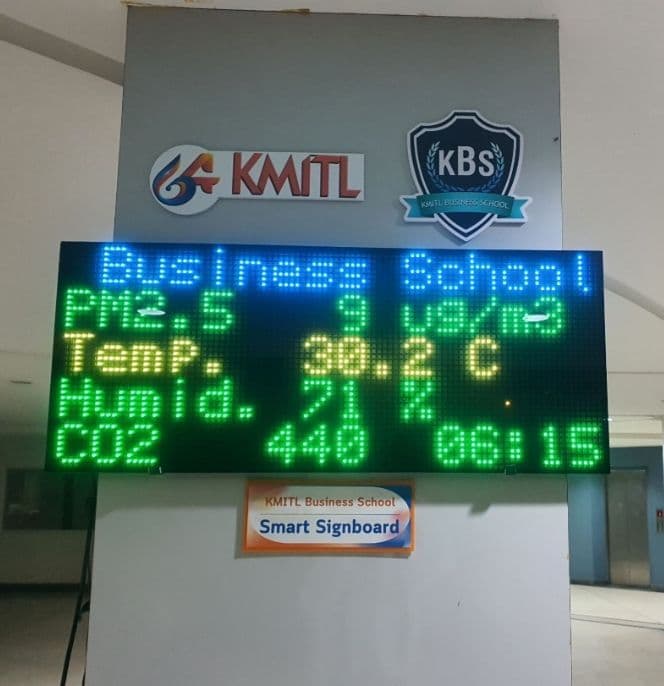
Air Quality Monitoring System with External Device Controlling Capability is the equipment which measures and records the climatic data with the capability to control external devices (e.g. blower fan or air purifier) to rectify the surrounding atmosphere according to the air quality at the moment and other users' pre-defined conditions.
ปัญหาของสภาพอากาศในปัจจุบันต้องการอุปกรณ์ที่ไม่เพียงแต่วัดคุณภาพของอากาศ แต่ต้องมีความสามารถในการแก้ไขสภาพอากาศโดยรอบในกรณีที่คุณภาพของอากาศไม่เหมาะสม

คณะวิทยาศาสตร์
The species Enterococcus lactis is closely related to E. faecium and is known for its beneficial and probiotic effects. In this study, strain RRS4 was isolated from Raphanus sativus Linn. and identified based on both phenotypic and genotypic characteristics. Strain RRS4 exhibited cell viability in environments with 2-8% NaCl, pH ranging from 4 to 9, and temperatures between 4°C and 45°C. Through comprehensive genomic analysis, strain RRS4 was confirmed to be E. lactis. E. lactis RRS4 demonstrated inhibitory effects against Vancomycin-resistant E. faecalis JCM 5803. Safety assessments via in silico methods, including KEGG annotation, indicated the absence of virulent and undesirable genes in E. lactis RRS4. VirulenceFinder analysis aligned virulence-related genes with those from three strains of E. lactis and four strains of E. faecium. While antibiotic resistance genes were found to be conserved, they did not correlate with key pathogenicity traits. Furthermore, safety evaluations highlighted that E. lactis RRS4 is generally safe, despite the presence of genes associated with antibiotic resistance. Lastly, we propose guidelines for assessing the safety of microbial strains using whole-genome analysis. These findings represent advancements in probiotic research.

คณะวิทยาศาสตร์
Bacteriocins are microbial peptides that demonstrate potency against pathogens. This study evaluated the inhibitory effects on pathogens and characterized the bacteriogenomic profile of strain TKP1-5, isolated from the feces of Anas platyrhynchos domesticus. Strain TKP1-5 was characterized using phenotypic traits, 16S rRNA sequencing, and Whole-Genome Sequencing (WGS). It exhibited growth in the presence of 2-6% NaCl, temperatures of 25-45°C, and pH levels ranging from 3 to 9. Based on ANIb, ANIm, and dDDH values, strain TKP1-5 was identified as Lactococcus lactis. Whole genome analysis revealed that strain TKP1-5 harbors the Nisin Z peptide gene cluster with a bit-score of 114.775. The antimicrobial spectrum of bacteriocin TKP1-5 showed inhibitory effects against pathogenic bacteria including Pediococcus pentosaceus JCM5885, Listeria monocytogenes ATCC 19115, Enterococcus faecalis JCM 5803T, Salmonella Typhimurium ATCC 13311ᵀ, Aeromonas hydrophila B1 AhB1, Streptococcus agalactiae 1611 and Streptococcus cowan I. Genomic analysis confirmed L. lactis TKP1-5 as a non-human pathogen without antibiotic resistance genes or plasmids. Furthermore, L. lactis TKP1-5 contains potential genes associated with various probiotic properties and health benefits. This suggests that L. lactis TKP1-5, with its antibacterial activity and probiotic potential, could be a promising candidate for further research and application in the food industry.

คณะอุตสาหกรรมอาหาร
The consumption of plant-based products has been gaining popularity as consumers become more health-conscious and aware of environmental impacts. The food industry has been developing meat analogs with properties similar to conventional meat. This study investigates the chemical and physical properties of chickpea-based meat analog burgers and hybrid burgers containing both chickpeas and pork, using the sous-vide cooking method. This technique helps maintain food quality in terms of texture, moisture retention, and nutritional value. The experiment examined various properties of both types of burgers, including cooking loss, water holding capacity, shear force, pH value, and color analysis. Additionally, sensory evaluation was conducted to assess taste, texture, and overall consumer preference. The findings will provide insights into the optimal sous-vide conditions for producing plant-based and hybrid burgers with desirable quality characteristics that meet the needs of health-conscious consumers. This study serves as a valuable guideline for the food industry in developing high-nutritional-value alternative protein products while reducing meat consumption. By incorporating plant-based ingredients, it helps minimize environmental impact and promotes sustainability in food production. The research is significant in both food science and the development of healthier, competitive food products for the future market.