

This special problem aims to study and compare the performance of predicting the air quality index (AQI) using five ensemble machine learning methods: random forest, XGBoost, CatBoost, stacking ensemble of random forest and XGBoost, and stacking ensemble of random forest, SVR, and MLP. The study uses a dataset from the Central Pollution Control Board of India (CPCB), which includes fifteen pollutants and nine meteorological variables collected between January, 2021 and December, 2023. In this study, there were 1,024,920 records. The performance is measured using three methods: root mean square error (RMSE), mean absolute error (MAE), and coefficient of determination. The study found that the random forest and XGBoost stacking ensemble had the best performance measures among the three methods, with the minimum RMSE of 0.1040, the minimum MAE of 0.0675, and the maximum of 0.8128. SHAP-based model interpretation method for five machine learning methods. All methods reached the same conclusion: the two variables that most significantly impacted the global prediction were PM2.5 and PM10, respectively.
ทั่วโลกกำลังเผชิญกับวิกฤตมลพิษทางอากาศที่รุนแรงที่สุดในประวัติศาสตร์ การเพิ่มขึ้นของสารมลพิษในอากาศ เช่น ฝุ่นละอองขนาดเล็ก PM2.5 PM10 ก๊าซโอโซน ก๊าซคาร์บอนมอนอกไซด์ ไนโตรเจนไดออกไซด์ และซัลเฟอร์ไดออกไซด์ ซึ่งส่งผลกระทบต่อระบบทางเดินหายใจและระบบไหลเวียนโลหิตของมนุษย์ นอกจากนี้ยังมีผลกระทบทางลบต่อพืชและสัตว์ในระบบนิเวศอีกด้วย หลายพื้นที่ทั่วโลกเผชิญกับค่า PM2.5 เกินมาตรฐานอย่างต่อเนื่อง องค์การอนามัยโลก (World Health Organization : WHO) ประกาศเตือนว่า PM2.5 เป็นสารก่อมะเร็ง ส่งผลให้เกิดโรคทางเดินหายใจ โรคหัวใจ และโรคหลอดเลือดสมอง PM2.5 เป็นมลพิษทางอากาศที่อันตรายที่สุด ส่งผลต่อระบบทางเดินหายใจและเพิ่มความเสี่ยงต่อมะเร็งปอด สถิติปี 2020 มีผู้เสียชีวิตจากมะเร็งปอด 1.79 ล้านคน และคาดว่าจำนวนผู้เสียชีวิตจะเพิ่มมากขึ้นทุกปีอย่างต่อเนื่อง ดัชนีคุณภาพอากาศ (Air Quality Index : AQI) เป็นตัวชี้วัดสำคัญในการประเมินคุณภาพอากาศและบ่งชี้ถึงระดับของมลพิษ โดยใช้ข้อมูลความเข้มข้นของมลพิษในอากาศคำนวณเป็นค่าดัชนีคุณภาพอากาศที่ช่วยให้ประชาชนทราบถึงระดับความปลอดภัยของอากาศ ดังนั้นหากในชีวิตประจำวันสามารถทำนายดัชนีคุณภาพอากาศได้ ประชาชนจะสามารถวางแผนการเดินทางหรือการทำกิจกรรมกลางแจ้ง โดยหลีกเลี่ยงบริเวณที่มีมลพิษสูงได้ โดยเฉพาะกลุ่มเสี่ยง เช่น ผู้สูงอายุ เด็กเล็ก และผู้ป่วยเรื้อรัง ในช่วงหลายปีที่ผ่านมา มีงานวิจัยที่ได้พัฒนาวิธีการทำนายดัชนีคุณภาพอากาศโดยนักวิจัยได้ประยุกต์ใช้วิธีการเรียนรู้ของเครื่อง (Machine Learning) เพื่อการทำนายคุณภาพอากาศให้ดียิ่งขึ้น ในงานวิจัยนี้ คณะผู้วิจัยจึงมีความสนใจนำวิธีการเรียนรู้ของเครื่องแบบรวมกลุ่มมาใช้ในการทำนายดัชนีคุณภาพอากาศ จากการทบทวนวรรณกรรมเกี่ยวกับงานวิจัยที่เกี่ยวข้อง คณะผู้วิจัยพบว่าในงานวิจัยของ Zhang et al. (2023) ที่ศึกษาในกลุ่มเมืองของจีน 6 แห่ง ด้วยข้อมูลมลพิษและสภาพอากาศ พบได้ว่าวิธีป่าสุ่มมีประสิทธิภาพดีที่สุดเมื่อวัดด้วย MAE ต่อมาในงานวิจัยของ Dao et al. (2022) ที่ได้ใช้ข้อมูลมลพิษในอินเดีย พบว่าวิธี XGBoost มีประสิทธิภาพดีที่สุด เช่นเดียวกับงานวิจัยของ Kumar and Pande (2023) ในขณะที่ Ravindiran et al. (2023) ได้ศึกษาด้วยข้อมูลมลพิษและสภาพอากาศในรัฐอานธรประเทศ พบว่าวิธี CatBoost มีประสิทธิภาพดีที่สุด และอีก 2 งานวิจัยที่ได้อาศัยแนวทางการรวมกลุ่มแบบ Stacking ได้แก่ งานวิจัยของ Sharma et al. (2024) ที่ศึกษาในหลายเมืองของอินเดียโดยได้ใช้วิธีการรวมกลุ่มของต้นไม้ตัดสินใจหลายวิธี หนึ่งในนั้นคือวิธีการรวมกลุ่มป่าสุ่มและ XGBoost ซึ่งก็พบว่าวิธีดังกล่าวมีประสิทธิภาพดีที่สุด และ Emeç and Yurtsever (2024) ได้ศึกษาการทำนายความเข้มข้นของ PM2.5 ซึ่งเป็นหนึ่งในมลพิษสำคัญที่ส่งผลต่อดัชนีคุณภาพอากาศของเมืองอิสตันบลูและปักกิ่งโดยใช้วิธีการเรียนรู้ของเครื่อง 3 วิธีมารวมกันเป็นวิธีรวมกลุ่มป่าสุ่ม, SVR และ MLP พบว่าวิธีนี้มีประสิทธิภาพดีกว่าการใช้ทั้ง 3 วิธีแยกกัน ดังนั้นคณะผู้วิจัยจึงสนใจนำวิธีการเรียนรู้ของเครื่องแบบรวมกลุ่มทั้ง 5 วิธี ได้แก่ วิธีป่าสุ่ม วิธี XGBoost วิธี CatBoost วิธีรวมกลุ่มป่าสุ่มและ XGBoost และวิธีรวมกลุ่มป่าสุ่ม, SVR และ MLP โดยใช้ข้อมูลเกี่ยวกับค่ามลพิษและสภาพอากาศจากสถานีตรวจวัดในรัฐเดลี ประเทศอินเดีย ซึ่งเป็นพื้นที่ที่มีปัญหาด้านคุณภาพอากาศเป็นอันดับต้น ๆ ของโลก โดยใช้ข้อมูลตั้งแต่วันที่ 1 มกราคม 2021 ถึง 31 ธันวาคม 2023 และวิธีการวัดประสิทธิภาพ 3 วิธี ได้แก่ รากของค่าคลาดเคลื่อนกำลังสองเฉลี่ย ค่าคลาดเคลื่อนสัมบูรณ์เฉลี่ย และสัมประสิทธิ์การกำหนด (Coefficient of Determination) เปรียบเทียบประสิทธิภาพของวิธีการต่าง ๆ และระบุแนวทางที่เหมาะสมที่สุดในการทำนายดัชนีคุณภาพอากาศ
คณะอุตสาหกรรมอาหาร
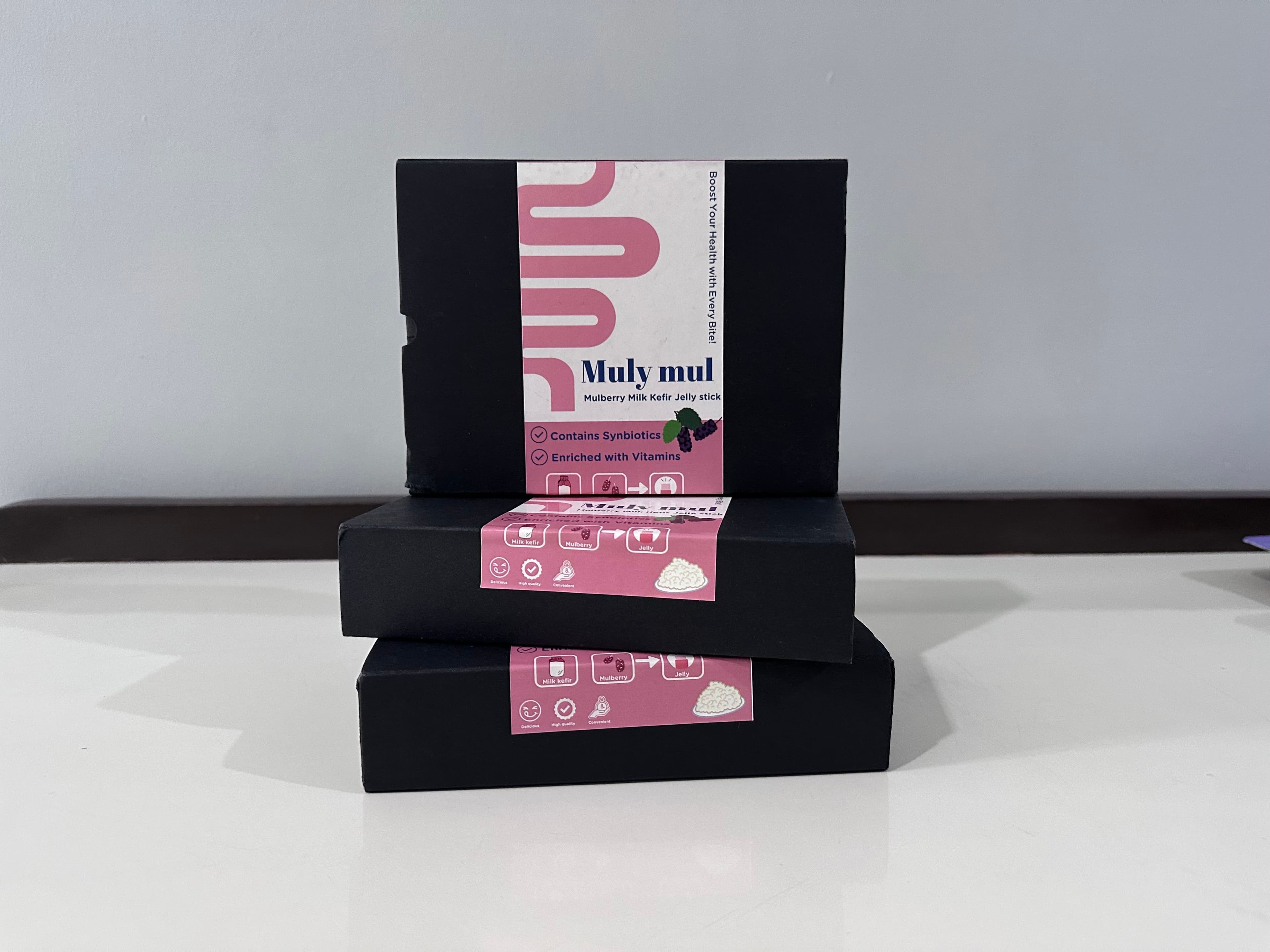
A new jelly snack alternative for health-conscious individuals—delicious, convenient, and gut-friendly. Rich in probiotics and prebiotics, packed with antioxidants, and essential vitamins. Suitable for health enthusiasts and lactose-intolerant individuals. Free from artificial colors and flavors

คณะสถาปัตยกรรม ศิลปะและการออกแบบ
Thammadul Wellness Center is a health and wellness center focused on restoring balance to the body and mind through natural therapy and holistic care. Designed as a retreat for relaxation and rejuvenation, the center integrates alternative medicine, nutritional therapy, appropriate exercise, and an environment that promotes tranquility. The center offers a wide range of services, including Thai herbal spa treatments, yoga and meditation, nutritional counseling, and personalized health restoration programs. The architectural design emphasizes the use of natural materials and a setting that harmonizes with the surrounding environment, creating a serene atmosphere that allows visitors to reconnect with nature. Thammadul Wellness Center aims to promote the concept of holistic health care, emphasizing prevention rather than treatment, so that guests can adopt these wellness practices into their daily lives sustainably.
คณะอุตสาหกรรมอาหาร
The study investigated the extraction of astaxanthin-rich oil from shrimp waste biomass, a valuable byproduct rich in functional lipids and proteins. Wet rendering has long been an inexpensive method to extract oil, however the high temperatures and long cooking times negatively affect the amount of astaxanthin. On the other hand, the study looked into employing deep eutectic solvent as a green solvent and combining a wet rendering process with high-shear homogenization and high-frequency ultrasound-assisted extractions. DES-UAE at 60% amplitude and wet rendering at 60 °C were found to be the ideal conditions, as were DES-HAE at 13,000 rpm and wet rendering at 60 °C. With a notable increase in oil yields of 16.80% and 20.12%, respectively, and improved oil quality (lower acid and peroxide values) in comparison to the conventional wet rendering, experimental validation validated the effectiveness of the DES-HAE and DES-UAE procedures. DES-UAE notably raised the amount of astaxanthin. This study demonstrates that DES-HAE and DES-UAE are quicker, lower-temperature substitutes for obtaining premium, astaxanthin-rich shrimp oil, resulting in more effective use of this priceless byproduct.