The study investigated the extraction of astaxanthin-rich oil from shrimp waste biomass, a valuable byproduct rich in functional lipids and proteins. Wet rendering has long been an inexpensive method to extract oil, however the high temperatures and long cooking times negatively affect the amount of astaxanthin. On the other hand, the study looked into employing deep eutectic solvent as a green solvent and combining a wet rendering process with high-shear homogenization and high-frequency ultrasound-assisted extractions. DES-UAE at 60% amplitude and wet rendering at 60 °C were found to be the ideal conditions, as were DES-HAE at 13,000 rpm and wet rendering at 60 °C. With a notable increase in oil yields of 16.80% and 20.12%, respectively, and improved oil quality (lower acid and peroxide values) in comparison to the conventional wet rendering, experimental validation validated the effectiveness of the DES-HAE and DES-UAE procedures. DES-UAE notably raised the amount of astaxanthin. This study demonstrates that DES-HAE and DES-UAE are quicker, lower-temperature substitutes for obtaining premium, astaxanthin-rich shrimp oil, resulting in more effective use of this priceless byproduct.
Sustainability and Waste Utilization: Upcycling shrimp byproducts into valuable oil helps ensure that seafood manufacturing is waste-free. Potential for Nutraceutical & Functional Food Applications
คณะสถาปัตยกรรม ศิลปะและการออกแบบ
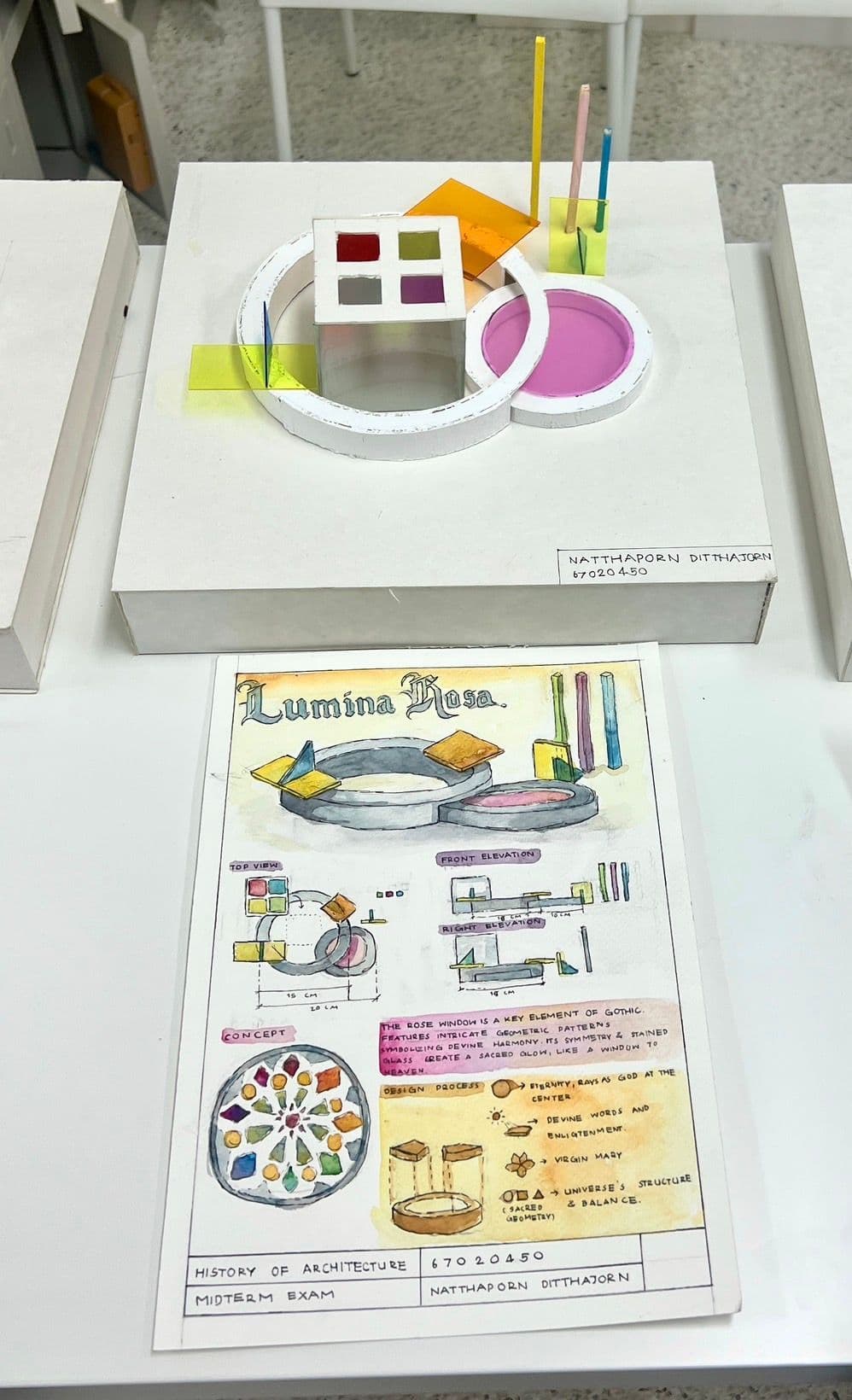
This conceptual model, inspired by the Rose Window in Gothic architecture, embodies intricate geometric patterns that reflect divine harmony and balance. Its symmetrical structure and the interplay of light passing through stained glass create a sense of movement, enhancing the sacred and mystical atmosphere. The composition evokes a celestial presence, like a window to heaven.
คณะอุตสาหกรรมอาหาร
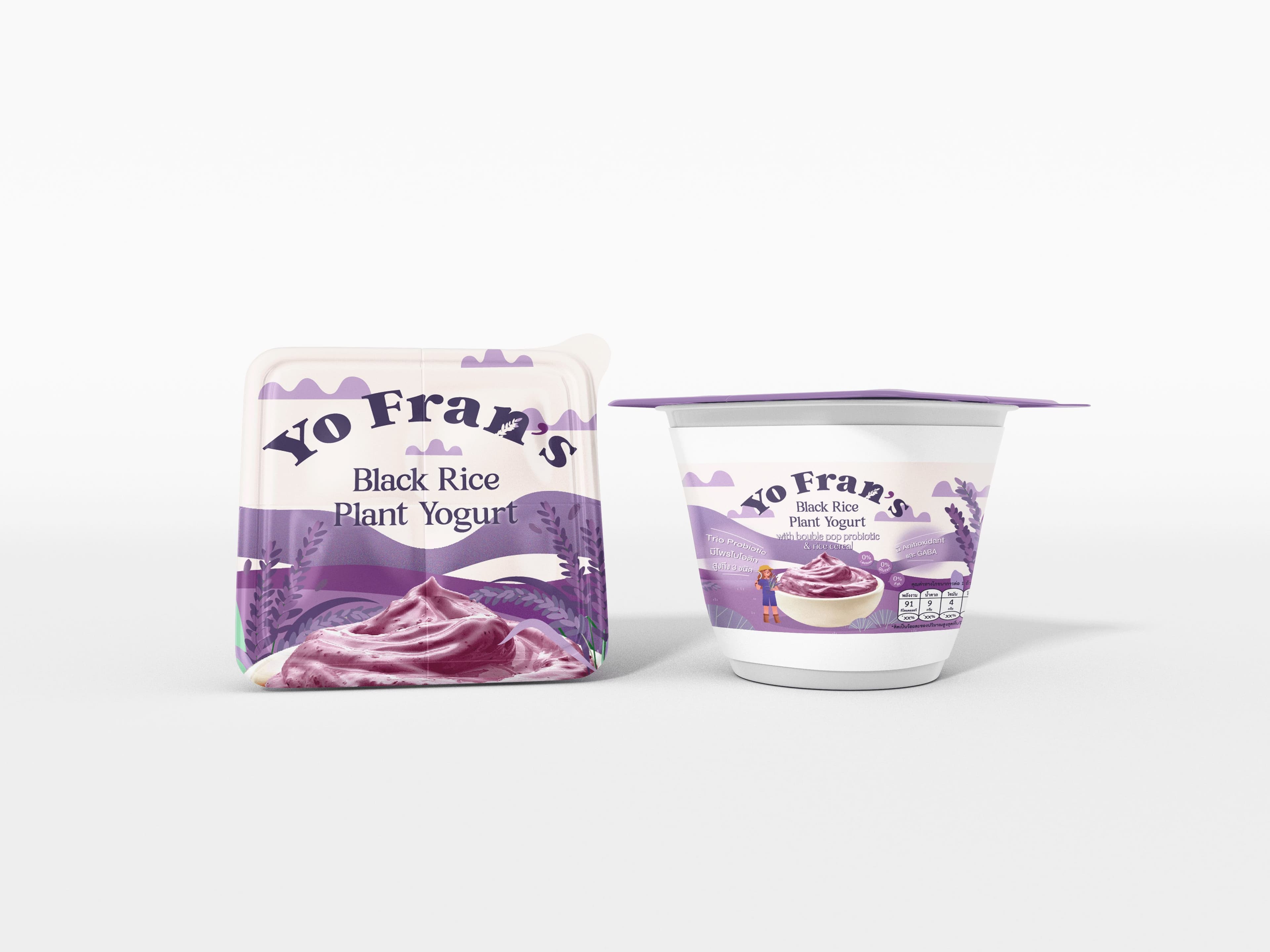
This black rice yogurt combines Trio Probiotic popping pearls and healthy rice cereal, rich in anthocyanins that help slow down bodily aging. It contains 3 types of probiotics to support gut balance and enhance digestive efficiency. This zero-waste product repurposes rice residue from the production process into nutritious cereal, offering a delicious and health-packed experience in one cup.
คณะเทคโนโลยีสารสนเทศ
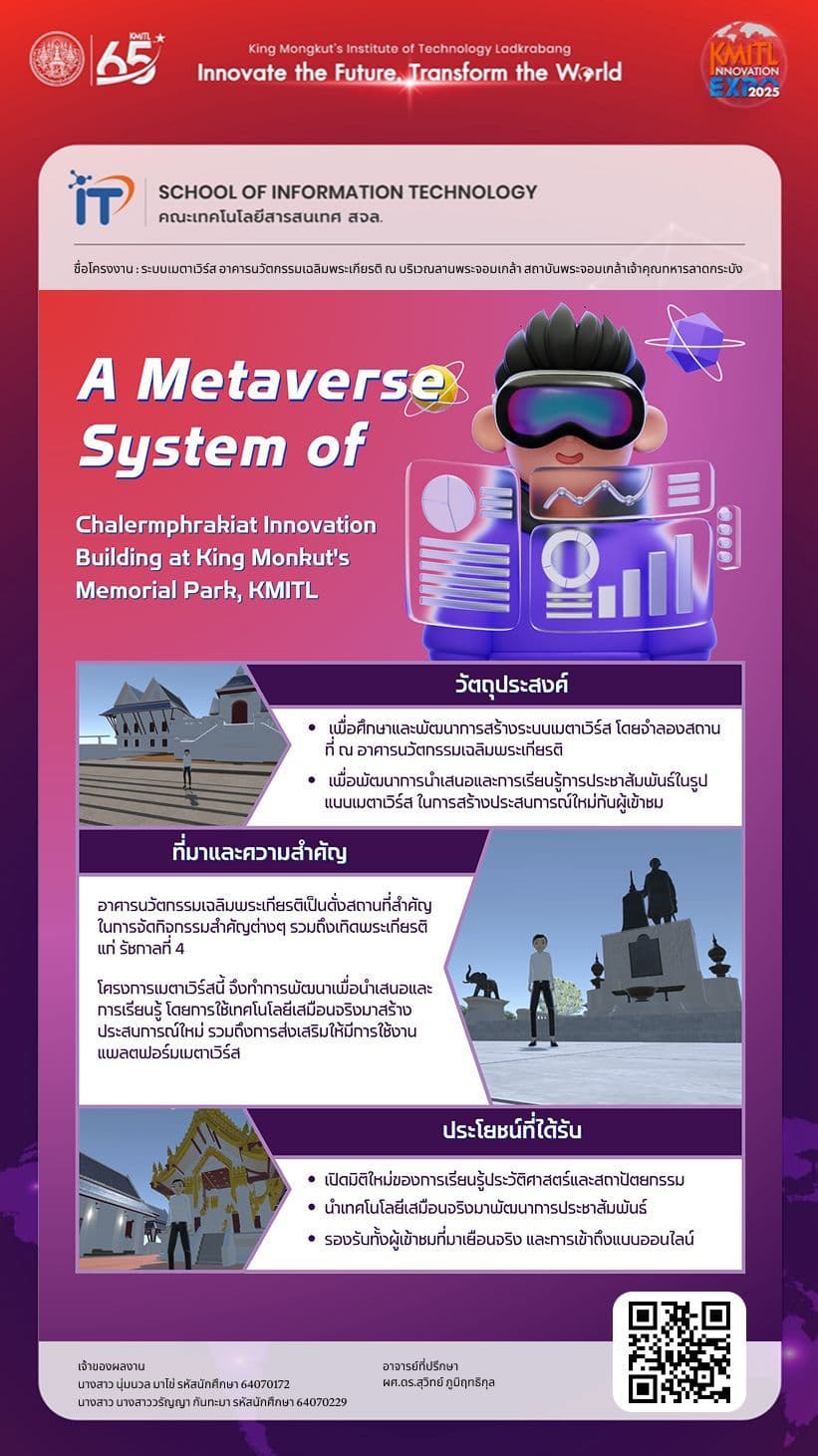
Traditional methods of public relations and learning often lack engagement and fail to provide users with a deep and immersive experience. Additionally, these methods struggle to reach a wide audience, especially those unable to visit the physical location. This project aims to solve the issues of accessibility and awareness regarding the institution’s Chalermphrakiat Hall and historical exhibition. Utilizing metaverse technology to simulate important locations allows users to explore the site and view key information in a virtual format, thereby enhancing the engagement of students staff alumni and the general public. The metaverse system is developed using Unity, a powerful game engine capable of supporting the creation of metaverse environments. This allows for the creation of an interactive and realistic virtual space. Unity also supports the management of physics, lighting, and sound, further enhancing realism. Additionally, the system is integrated with web browsers using WebGL technology, enabling the project developed in Unity to be accessed directly through a browser. Users can visit and interact with the metaverse environment from anywhere without the need to install additional software. The developers have thus created the metaverse system to provide a realistic and engaging learning experience, enhancing public relations efforts and fostering a strong connection with the institution efficiently.