
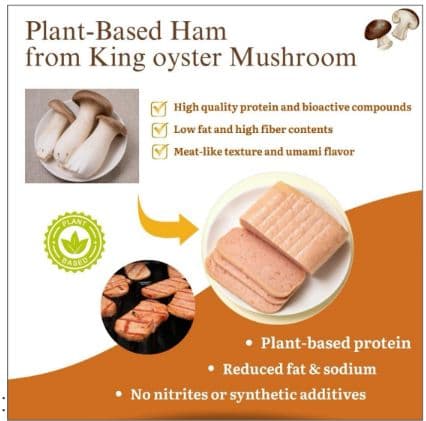
This project therefore aims to develop a "Plant-based Ham Product Prototype" using king oyster mushrooms (Pleurotus eryngii) as the primary ingredient — a natural raw material with strong potential in terms of nutritional value and meat-like texture. The project also seeks to improve the production process to achieve a product with satisfactory textural and flavor characteristics, meeting the needs of a new generation of health- and environmentally-conscious consumers, while providing a foundation for further commercial development within the alternative protein market.
ในยุคปัจจุบัน ผู้บริโภคจำนวนมากให้ความสำคัญกับสุขภาพ ความปลอดภัยของอาหาร และความยั่งยืนด้านสิ่งแวดล้อม ส่งผลให้ผลิตภัณฑ์อาหารจากพืช (plant-based foods) และโปรตีนทางเลือก (alternative protein) ได้รับความนิยมเพิ่มขึ้นอย่างต่อเนื่อง [1] หนึ่งในผลิตภัณฑ์เนื้อสัตว์แปรรูปที่ถูกจับตามองคือ “แฮม” ซึ่งแม้จะเป็นที่นิยมในวงกว้าง แต่ก็จัดอยู่ในกลุ่มอาหารที่ผ่านกระบวนการสูง (ultra-processed food) ที่มักมีปริมาณโซเดียมสูง และใช้สารเติมแต่ง เช่น โซเดียมไนไตรท์ ซึ่งมีความเชื่อมโยงกับความเสี่ยงต่อสุขภาพ [2] การพัฒนา “แฮมจากพืช (Ham plant-based)” จึงเป็นทางเลือกที่ตอบโจทย์ผู้บริโภคยุคใหม่ โดยเฉพาะเมื่อสามารถเลียนแบบเนื้อสัมผัสและรสชาติให้ใกล้เคียงผลิตภัณฑ์จากเนื้อสัตว์ได้ โดยใช้วัตถุดิบจากธรรมชาติที่มีคุณค่าทางโภชนาการสูง เช่น เห็ดออรินจิ (Pleurotus eryngii) เป็นวัตถุดิบที่มีศักยภาพสูงในการพัฒนาเป็นผลิตภัณฑ์เนื้อเลียนแบบ เนื่องจากมีโครงสร้างเส้นใยที่คล้ายเนื้อสัตว์ตามธรรมชาติ มีปริมาณโปรตีนคุณภาพดี และอุดมด้วยสารพฤกษเคมีที่มีฤทธิ์ทางชีวภาพ รวมทั้งให้พลังงานต่ำ (24 กิโลแคลอรีต่อ 100 กรัม), โปรตีน 3.6 กรัม และแร่ธาตุหลากหลาย เช่น โพแทสเซียม แมกนีเซียม และซีลีเนียม ดังตารางที่ 1 เห็ดยังมีสารให้รสอูมามิ เช่น กลูตามิก แอสปาร์ติก และไรโบนิวคลีโอไทด์ ซึ่งช่วยชูรสและลดผลกระทบของการลดโซเดียมในสูตรอาหาร [3]

This work presents the development of a multipurpose plasma water generator using atmospheric pressure plasma technology. An array-based plasma generation system was designed to enhance the efficiency of producing Plasma Activated Water (PAW), ensuring consistent quality and supporting diverse applications. The device can be operated through an automated control system integrated with IoT connectivity, enabling remote command, status monitoring, and real-time performance tracking. This improves convenience, reduces chemical usage, and enables effective and safe applications in agriculture, sterilization, water treatment, and various industrial processes.

คณะพยาบาลศาสตร์
-
คณะบริหารธุรกิจ
-