
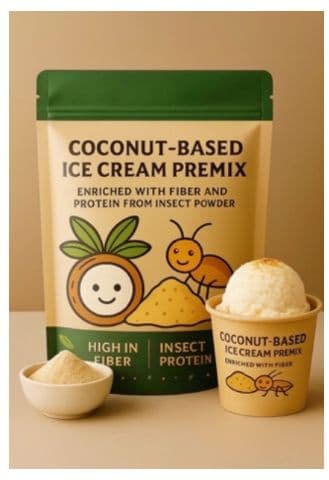
This research project focuses on developing an "instant coconut milk ice cream powder" enriched with dietary fiber and insect protein powder — a concept rooted in creating an alternative dessert product in powdered ice cream form with key strengths in health, nutritional value, and sustainability. Coconut milk, a plant-based ingredient, serves as the primary raw material in place of cow's milk, making the product suitable for individuals with lactose allergy or lactose intolerance. The product is further enriched with inulin dietary fiber to enhance its functional nutritional value, supporting the growth of beneficial gut microorganisms, helping to improve digestive balance, and aiding in blood sugar level control. Additionally, insect protein powder is incorporated as a high-quality protein source representing a future alternative protein that distinguishes this product from conventional ice cream. Furthermore, the instant powdered coconut milk ice cream format offers practical advantages — it is easy to prepare, convenient, and simple to transport and store. The product can be reconstituted into ice cream by adding water, blending, and freezing prior to consumption. It can also serve as a base for other ice cream flavors, or be further applied as an ingredient in other desserts or blended beverages. There is also commercial potential to extend the product as a health food ingredient for the food service industry. The product is developed with the concept of low fat and low sugar content, utilizing clean, safe, standardized, and environmentally friendly domestic raw materials
ในปัจจุบัน กระแสการบริโภคอาหารเพื่อสุขภาพมีการเติบโตขึ้นอย่างรวดเร็วทั้งในระดับโลกและในประเทศไทย จากการที่ผู้บริโภคเริ่มให้ความสำคัญกับการดูแลสุขภาพและโภชนาการมากขึ้น ส่งผลให้ผู้บริโภคมีแนวโน้มที่จะให้ความสำคัญและมีความสนใจในการบริโภคผลิตภัณฑ์อาหารที่มีประโยชน์ต่อร่างกายมากยิ่งขึ้น โดยเฉพาะผลิตภัณฑ์ที่ให้คุณค่าทางโภชนาการสูงและช่วยส่งเสริมระบบต่าง ๆ ของร่างกายได้ เช่น ระบบขับถ่าย ระบบภูมิคุ้มกัน หรือการควบคุมน้ำหนัก เป็นต้น (Euromonitor International, 2024) ส่งผลให้ตลาดผลิตภัณฑ์อาหารเพื่อสุขภาพซึ่งเป็นกระแสที่สำคัญในตลาดโลกมีการขยายตัวเติบโตขึ้นอย่างต่อเนื่อง โดยเฉพาะในกลุ่มผลิตภัณฑ์ที่ปราศจากน้ำตาลแล็กโทส (Lactose-free products) ซึ่งได้รับความสนใจเพิ่มขึ้นอย่างต่อเนื่องจากผู้บริโภคที่มีภาวะการแพ้แล็กโทสหรือมีสภาวะการย่อยน้ำตาลแล็กโทสบกพร่อง (Lactose intolerance) รวมทั้งผลิตภัณฑ์จากแหล่งโปรตีนทางเลือก (Alternative protein sources) โดยเฉพาะการใช้โปรตีนจากแหล่งทรัพยากรที่ยั่งยืน ทั้งโปรตีนจากพืชหรือแมลง กำลังเป็นที่สนใจอย่างกว้างขวางสำหรับผู้บริโภคที่หลีกเลี่ยงผลิตภัณฑ์จากสัตว์ รวมถึงผู้บริโภคที่ใส่ใจต่อสิ่งแวดล้อมทั้งในและต่างประเทศ
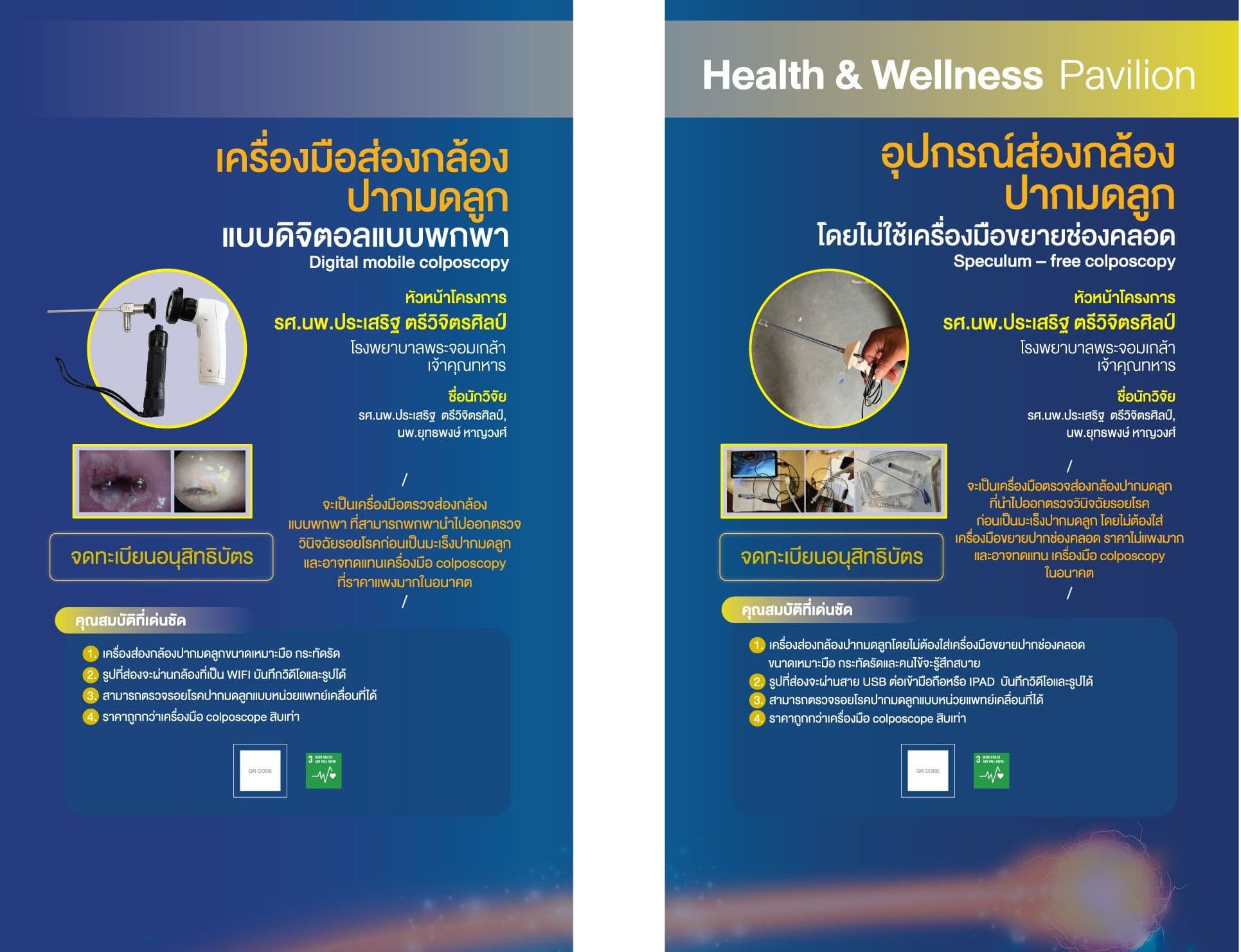
โรงพยาบาลพระจอมเกล้าเจ้าคุณทหาร
-
วิทยาเขตชุมพรเขตรอุดมศักดิ์
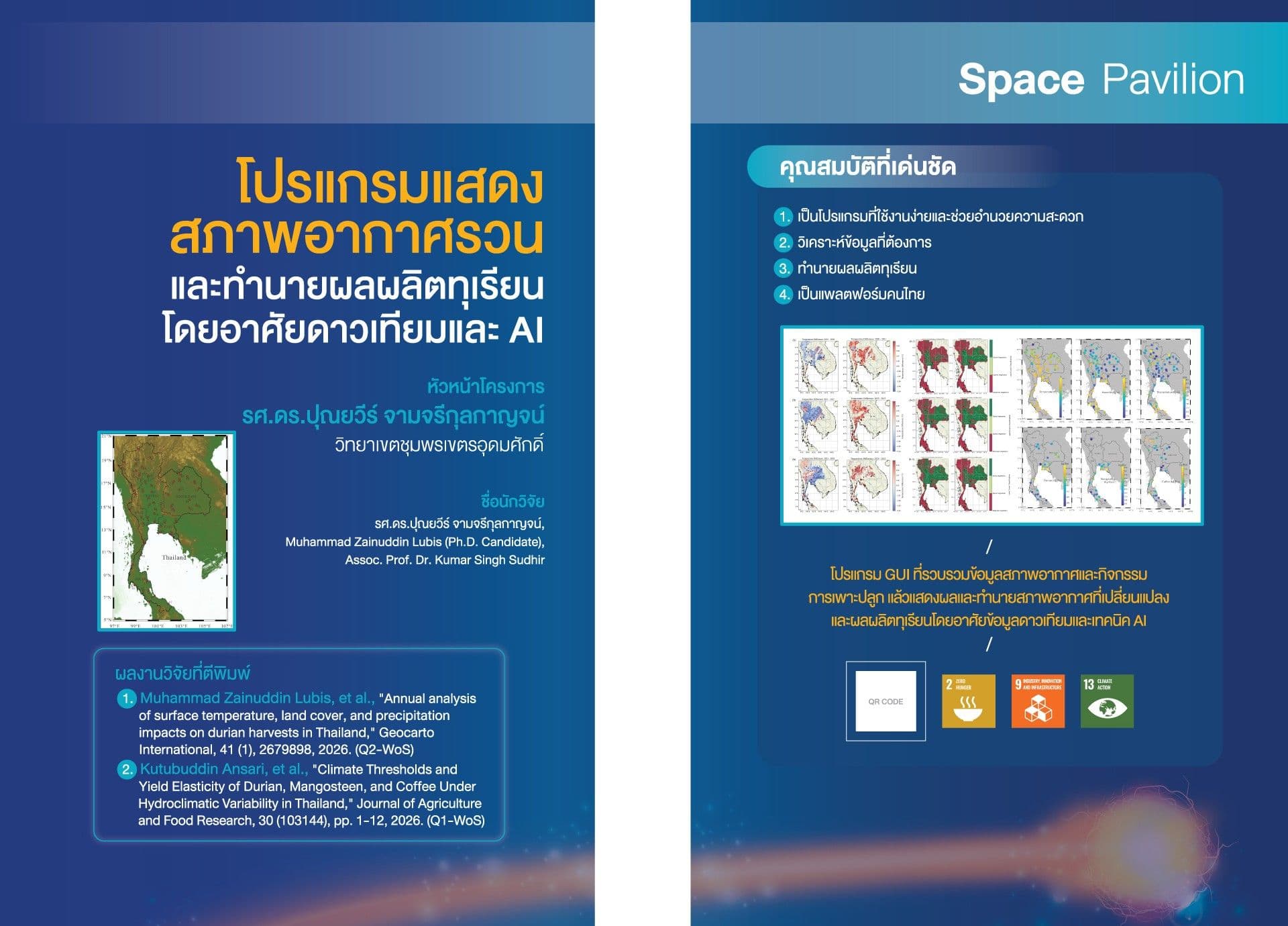
The presented GUI program is designed to display irregular weather conditions and predict durian yields using satellite data and artificial intelligence. It integrates satellite-based environmental monitoring, geospatial analysis, and AI-driven prediction with ground-based measurements, geospatial intelligence, environmental analytics, and machine learning. This integration supports scientific research, environmental monitoring, climate assessment, and data-driven decision-making. The GUI program provides analytical and predictive information based on datasets, algorithms, models, and parameters selected by the user. Predictions, classifications, and analytical results should be interpreted as model-based information, not as substitutes for professional judgment, field observations, official measurements, or regulatory information. Accuracy may vary depending on data quality, spatial and temporal resolution, model configuration, input variables, geographic conditions, and other analytical assumptions. Users are responsible for validating analytical results before applying them to operational, scientific, commercial, regulatory, or policy-related decisions.
คณะอุตสาหกรรมอาหาร
-