
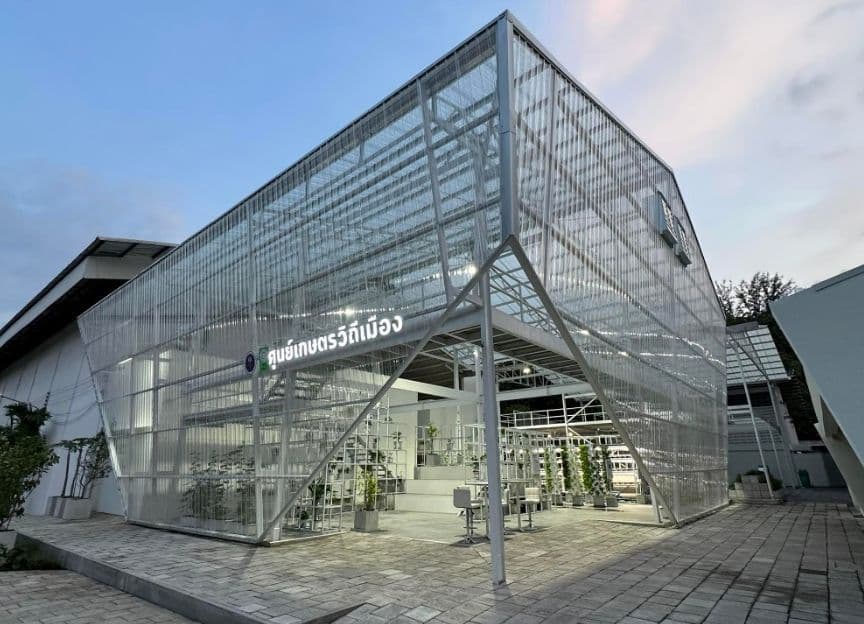
From the current situation and uncertainty; leads to the concept of food security. It is the application of innovation and technology to create high productivity in a limited area. The unused buildings in urban areas were renovated for planting, created as a learning area for planting in urban area. The different methods of growing plants were presented. There are 35 planting innovations for disseminating knowledge, to create food security, self-reliant, supports sustainable living.
จากสถานการณ์ในปัจจุบัน ปัญหาการเปลี่ยนแปลงสภาพภูมิอากาศ ภัยพิบัติ โรคระบาด การเพิ่มขึ้นของประชากร ขยายตัวของเมืองอย่างรวดเร็ว นำมาสู่แนวคิดความมั่นคงทางอาหาร ข้อจำกัดของการปลูกพืชในเมือง และแนวคิด BCG Economy Model เป็นการนำเอานวัตกรรมและเทคโนโลยีเข้ามาปรับใช้เพื่อให้เกิดการให้ผลผลิตที่มากในพื้นที่จำกัด โดยปรับปรุงอาคารเก่าในพื้นที่เมืองที่ไม่ถูกใช้งานมาปรับปรุงให้เหมาะสมกับการปลูกพืช ในพื้นที่ของสำนักงานการวิจัยแห่งชาติ (วช) เป็นพื้นที่ต้นแบบส จัดทำเป็นพื้นที่เรียนรู้การปลูกพืชในเมือง นำเสนอวิธีการปลูกพืชแบบต่างๆ รวบรวมเป็นนวัตกรรมการปลูกพืชกว่า 35 รายการ สำหรับเผยแพร่ความรู้ให้กับนักเรียนนักศึกษา ชุมชน และผู้ที่สนใจ ไปจนถึงหน่วยงานรัฐ เพื่อสร้างความมั่นคงทางอาหาร พึ่งพาตนเองได้ รองรับการอยู่อาศัยอย่างยั่งยืน

คณะวิศวกรรมศาสตร์
The design and development of an electric locomotive for the TRRN Railway Challenge 2025 aims to enhance learning potential and apply various theories in practical settings. The focus is on developing the locomotive to pass various tests, including acceleration, automatic braking system, noise, vibration, energy consumption, and durability throughout the competition. Additionally, the project helps improve skills in writing engineering design reports, which enables students to develop their analytical and discussion abilities in order to successfully complete each test according to the competition rules.
คณะเทคโนโลยีการเกษตร
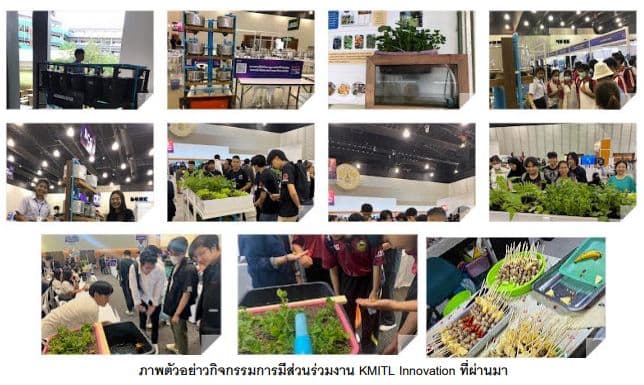
The project "High-Protein Gaeng Proe Sheets from Organic Golden Apple Snails" is of great significance in terms of developing local food innovation with enhanced nutritional value, while responding to the needs of health- and environmentally-conscious consumers. The project aims to add value to the golden apple snail — an aquatic species with promising economic potential in Thailand — owing to its rapid reproduction and ability to feed on a wide variety of plant matter. The research team has been developing the breed and conducting farming trials for over five years, and has consistently presented findings at KMITL Innovation events. The project is currently seeking support from various funding sources to scale up and transfer knowledge to farmers. This project therefore serves as a valuable initiative in transforming organically farmed produce into safe and sustainable food product formats.
คณะวิศวกรรมศาสตร์
Design and Development of a Remote Battery Management System This research focuses on the design and development of a battery management system that enables remote monitoring and control, allowing users to customize battery cell properties as needed. The system is specifically designed for use with graphene battery cells and can be effectively applied to alternative energy systems for residential use.