
Objective or Background: Dental caries is still one of the most significant dental problems worldwide, with prevalence rates up to 90% among children and adults. Cariogenic bacteria, especially Streptococcus mutans, is the primary microorganism involved in the pathogenesis through carbohydrate metabolism and biofilm formation, which are challenging to eradicate. Histatin-5 (HST-5), a human salivary antimicrobial peptide, has demonstrated antimicrobial activity against various fungal and bacterial pathogens. Phytosphingosine (PHS), an endogenous bioactive sphingolipid found in fungi, plants, and humans, also shows antimicrobial properties. This study aimed to evaluate the killing activity of HST-5 alone and in combination with PHS against S. mutans under biofilm-stimulating conditions. Materials and Methods: Antimicrobial activity against a planktonic culture of S. mutans was evaluated using a time-kill assay, and biofilm-forming capacity was confirmed by crystal violet staining assay. The killing ability against 24h pre-formed biofilm was determined using Transferable Solid Phase (TSP) pin lid model. Synergistic activity between HST-5 and PHS was evaluated using the checkerboard technique. Additionally, the cytotoxicity of the tested agent on human gingival fibroblast cells (hGFs) was assessed after 1 h of incubation using an MTT assay. Results: A time-kill assay revealed that both HST-5 and PHS exhibit time- and concentration-dependent activity against the planktonic form of S. mutans. PHS achieved over 90% killing activity within 15 min at 5 μg/ml, whereas HST-5 required 30 min to reach 90% killing at 20 μM. The biofilm formation capacity of S. mutans was confirmed. The inhibitory concentrations (IC50) of HST-5 and PHS against S. mutans biofilm were 25 μM and 13.5 μg/ml, respectively. A synergistic interaction between HST-5 and PHS, with IC50 values reduced by 8-fold and 16-fold, respectively. No cytotoxic effects were observed in hGFs cells at the concentration of the synergistic interaction. Conclusions: Therefore, the combination of HST-5 and PHS may enhance the effectiveness of anti-infective agents against S. mutans biofilm, potentially preventing the development of dental caries.
Dental caries is still one of the most significant dental problems worldwide, with prevalence rates up to 90% among children and adults. Cariogenic bacteria, especially Streptococcus mutans, is the primary microorganism involved in the pathogenesis through carbohydrate metabolism and biofilm formation, which are challenging to eradicate. Traditional preventions like brushing, while helpful, struggle to fully eradicate this resilient bacteria’s biofilm, as once it is formed, simple brushing is not enough.

คณะสถาปัตยกรรม ศิลปะและการออกแบบ
Interior Architecture Design Project: A Halal Restaurant Integrating the Culture of Songkhla, Thailand
คณะวิทยาศาสตร์
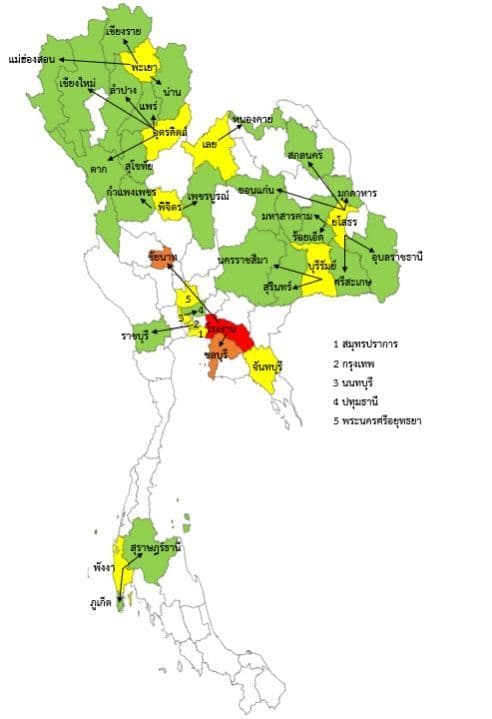
This research aims to select the location of the beverage distribution center of Thai Spirit Industry Co., Ltd. with the lowest total cost of transportation. using a mathematical model by considering the Muang districts of all 76 provinces, excluding Chachoengsao Province, where the factory is located. In the present study, four scenarios were divided: 1) when only one distribution center was required; 2) when more than one distribution center was established; 3) when it was divided into 4 regions. There can only be one distribution center in one region, and 4) when it is divided into four regions, where more than one distribution center can be established in one region. When processed with the program IBM ILOG CPLEX Optimization Studio, the results are summarized as follows: Scenario 1, when only one distribution center is assigned. The total transportation cost is 786,107.75 baht/month. Scenario 2, when more than one distribution center can be established. The total transportation cost is 252,338.98 baht/month. Scenario 3, when divided into 4 regions by requiring only one distribution center in one region. The total transportation cost is 401,499.61 baht/month. Scenario 4, when divided into 4 regions by requiring that there is more than one distribution center in each region. The total transportation cost is 258,666.22 baht/month.
คณะวิศวกรรมศาสตร์
SecurionSphere is the penetration testing learning platform that focuses on web application exploitation. This platform is intended to address concerns seen in existing penetration testing platforms, such as resource sharing that may affect other users and the constant environment configuration the permits the same response leading to copy the answer from others. Supervisors can use templates to address various forms of web application vulnerability threats. Users can generate the instance of supervisor's templates machine. The platform also randomly generates the environment configuration for each machine has the difference environment and the answer. This allows the users get more realistic learning experiences without affecting the resources of others.