

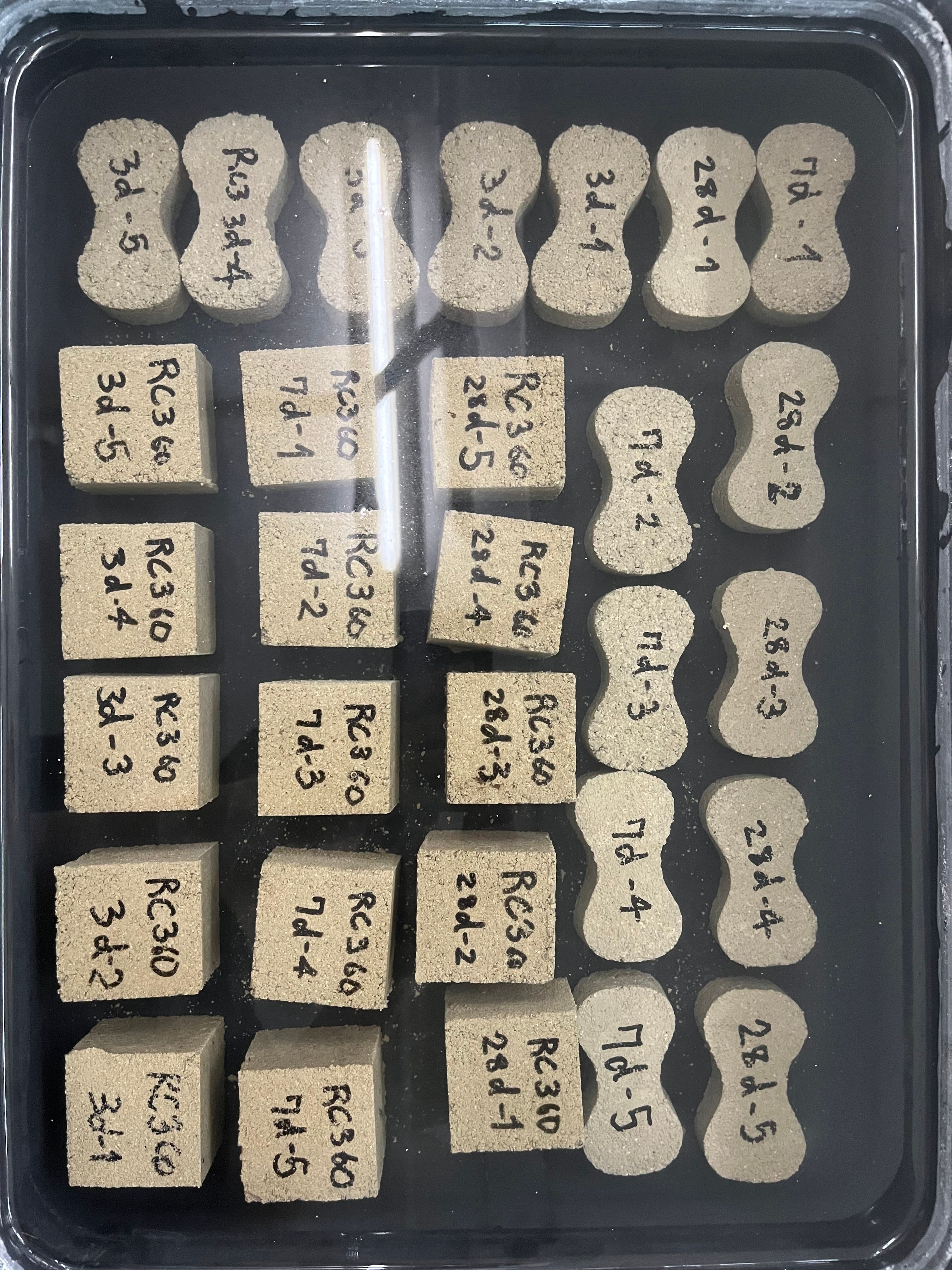
This study focuses on the use of ceramic tile powder as a cement replacement material in concrete at an appropriate ratio. The objective is to investigate the properties of replacing cement with tile powder and to determine the optimal mixing ratio of tile powder in cement mortar that can yield properties equivalent to or superior to conventional cement mortar. The experiment involved preparing cement mortar samples by replacing cement with two types of ceramic tile powder waste from tile manufacturing plants: waste tile powder and rectified tile powder. The mixing process was divided into two parts: Part 1 used a cement and tile powder ratio, while Part 2 used the results of the strength analysis from Part 1 to adjust the ratio accordingly. Various properties were tested, including specific gravity, normal consistency, setting time, tensile strength, and compressive strength. The results of the study revealed that replacing of cement with rectified tile powder provided the highest tensile and compressive strength, comparable to that of conventional cement mortar. Therefore, the use of ceramic tile powder as a replacement can enhance compressive strength while reducing cement usage, which has positive environmental implications by decreasing greenhouse gas emissions from cement production. Furthermore, this approach promotes the effective use of waste materials from the ceramic industry, contributing to the sustainability of the construction industry.
คอนกรีตเป็นวัสดุที่นิยมใช้ในด้านการก่อสร้างในประเทศไทย เนื่องจากมีข้อได้เปรียบที่หลากหลายเมื่อเทียบกับวัสดุอื่นๆ คือคอนกรีตมีคุณสมบัติเชิงกลที่ดี มีความคงทนสูง ไม่ติดไฟ สามารถหล่อขึ้นรูปร่างตามที่ต้องการได้ ตกแต่งผิวให้สวยงามได้ และที่สำคัญคือมีราคาไม่แพง โดยเฉพาะเมื่อเทียบกับราคาเหล็กรูปพรรณ ซึ่งปูนซีเมนต์มีบทบาทสำคัญในฐานะสารยึดเกาะในคอนกรีตส่งผลให้คอนกรีตเกิดความแข็งแรง และมีความ สามารถด้านการรับน้ำหนักสูง เนื่องจากอุตสาหกรรมการก่อสร้างมีการพัฒนาอย่างต่อเนื่อง ส่งผลให้เกิดความต้องการในด้านการผลิตปูนซีเมนต์เพิ่มมากขึ้นตามไปด้วย จึงทำให้การใช้หินรวมเพิ่มขึ้นโดยเฉพาะหินปูน เนื่องจากหินปูนมีความสำคัญในกระบวนการผลิตปูนซีเมนต์และเป็นทรัพยากรธรรมชาติที่ไม่สามารถทดแทนได้ การเก็บเกี่ยวทรัพยากรธรรมชาติอย่างต่อเนื่องอาจส่งผลให้เกิดการเสื่อมโทรมทางเศรษฐกิจอย่างถาวร เช่น การสูญเสียความหลากหลายทางชีวภาพ ภาวะโลกร้อน การเปลี่ยนแปลงสภาพภูมิอากาศ การทำลายระบบนิเวศ และการปนเปื้อนของฝุ่น อีกทั้งปัญหาที่เกี่ยวข้องกับการใช้พลังงานและมลภาวะต่อสิ่งแวดล้อมที่หลีกเลี่ยงไม่ได้ในขั้น ตอนการผลิตปูนซีเมนต์ก่อให้เกิดมลพิษอย่างมากโดยเฉพาะมลพิษทางอากาศ ซึ่งการผลิตปูนซีเมนต์นั้นปล่อยก๊าซคาร์บอนไดออกไซด์ประมาณ 0.8 ตัน และก๊าซเรือนกระจก 1 ตันต่อปูนซีเมนต์ 1 ตันสู่ชั้นบรรยากาศ ในอุตสาหกรรมกระเบื้องเซรามิกมีการพัฒนามาอย่างต่อเนื่อง ส่งผลทำให้กระเบื้องเซรามิกมีความต้องการในการผลิตกระเบื้องเพิ่มมากขึ้น ทำให้เกิดผงกระเบื้องจากกระบวนการการผลิตทั้งที่ตกค้างในร่องน้ำและการขัดตกแต่งหลังเผาเสร็จ ซึ่งเป็นของเศษขยะจากกระบวนการผลิตกระเบื้องเซรามิกเป็นจำนวนมาก ผงกระเบื้องเซรามิกนี้มีส่วนประกอบส่วนมากเป็น ซิลิกา (Silicon dioxide) และอะลูมินา (Aluminum oxide) ที่สามารถเกิดปฏิกิริยาปอซโซลาน (Pozzolanic reaction) ได้ดีกับแคลเซียมไฮดรอกไซด์ (Calcuim hydroxide) จากปฏิกิริยาไฮเดรชัน (Hydration reaction) ของปูนซีเมนต์ จึงได้มีแนวคิดที่จะนำผงกระเบื้องขัดมาทดแทนปริมาณซีเมนต์ในการผสมคอนกรีตในงานก่อสร้าง เพื่อก่อให้เกิดประโยชน์ด้านเศรษฐกิจและสิ่งแวดล้อม การศึกษานี้สามารถลดต้นทุนการผลิตซีเมนต์ และลดการปล่อยก๊าซคาร์บอนไดออกไซด์สู่บรรยากาศจากกระบวนการผลิตซีเมนต์พร้อมทั้งลดขยะในด้านอุตสาหกรรม โดยการนำเศษผงกระเบื้องที่เป็นของเสียจากโรงงานผลิตกระเบื้องเซรามิกกลับมาใช้ใหม่ในรูปแบบวัสดุทดแทนซีเมนต์

คณะวิศวกรรมศาสตร์
The production process of the food rancidity indicator label consists of three main steps: 1) preparation of the indicator solution, 2) preparation of the cellulose solution, and 3) formation of the sheet. The indicator solution includes bromothymol blue and methyl red, which act as indicators. The cellulose solution consists of hydroxypropyl methylcellulose, carboxymethyl cellulose, sodium hydroxide, polyethylene glycol 400, and the indicator solution. For the sheet formation, the cellulose solution was mixed with natural latex to increase flexibility and impart hydrophobic properties. After drying, the invention appears as a thin, dark blue label. When exposed to volatile compounds from rancid food, the label changes color from dark blue to green, and then to yellow, corresponding to the increasing amount of volatile compounds from the rancid food.

คณะสถาปัตยกรรม ศิลปะและการออกแบบ
The Kachatthai Project in Surin Province has been developed as a space to promote and generate income for farmers, incorporating a design concept that reflects the unique identity of Surin Province as its main guideline.
คณะวิทยาศาสตร์
Bacteriocins are microbial peptides that demonstrate potency against pathogens. This study evaluated the inhibitory effects on pathogens and characterized the bacteriogenomic profile of strain TKP1-5, isolated from the feces of Anas platyrhynchos domesticus. Strain TKP1-5 was characterized using phenotypic traits, 16S rRNA sequencing, and Whole-Genome Sequencing (WGS). It exhibited growth in the presence of 2-6% NaCl, temperatures of 25-45°C, and pH levels ranging from 3 to 9. Based on ANIb, ANIm, and dDDH values, strain TKP1-5 was identified as Lactococcus lactis. Whole genome analysis revealed that strain TKP1-5 harbors the Nisin Z peptide gene cluster with a bit-score of 114.775. The antimicrobial spectrum of bacteriocin TKP1-5 showed inhibitory effects against pathogenic bacteria including Pediococcus pentosaceus JCM5885, Listeria monocytogenes ATCC 19115, Enterococcus faecalis JCM 5803T, Salmonella Typhimurium ATCC 13311ᵀ, Aeromonas hydrophila B1 AhB1, Streptococcus agalactiae 1611 and Streptococcus cowan I. Genomic analysis confirmed L. lactis TKP1-5 as a non-human pathogen without antibiotic resistance genes or plasmids. Furthermore, L. lactis TKP1-5 contains potential genes associated with various probiotic properties and health benefits. This suggests that L. lactis TKP1-5, with its antibacterial activity and probiotic potential, could be a promising candidate for further research and application in the food industry.