

A Photographic series that expresses the abstract states of myself, towards the question of existence that results from being surrounded by expectations of both surrender and freedom of expression, this series focuses on my own subjectivities in order to bring back memories of almost forgotten feelings and make them clear once more.
การที่เติบโตมาจากครอบครัวที่คาดหวังในตัวเรา ที่สมาชิกคาดหวังในตัวเราไม่เหมือนกัน ถ้าเราทำแบบใดแบบหนึ่งที่คนใดคนหนึ่งต้องการอีกคนจะไม่พอใจ จนเราเกิดสงสัยว่าเราต้องเป็นแบบไหน เมื่อเข้ามาอยู่ในสังคมใหม่ทำให้เราตั้งคำถามกับตนเองเมื่อเข้าหาผู้คนว่าเราต้องเป็นไปแบบที่เขาต้องการหรือเปล่าเราถึงจะเข้าถึงเขาได้ ทำให้เราสับสนกับตัวเองและต้องสร้างตัวตนใหม่ไปตามที่คนคนนั้นพอใจ จนเราเองเริ่มเกิดคำถามว่าจริงๆแล้วตัวตนของเราจริงๆเป็นแบบไหน
คณะวิศวกรรมศาสตร์
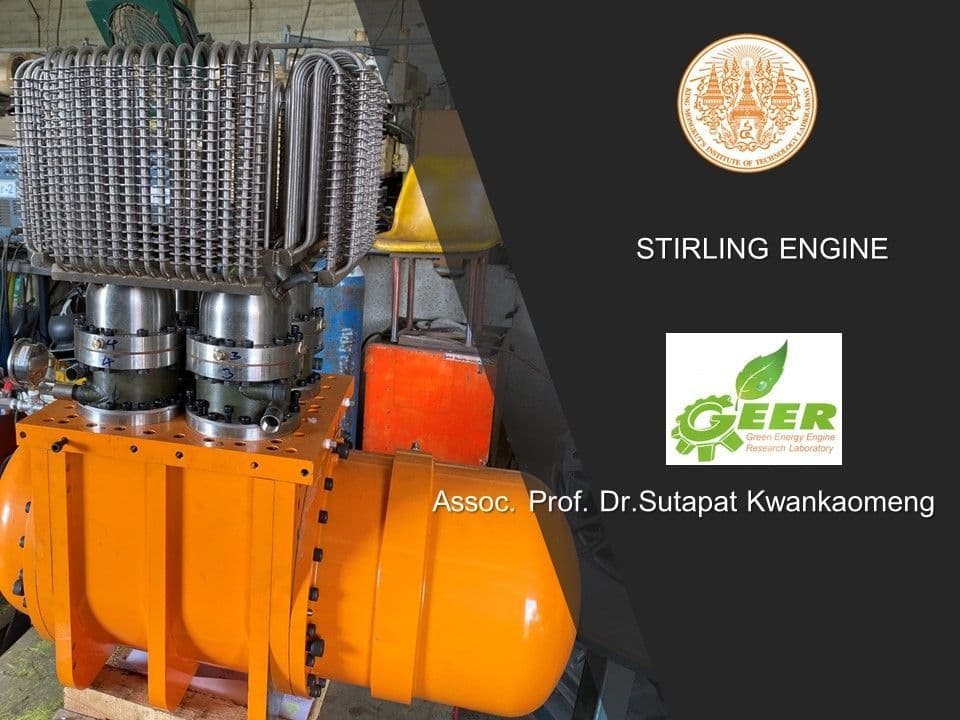
Stirling engine is the external heated engine that heat is sup-plied externally to the heater part of the engine. Thus, Stirling cycle engine can be employed with various sources of renewable energy such as biomass, biofuel, solar energy, geothermal energy, recovery heat, and waste. The integration of gasifier, burner, and heat engine as a power system offers more fuel choices of each local area with potential resources resulting independent from shortage and cost fluctuation of fossil fuel. This research aims to investigate the integration of the Stirling engine with a wood pellet gasifier for electric power generation. Biomass can be controlled to have continuously combustion with ultra-low toxic emission. Stirling engine, therefore, is a promising alternative in small-scale-electricity production. Even though many biomass-powered Stirling engines were successfully constructed and marketed but these engines and the use of biomass resources as fuel for power generation are quite new concepts in some developing countries. Especially, the capital cost of this engine is high and unaffordable for installation compared to other power systems. Therefore, this research aims to the study attractive and feasibility of the compact Stirling engine with green energy.

คณะวิศวกรรมศาสตร์
This research focuses on the design and development of a high-power converter to regulate energy supply from solar cells (Photovoltaic: PV) to a hydrogen production unit (Electrolyzer), which is a crucial component in advancing renewable energy in alignment with the RE100 initiative. Specifically, this study targets Green Hydrogen, which is generated through the water electrolysis process using clean energy from solar cells, ensuring zero emissions and environmental sustainability. The proposed converter includes of a Three-Level NPC Inverter, transformer, Full-Bridge Rectifier, and LC filter to enhance the power quality supplied to the electrolyzer. The system's design and simulation were conducted using MATLAB and Simulink to evaluate circuit performance and analyze operational efficiency. Simulation was conducted using MATLAB and Simulink to evaluate circuit performance and analyze operational efficiency. Additionally, a microcontroller-based control system is integrated with a gate driver circuit to optimize the electrolysis process by reducing power losses. This proposed converter effectively converts PV energy into suitable voltage and current levels for the electrolyzer while maintaining high hydrogen production efficiency.

คณะวิทยาศาสตร์
This work presents the fabrication of the handheld meter for potentiometric detection of Hg (II). The meter was constructed based on using an ion-sensitive field-effect transistor (ISFET) platform. The developed meter provides high accuracy and precision (%Recovery was in the range of 92.55 - 109.32 and %RSD was 2.38). It was applied to the analysis of cosmetic samples. The results by the developed electrode were not significantly different at a 95% confidence level compared to the results by using ICP-OES.